

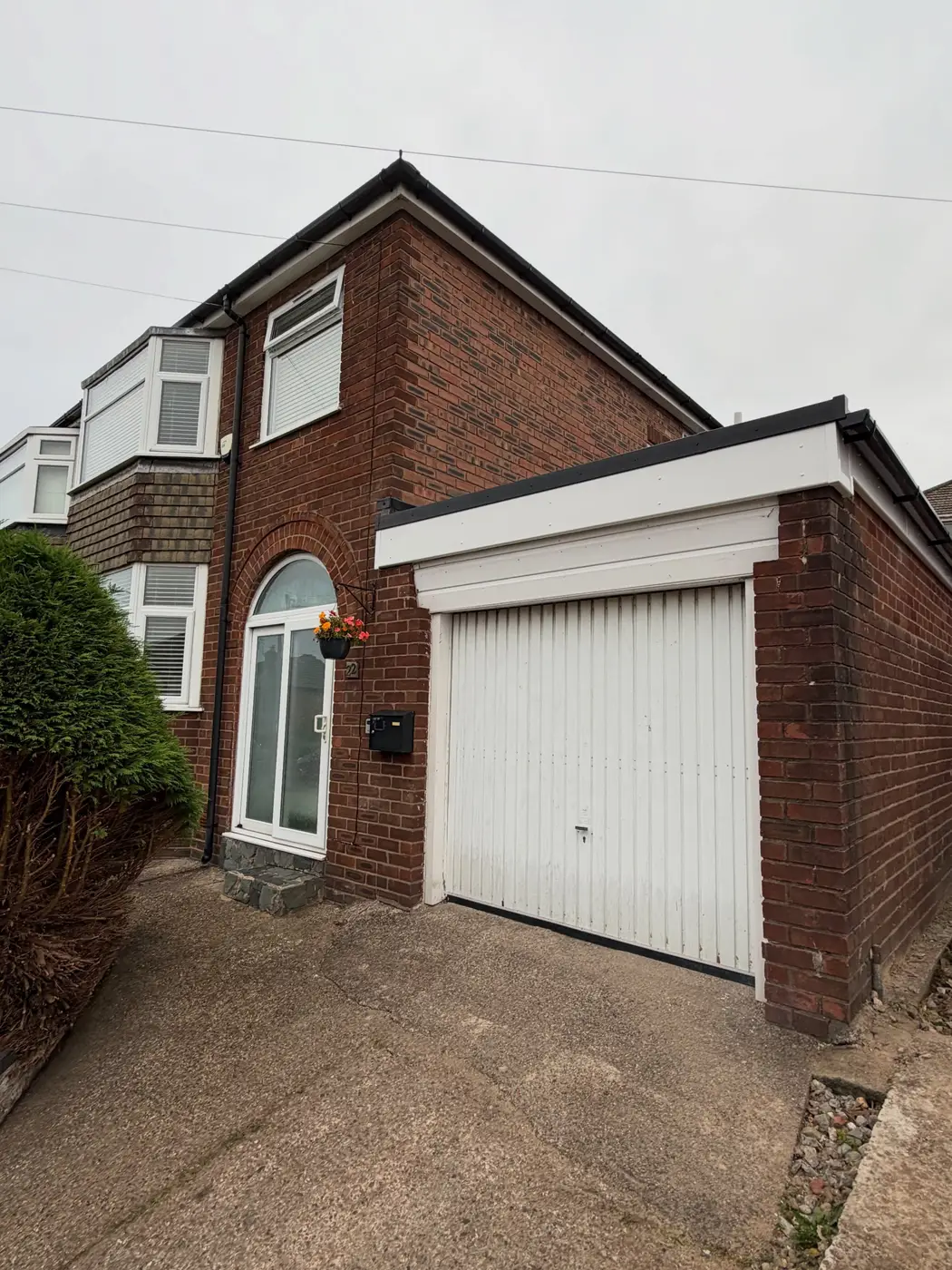
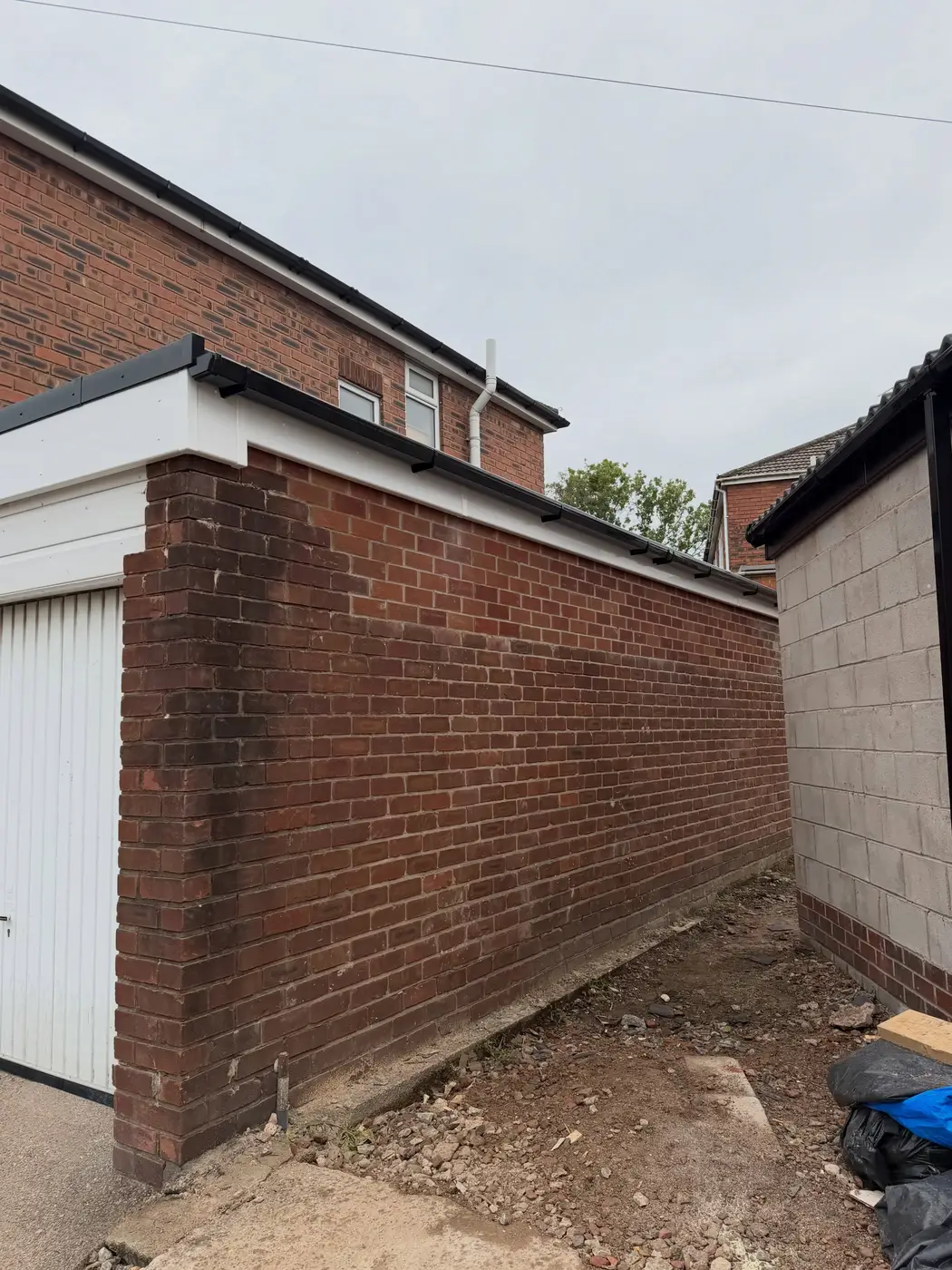
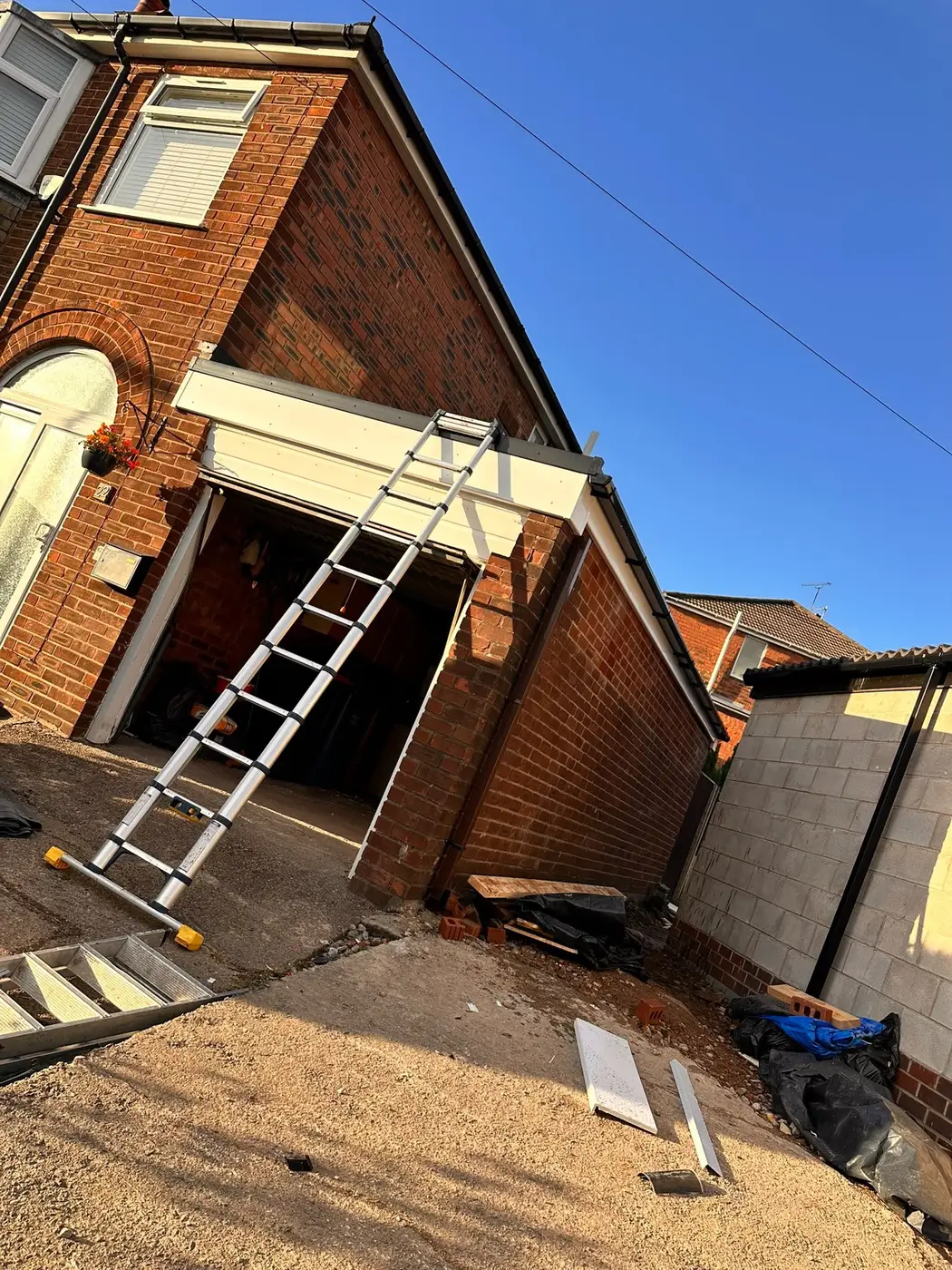
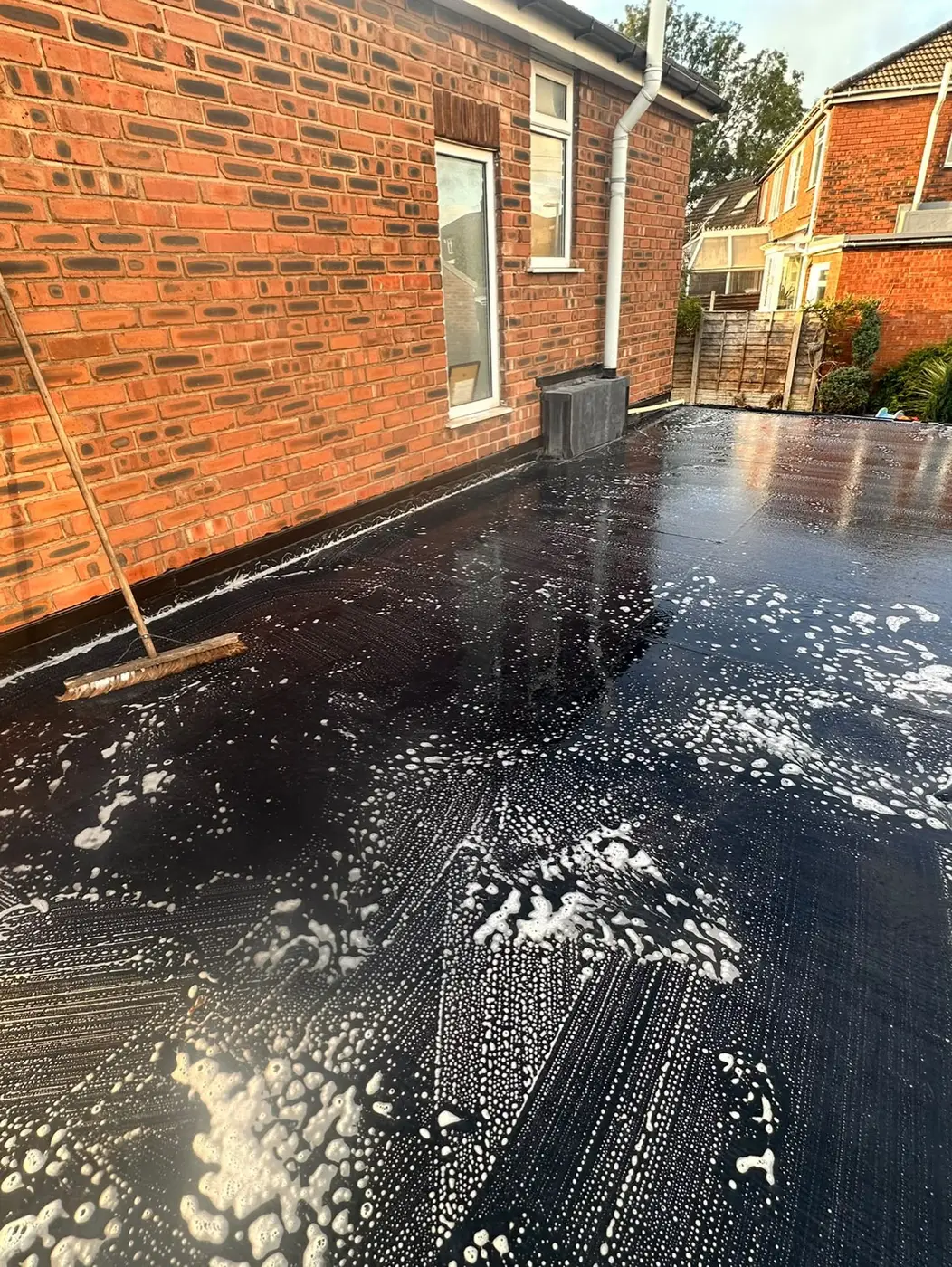
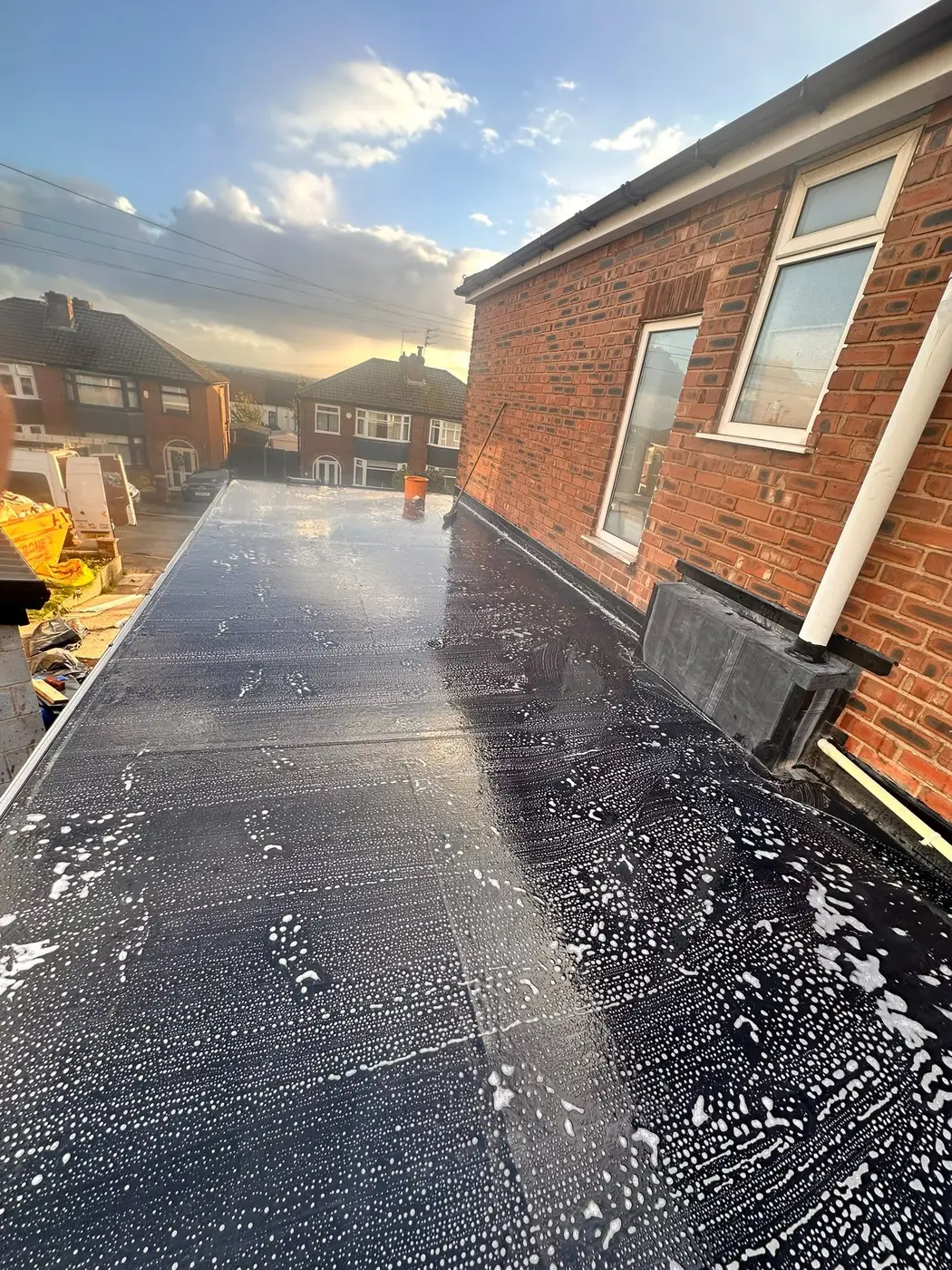
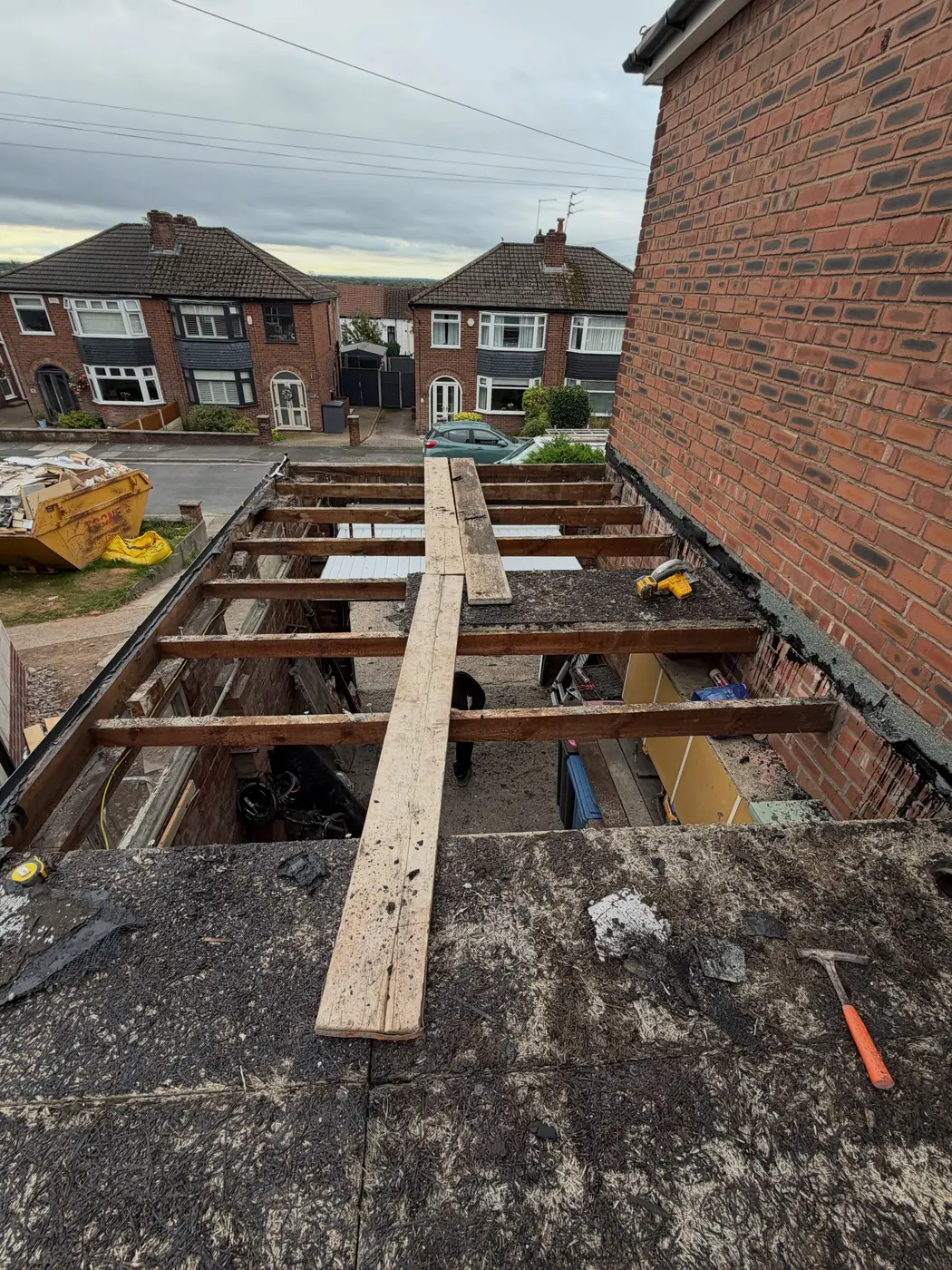
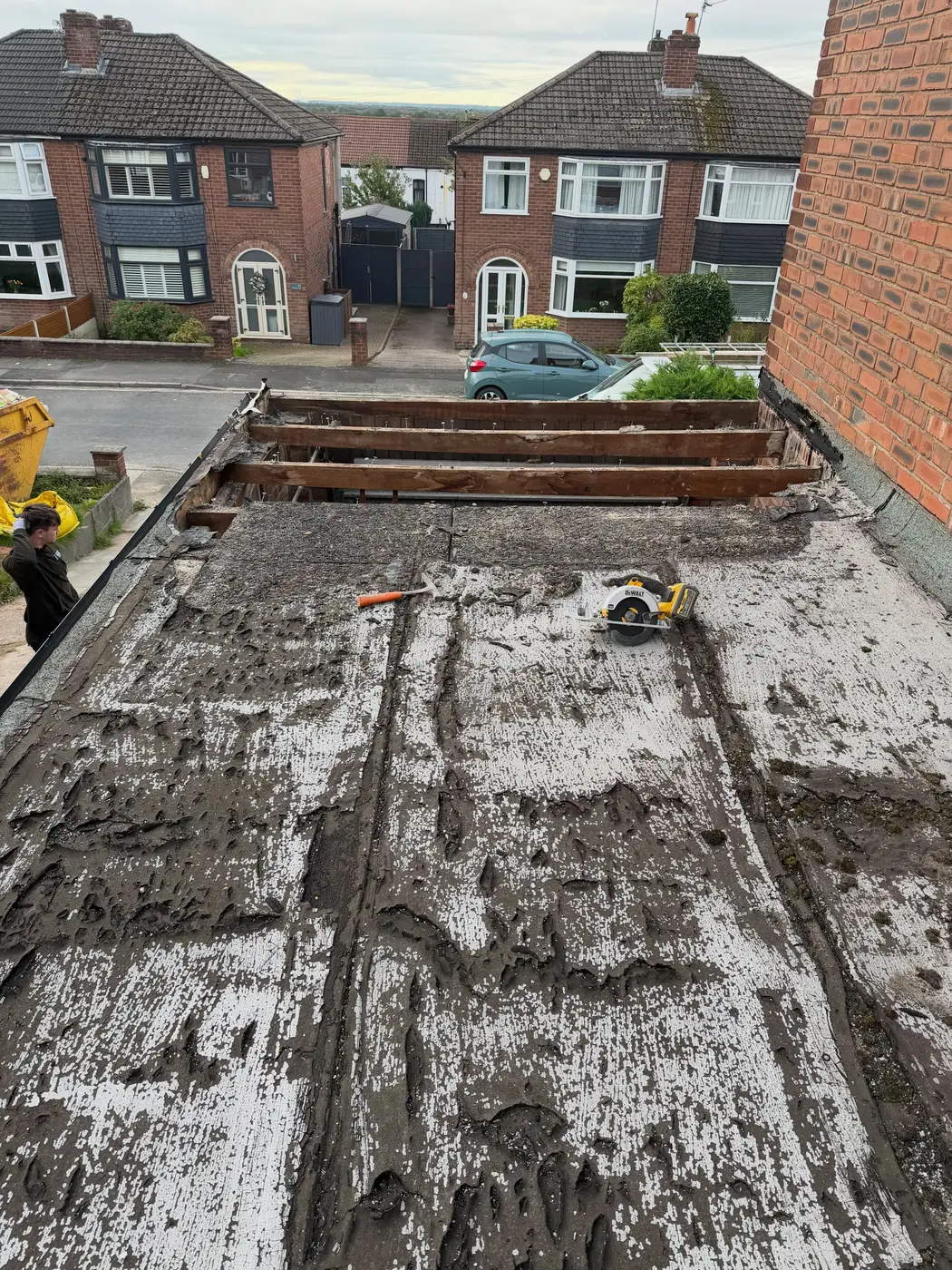
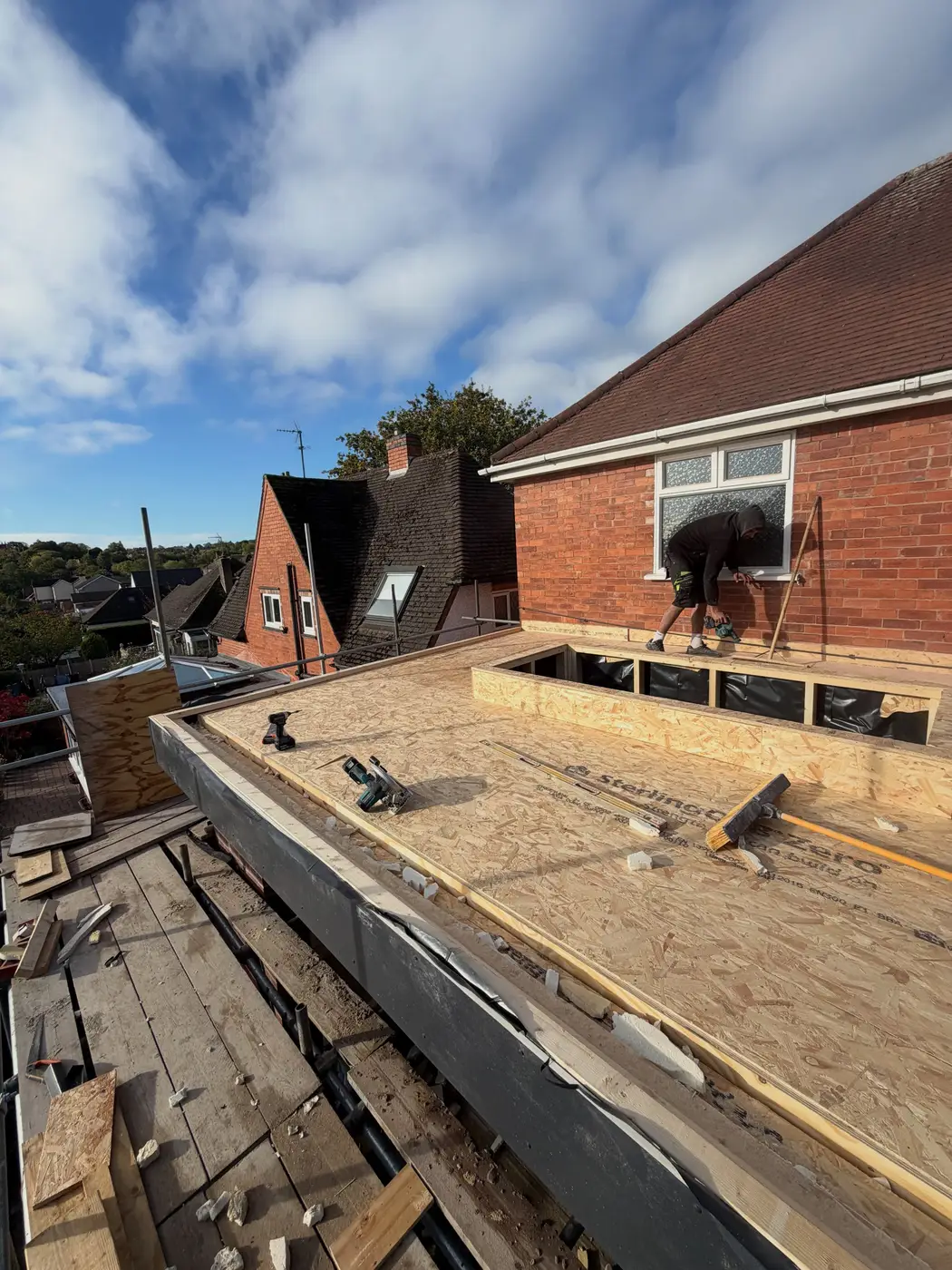
It works well on low-slope areas like garages, porches and additions, but not as a covering for steep slopes.
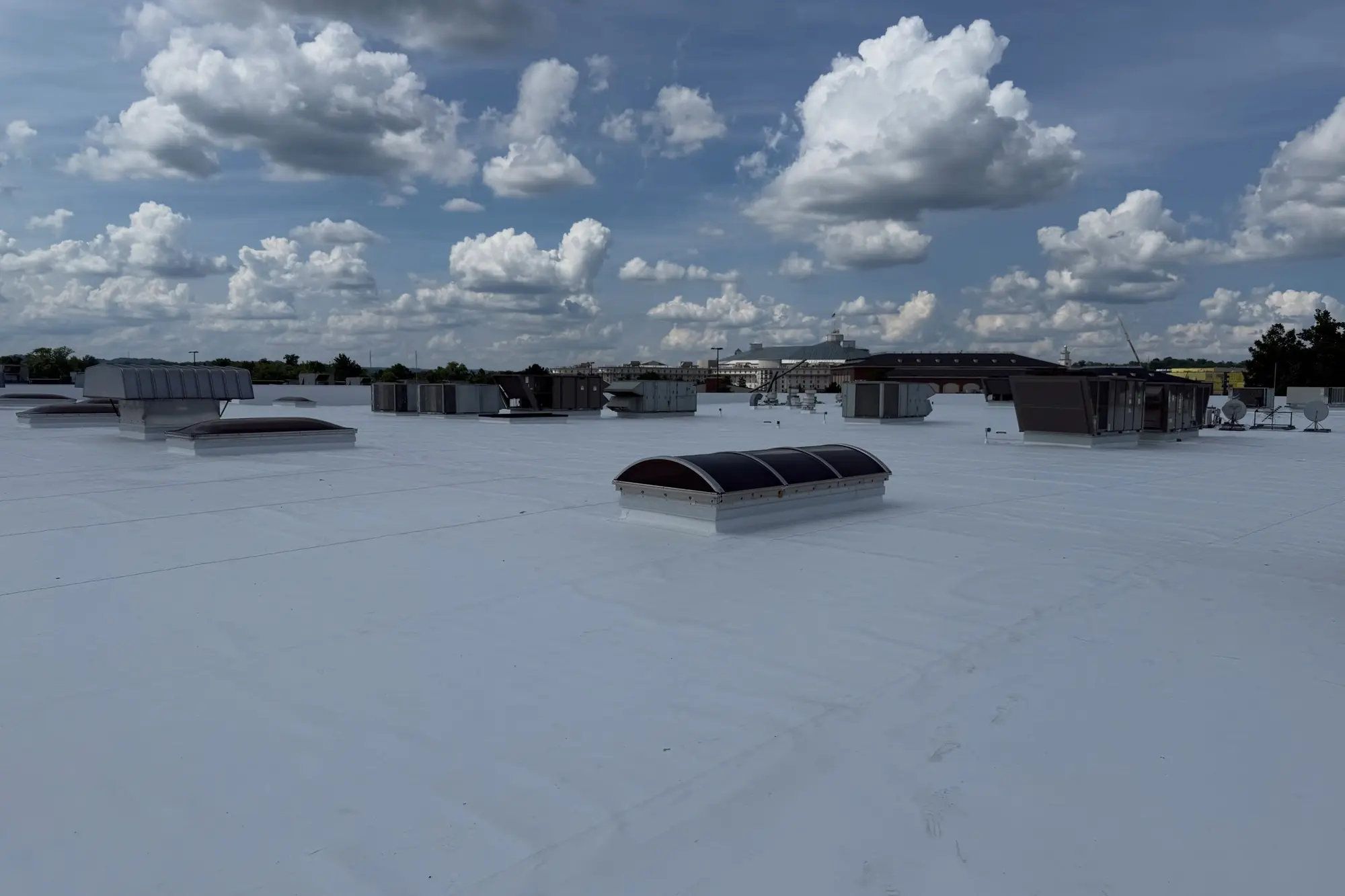

EPDM, often called rubber roofing, has a long track record on low-slope roofs. It's flexible in temperature swings, relatively straightforward to repair and a good match for garages, porches and small commercial roofs.
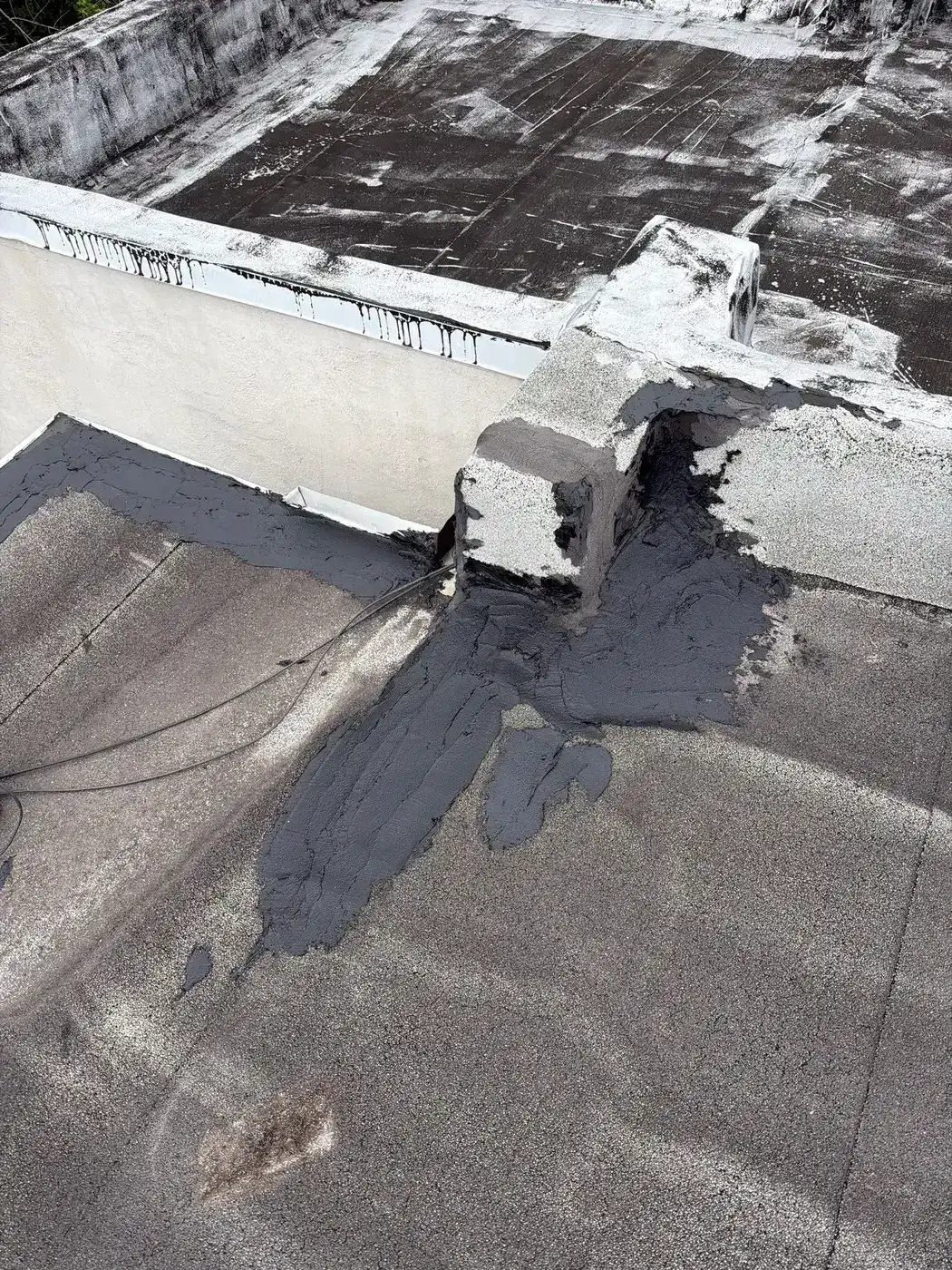
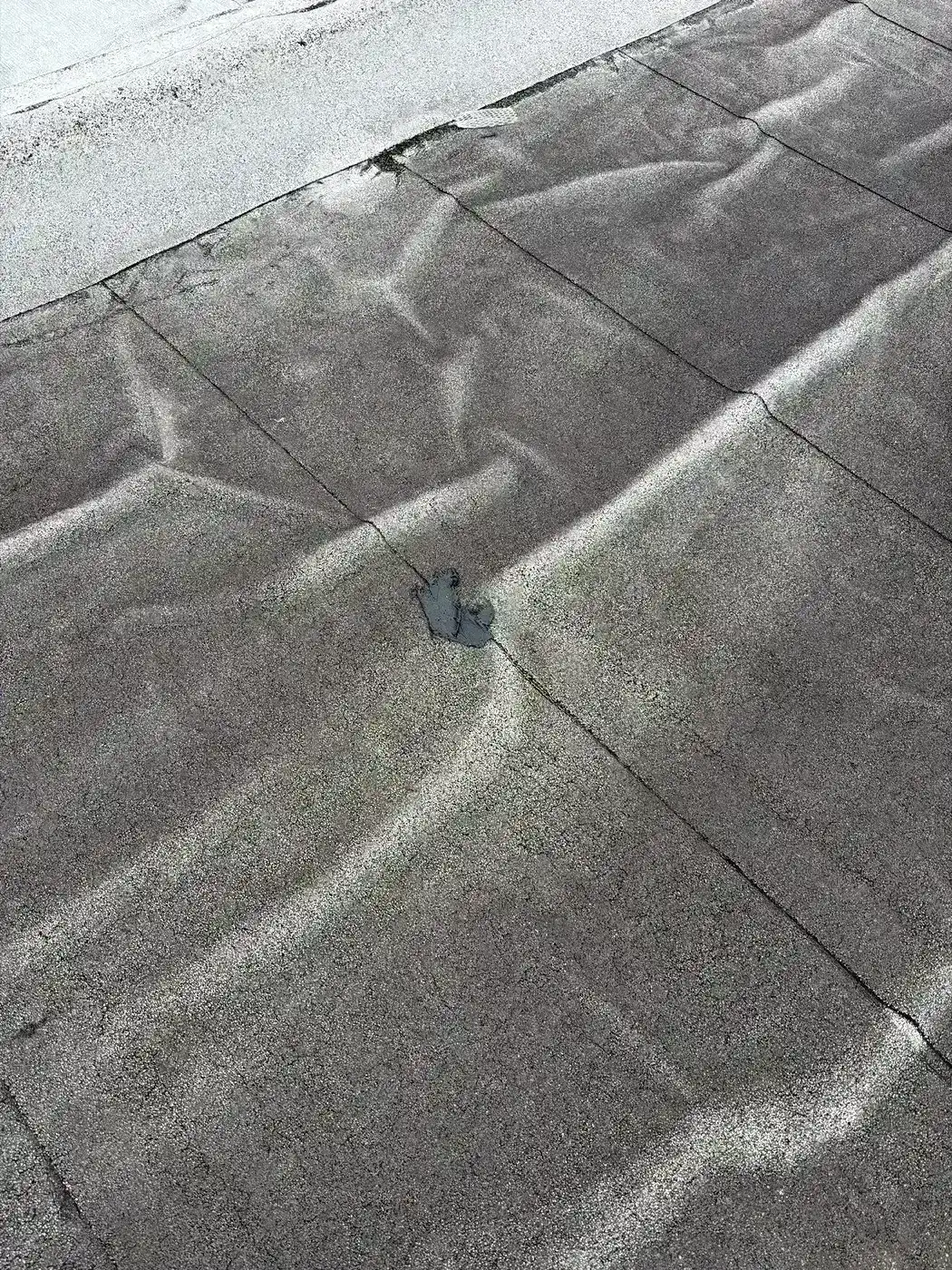
Most EPDM trouble shows up at seams, flashings and terminations, not in the middle of the sheet. We inspect those details and repair them using compatible primer and tape, or we replace the whole roof if the sheet has shrunk.
Common signs we check for:
- Open seams or lifted laps
- Shrinkage pulling at the edges
- Punctures from limbs or tools
- Flat garage or porch leaks
- Blisters over the sheet
- Failed perimeter termination
How the work gets done
Evaluate the Membrane
We check seams, shrinkage and any trapped moisture.
Clean and Prime
Proper prep comes first for any tape or patch work.
Seam and Flash
Seams and flashing are installed with compatible products.
Terminate Edges
Edge metal and terminations are secured for wind.
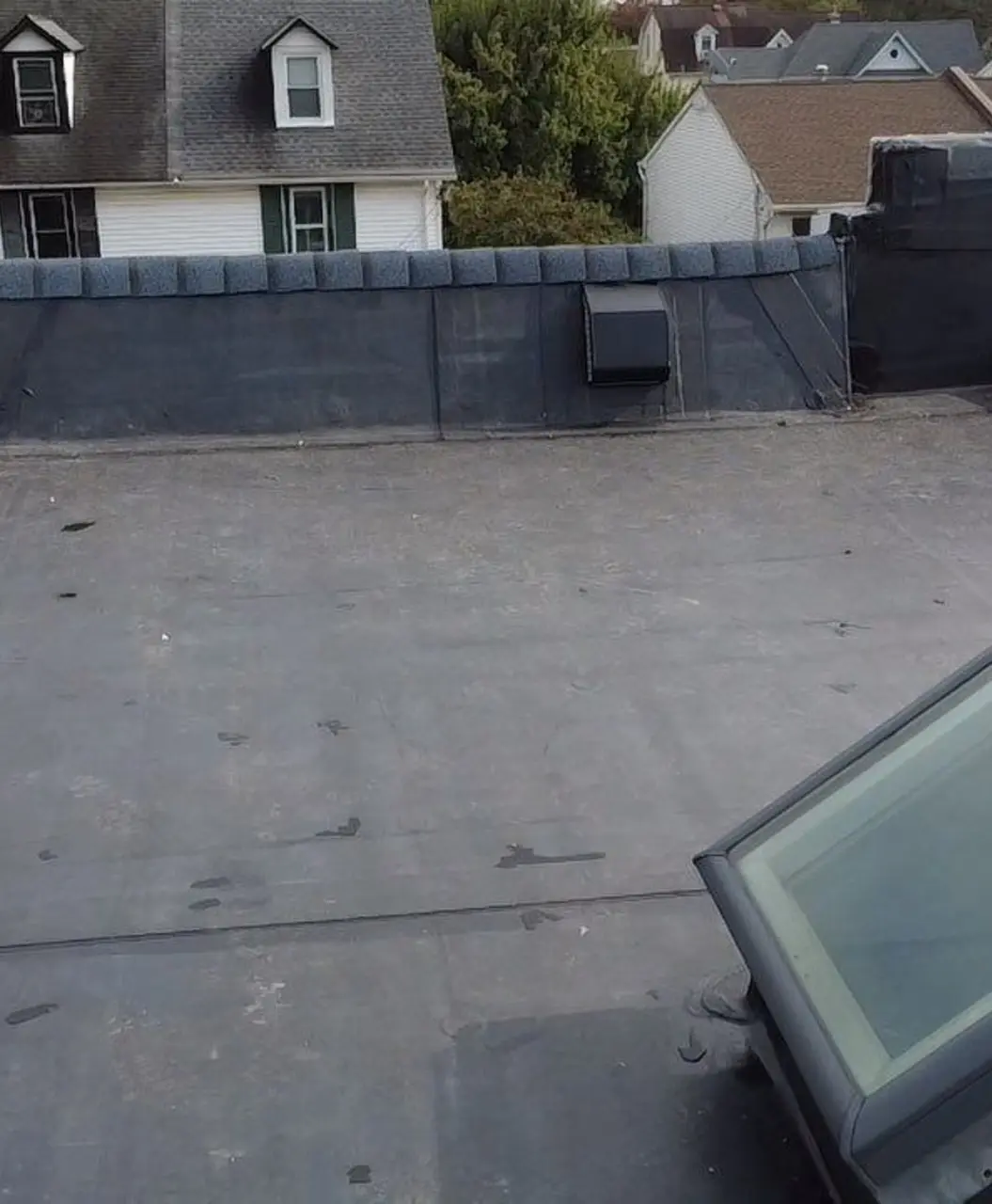
Typical Cost
EPDM often costs $5 to $11 per square foot installed. Repairs usually range from $300 to $1,500.
These are planning ranges for the Tulsa area, not a quote. Your written estimate is based on the actual roof.
Request an EstimateEPDM Rubber Roofing prices
Planning ranges for the Tulsa area, updated November 2026. They include typical labor and materials, but they are not a quote. Your written estimate is based on an inspection of the actual job. See every category on our price list.
What EPDM rubber roofing is
EPDM (ethylene propylene diene monomer) is a synthetic rubber membrane that has been used on flat roofs since the 1960s. It usually comes in large black sheets, which means fewer seams on a simple roof. It stays flexible in cold weather and resists sunlight and ozone well, and those are big reasons it has lasted so long in the market.
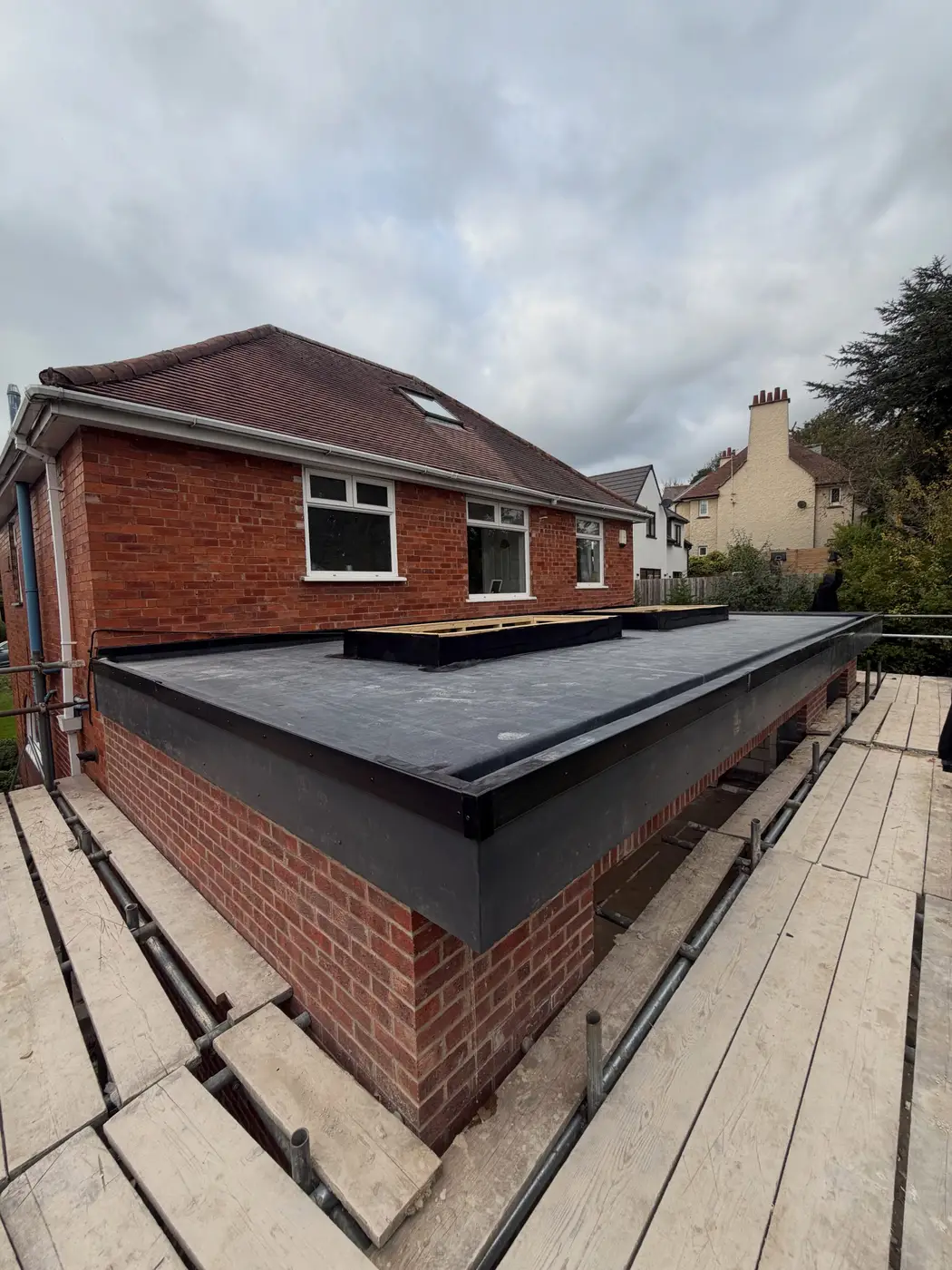
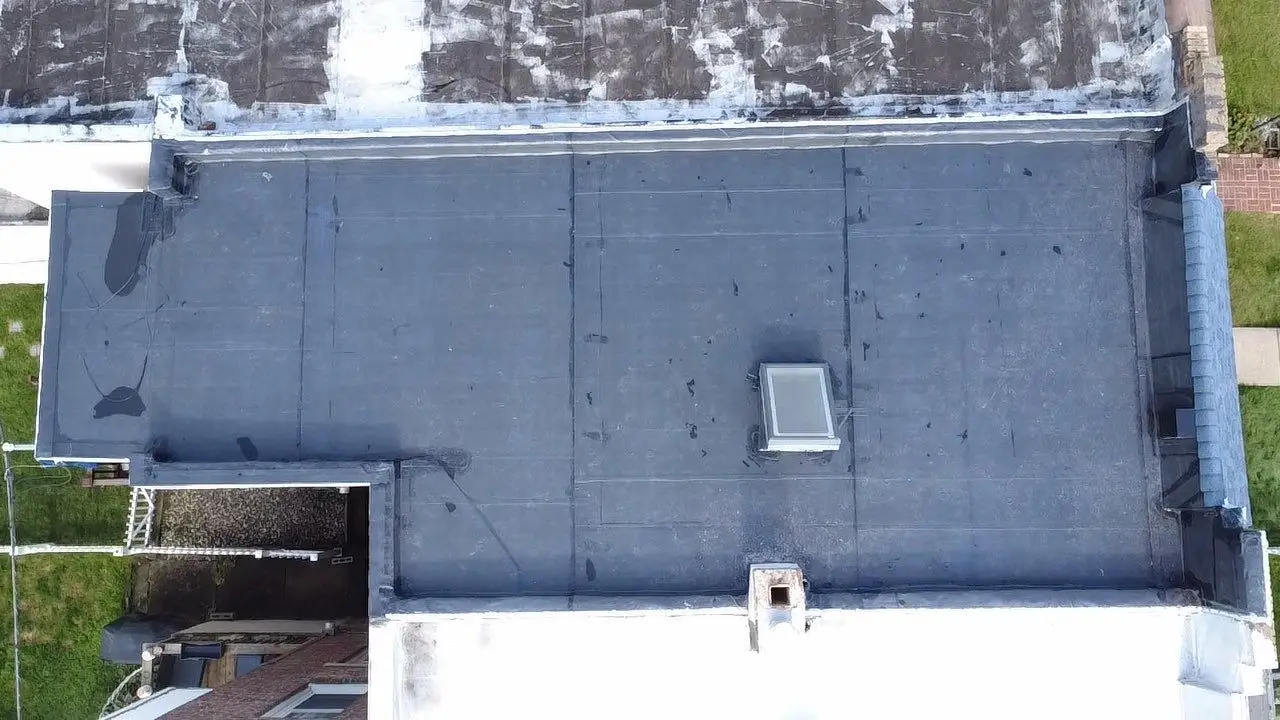
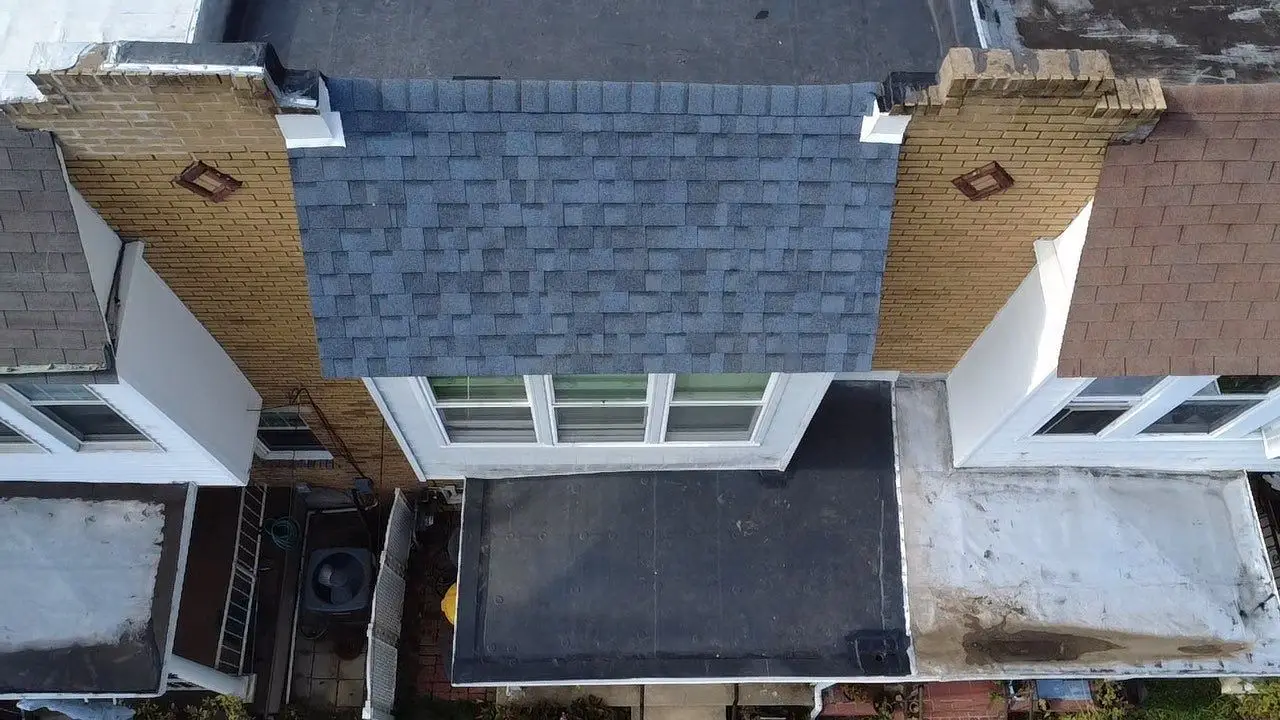
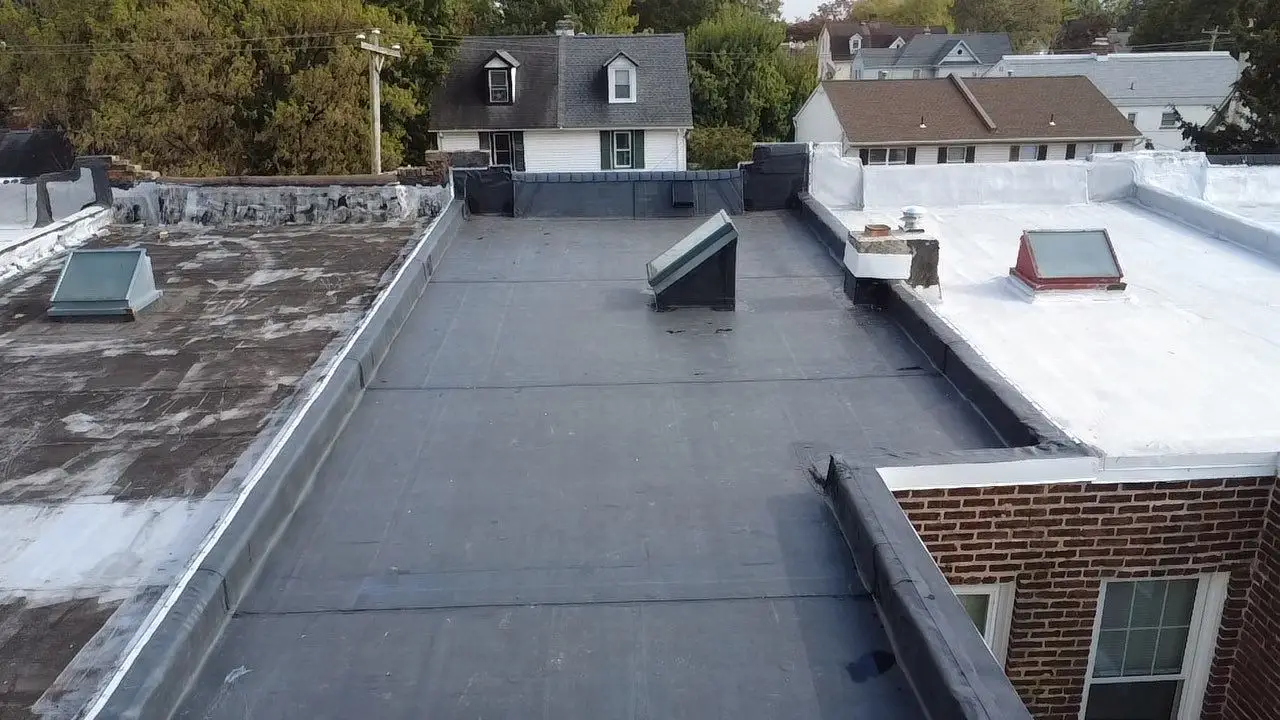
It is common on commercial buildings, as well as on garages, porches, extensions and residential flat sections. Our projects include several such jobs where the old flat roof was replaced with new decking and a single rubber sheet.
EPDM options explained
EPDM systems vary mainly in thickness, color and attachment.
- 45 mil: lighter and common on simple or budget-conscious roofs.
- 60 mil: a common commercial standard with better puncture and weather resistance.
- 90 mil: heavy-duty sheet for high-traffic roofs or longer service life.
- Black EPDM: the traditional option, which absorbs heat but holds up well in the sun.
- White-on-black EPDM: reflective top surface, at a higher cost.
- Fully adhered, mechanically attached or ballasted: installation methods that affect price, wind performance and repair access.
EPDM pros and cons
EPDM has a strong track record, with fairly simple materials and relatively low cost. It handles temperature changes well, and it can be repaired for years with proper primers and patches. On the downside, seams are taped rather than welded, so seam quality depends heavily on prep. Black membrane absorbs heat, and that can raise cooling costs on poorly insulated buildings, although good insulation reduces the effect. Dark rubber also shows ponding marks and can be punctured by sharp debris. A reflective membrane, such as TPO or PVC, may be a better fit if cooling is your main concern. Compare them in our flat roof options guide.
Good installation details
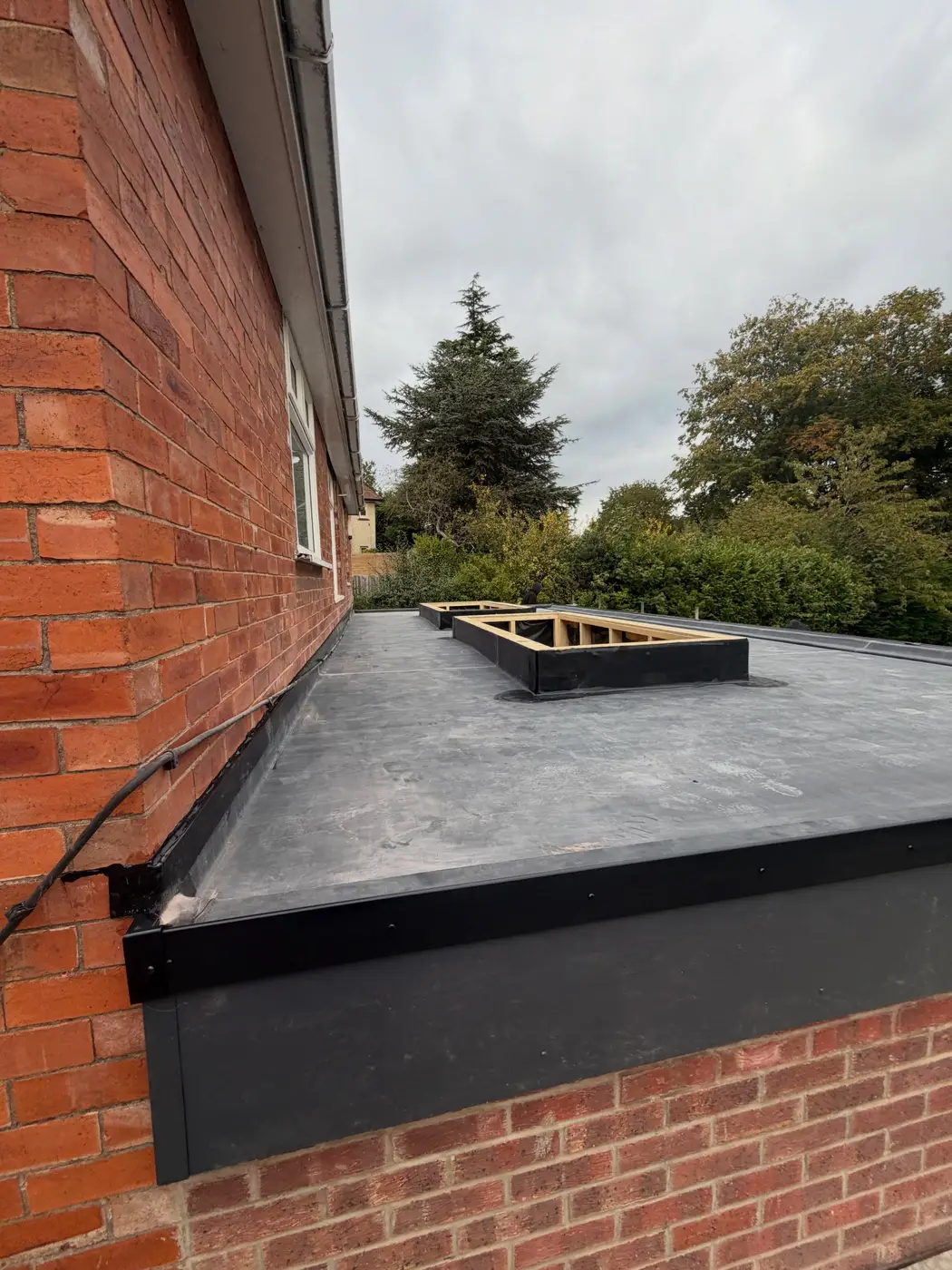
A rubber roof is simple in concept but depends on careful detail work. Before laying the sheet, we check the deck, fix soft spots and add tapered insulation where water sits. The membrane needs time to relax before it is bonded. Seams must be cleaned, primed and rolled with the right tape. Wall upstands, edge metal and drip details need secure terminations, and penetrations get pre-formed flashing where possible. On garage and extension roofs, the tie-in to the house wall or tile slope is where trouble usually starts, so we flash and counter-flash it carefully.
Repairing and maintaining EPDM
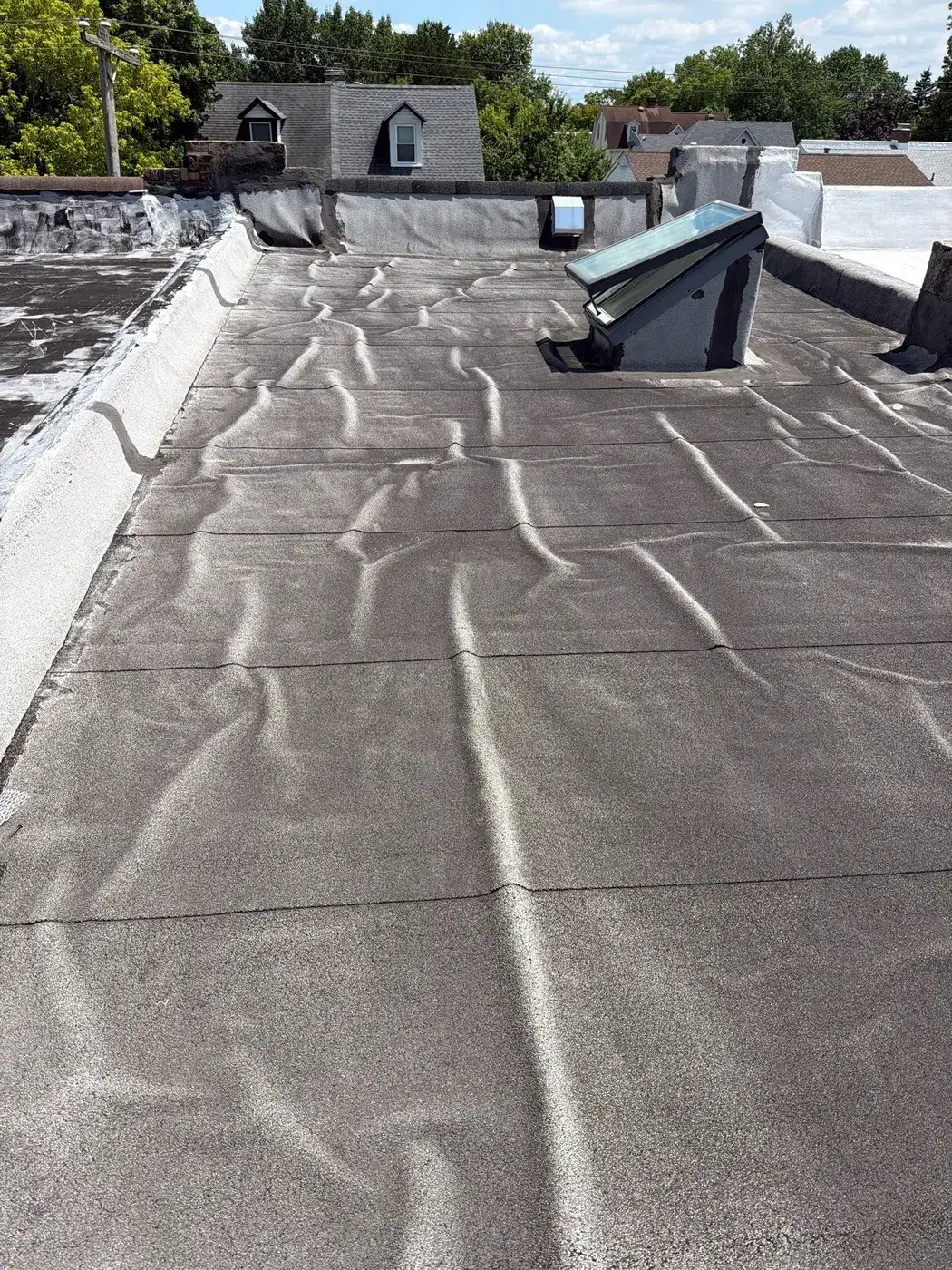
Common failures include open seams, shrinkage pulling at edges, punctures and flashing that has come loose. Repairs involve cleaning the old rubber thoroughly, priming and applying cured patches or uncured flashing. Avoid petroleum products and asphalt sealants, since they can damage EPDM. Simple care makes a big difference: keep debris off, check drains, look at seams after storms and stop any trades from walking on it with heavy tools. Older roofs may be good candidates for a roof coating. For leak diagnosis, see flat roof repair.
Related services
EPDM suits both garages and larger buildings. Business owners can read about commercial roof systems, homeowners about residential roofing, and anyone with an existing leak about flat roof repair in Tulsa. An aged sheet may also be a candidate for a roof coating.
Recent epdm rubber roofing projects
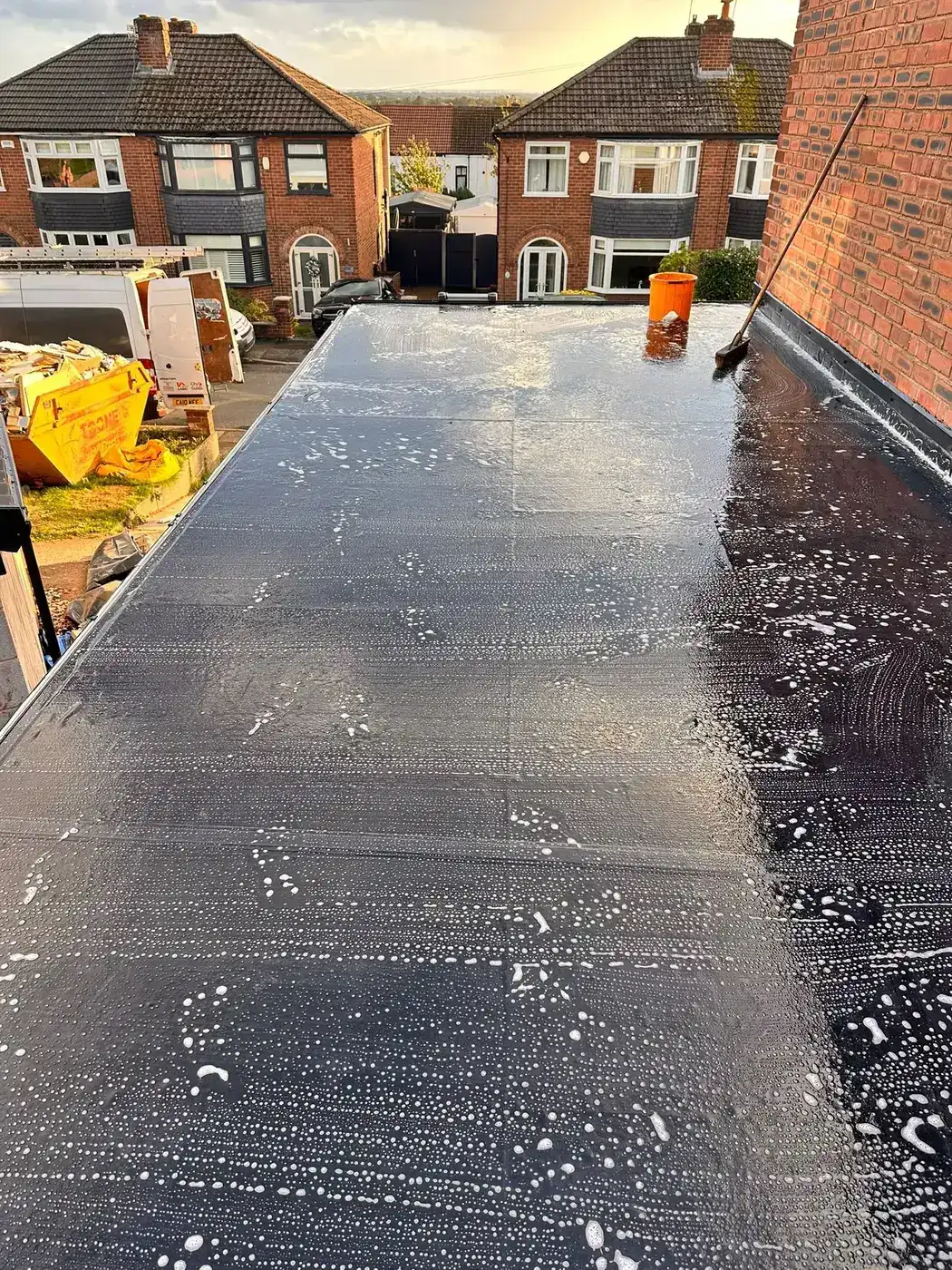
Garage Flat Roof Rebuilt with Rubber Membrane
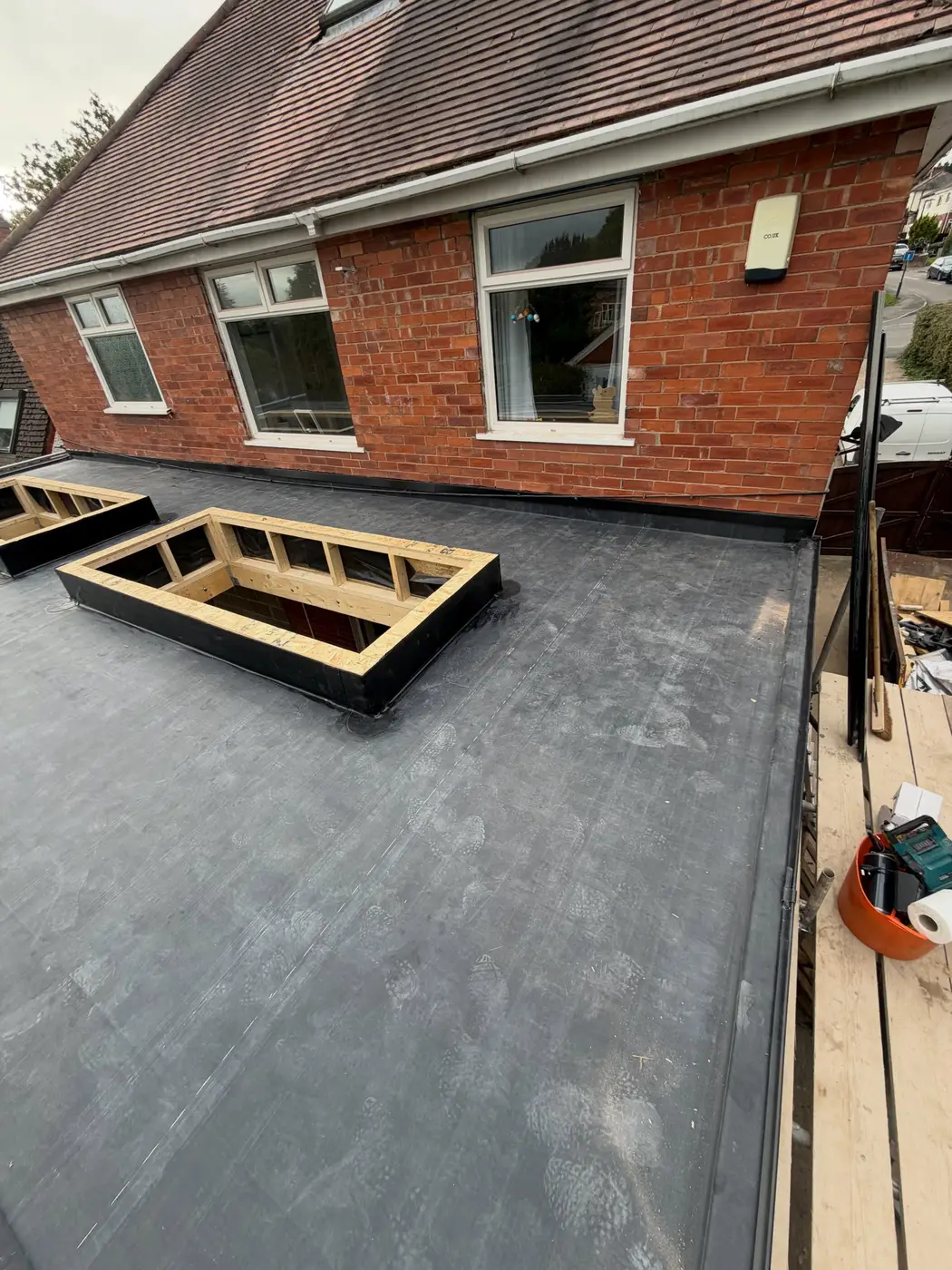
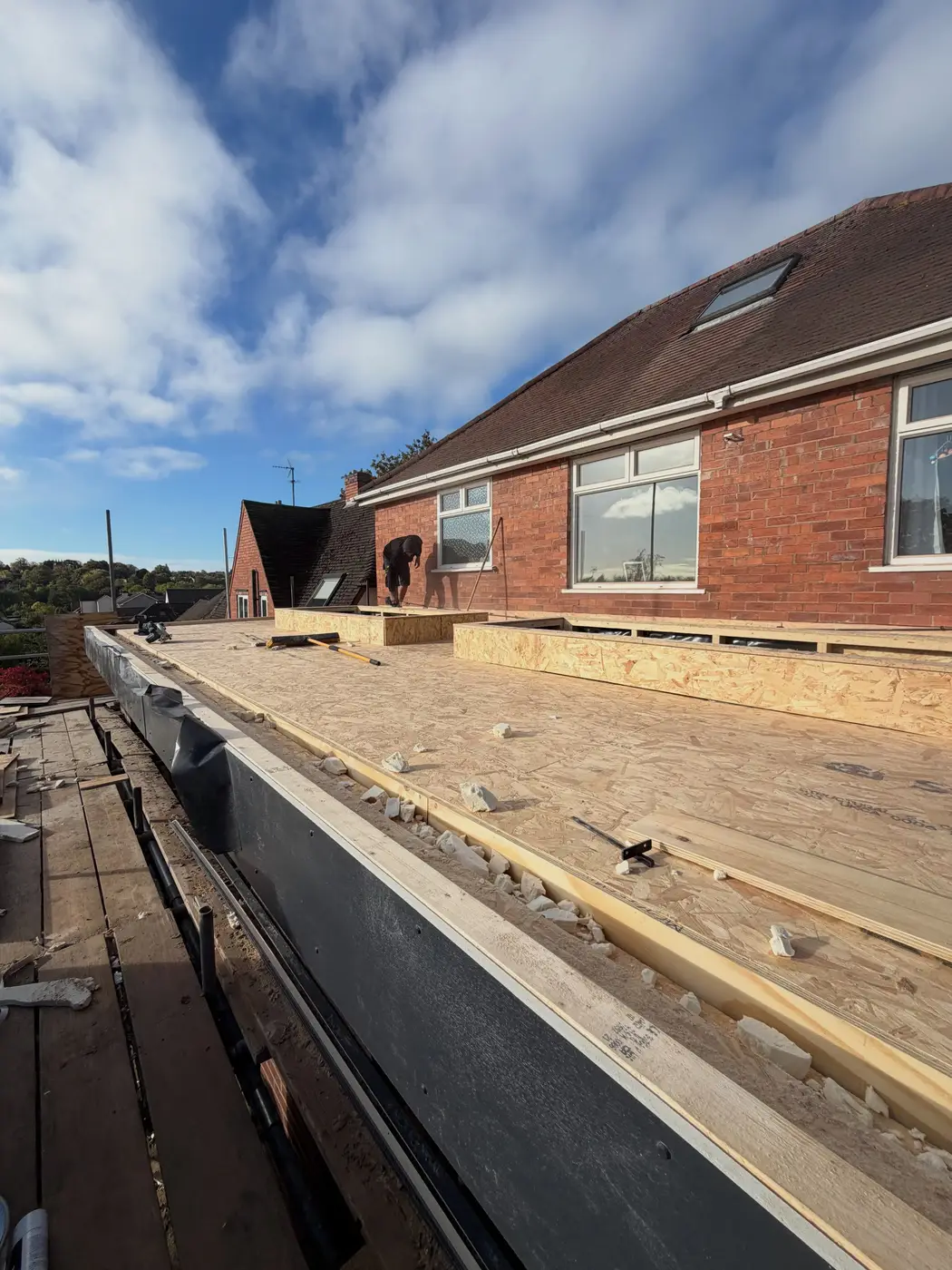
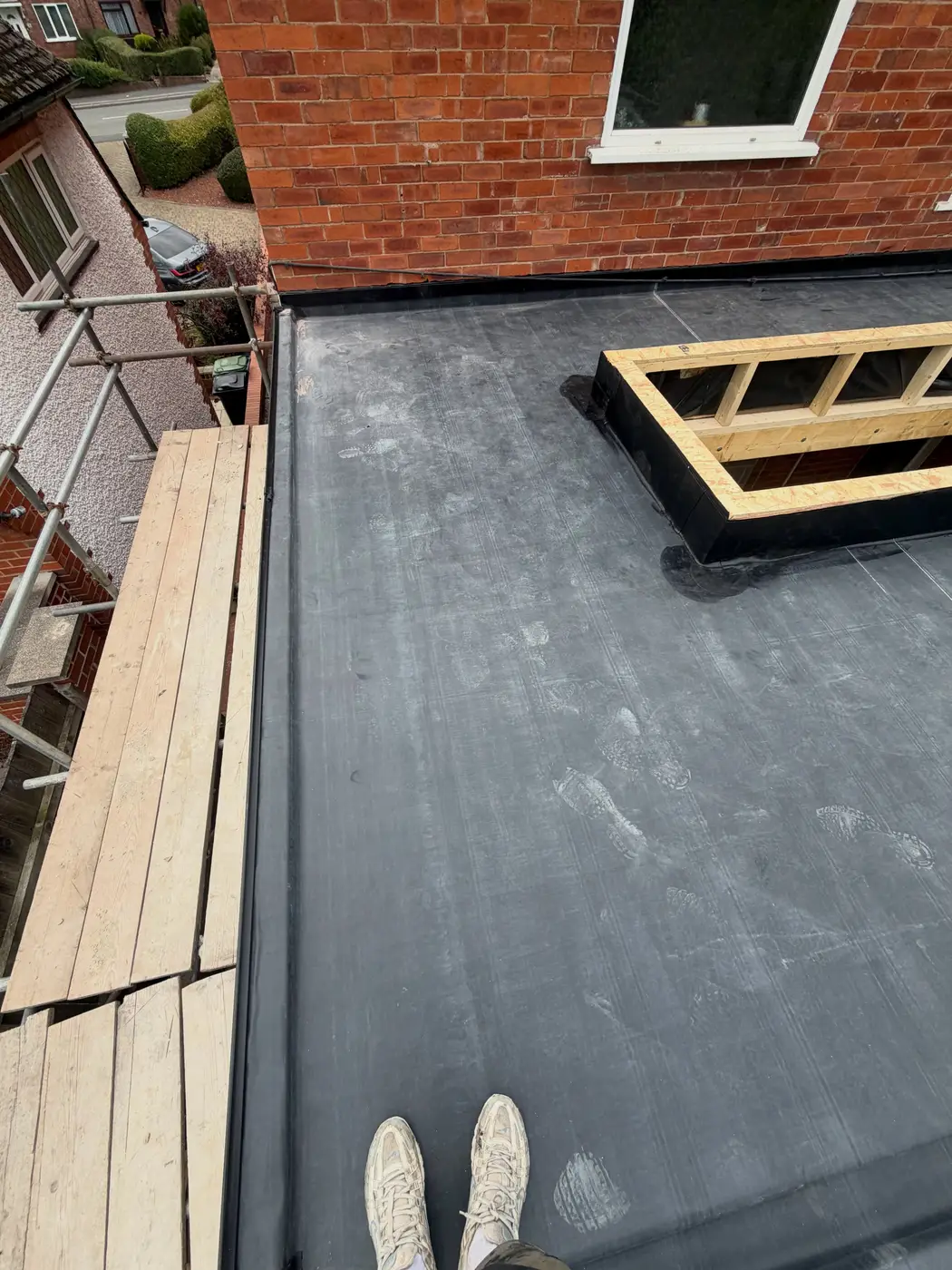
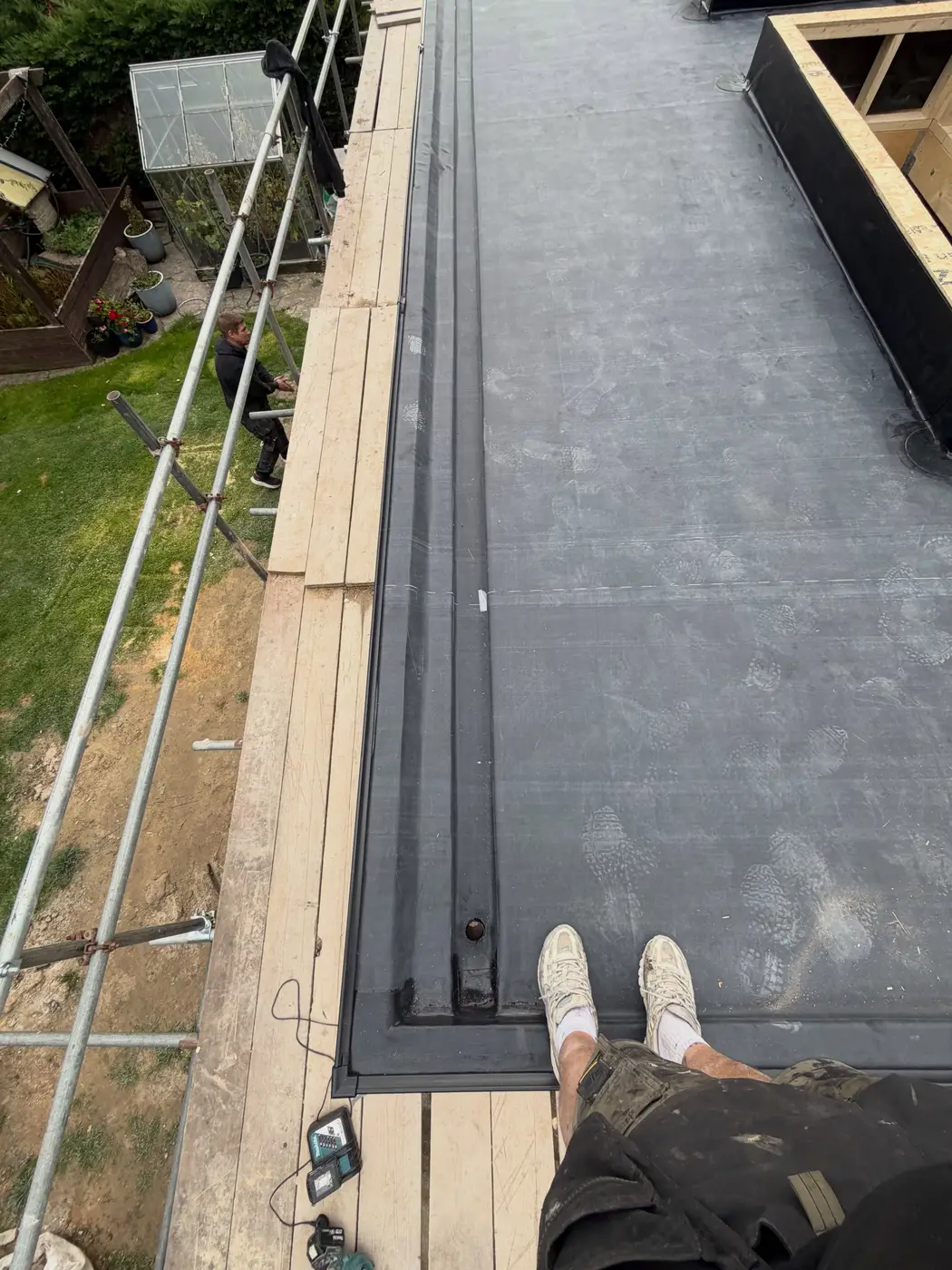
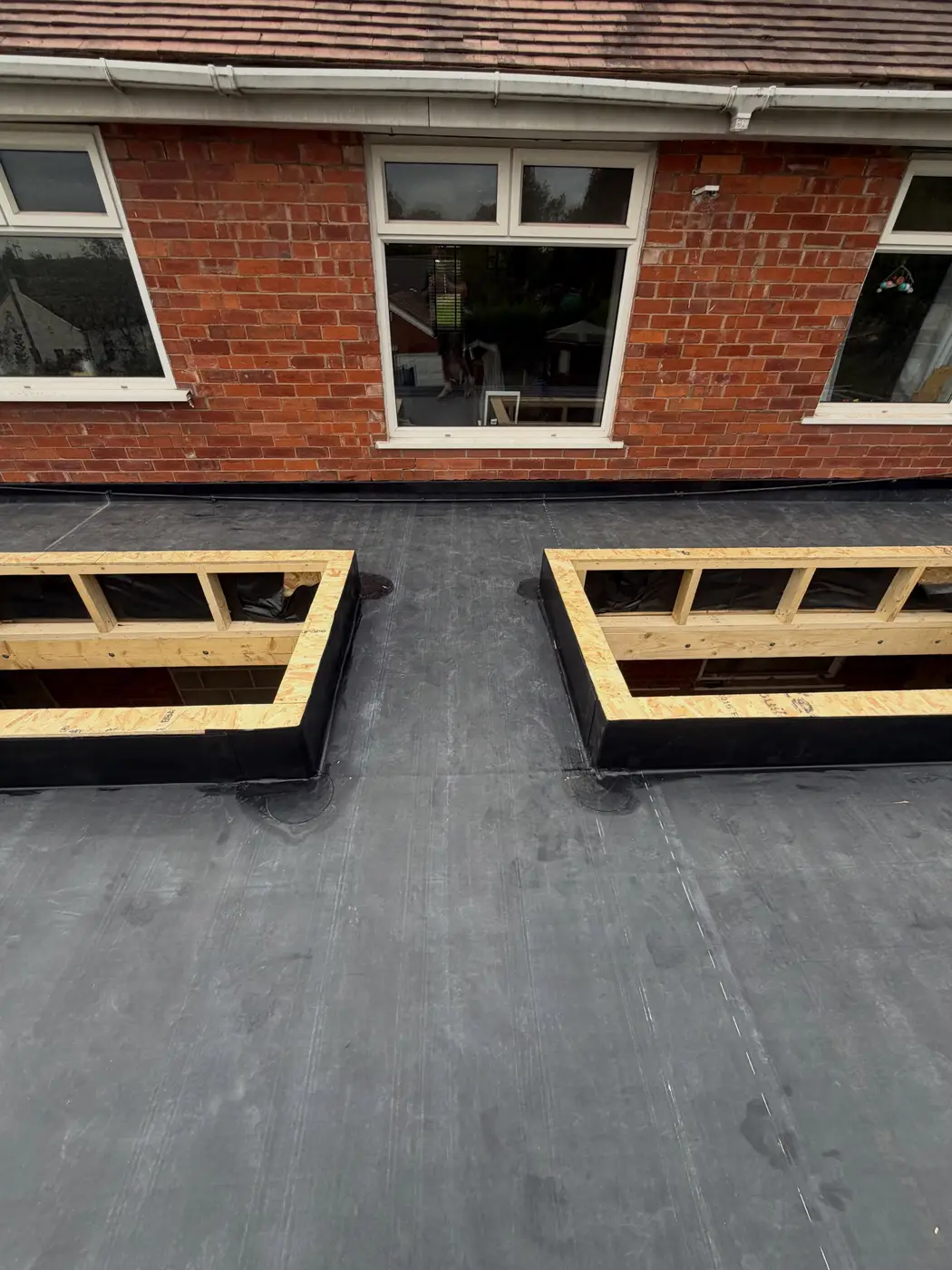
Rear Extension Roof with EPDM and Skylight Curbs
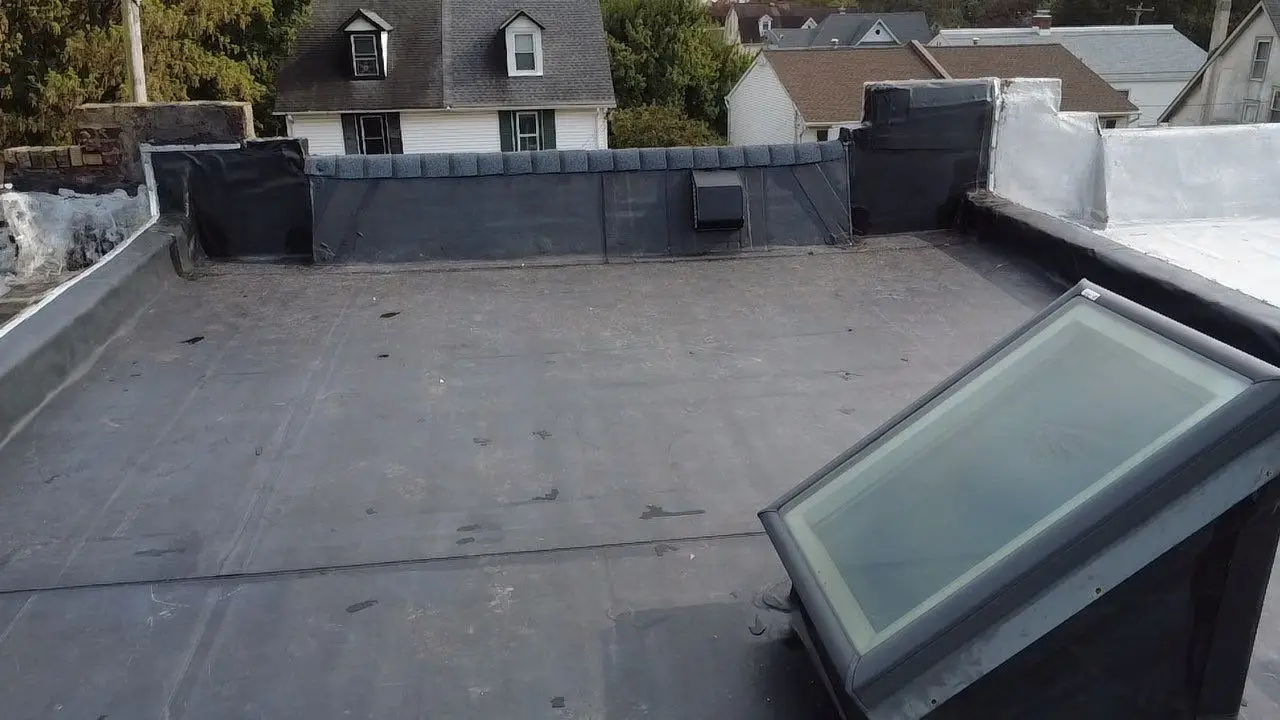
Worn Flat Roof Replaced with Rubber Membrane
See all of our roofing projects
Frequently asked questions
Is EPDM good on a residential roof?
How much does EPDM cost in Tulsa?
EPDM often costs $5 to $11 per square foot installed. Repairs usually range from $300 to $1,500. Small garage or addition roofs commonly run $1,500 to $5,000.
How long does an EPDM roof last?
Commonly about 20 to 30 years with good installation and maintenance. Thicker membranes and well-kept seams tend to reach the upper end of that range.
Is EPDM good for a garage roof?
Yes. It is a common choice for small flat roofs because large sheets reduce seams. Decking condition and wall flashing matter most for a long-lasting result.
Can EPDM be painted or coated?
Yes, with products designed for rubber. Regular paint will not bond well or last. A reflective coating can reduce heat and extend life if the membrane is still sound.