

Usually, since it avoids most tear-off and disposal and limits disruption inside.

Asphalt Shingle Roofing
Metal Roofing
Standing Seam Metal Roof
Metal Roof Retrofit
Clay Tile Roofing
Concrete Tile Roofing
Slate Roof Repair
Wood Shake Roofing
All Services
An old metal building roof often doesn't need to be torn off. Retrofits add a new weather surface over the existing panels, avoiding demolition and keeping the building in use while the work is done.
Depending on the condition, a retrofit can mean replacing failed fasteners and seams and adding a coating, installing a single-ply membrane over insulation, or framing a new metal panel system over the old roof.
Common signs we check for:
- Rust around fasteners
- Leaks at laps and end seams
- Backed-out screws
- Chalked and faded panels
- Hot or uninsulated building
- Skylight panels gone brittle
How the work gets done
Structural Review
We look at panels, purlins and rust before recommending a system.
Choose the Approach
Coating, membrane and new panel options are compared.
Prepare the Roof
Fasteners, seams and rusted areas are treated as needed.
Install the System
The new surface is installed along with revised flashings.
Typical Cost
Fastener and coating work commonly costs $3 to $7 per square foot. Retrofit panels or membranes often run $7 to $14.
These are planning ranges for the Tulsa area, not a quote. Your written estimate is based on the actual roof.
Request an EstimateMetal Roof Retrofit prices
Planning ranges for the Tulsa area, updated November 2026. They include typical labor and materials, but they are not a quote. Your written estimate is based on an inspection of the actual job. See every category on our price list.
What a metal roof retrofit is
A retrofit improves an existing metal roof without removing it. That spares you a tear-off, the debris and much of the disruption inside the building. It makes the most sense for shops, warehouses, churches and agricultural buildings, where old panels are structurally sound but leaks, rust or poor insulation are becoming a problem.
There are several levels of retrofit, from a focused repair to a whole new roof surface:
- Fastener and seam restoration: replacing worn screws, sealing laps and reinforcing penetrations.
- Coating systems: fluid-applied coatings that seal the roof and add a reflective surface. See roof coating.
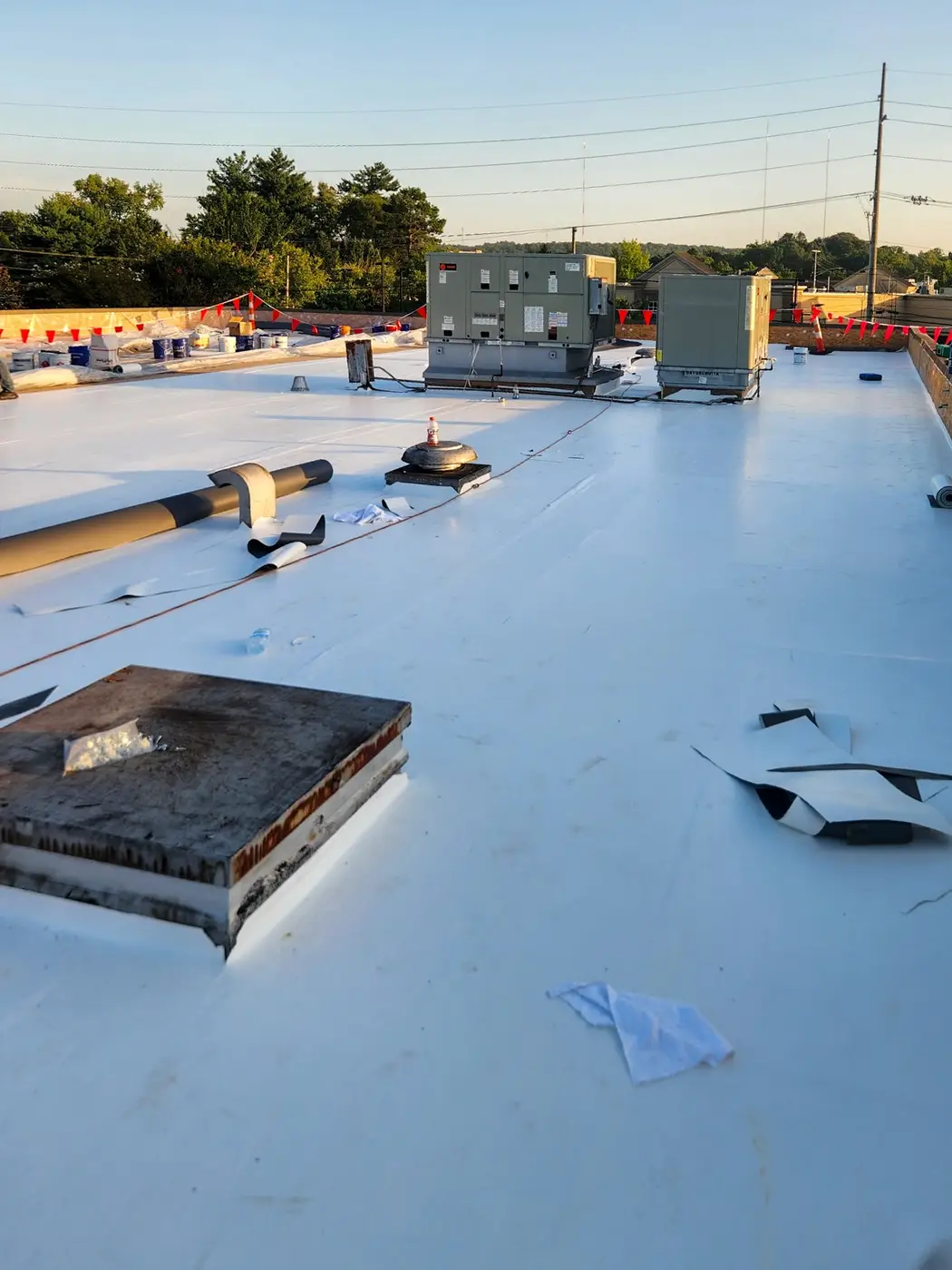
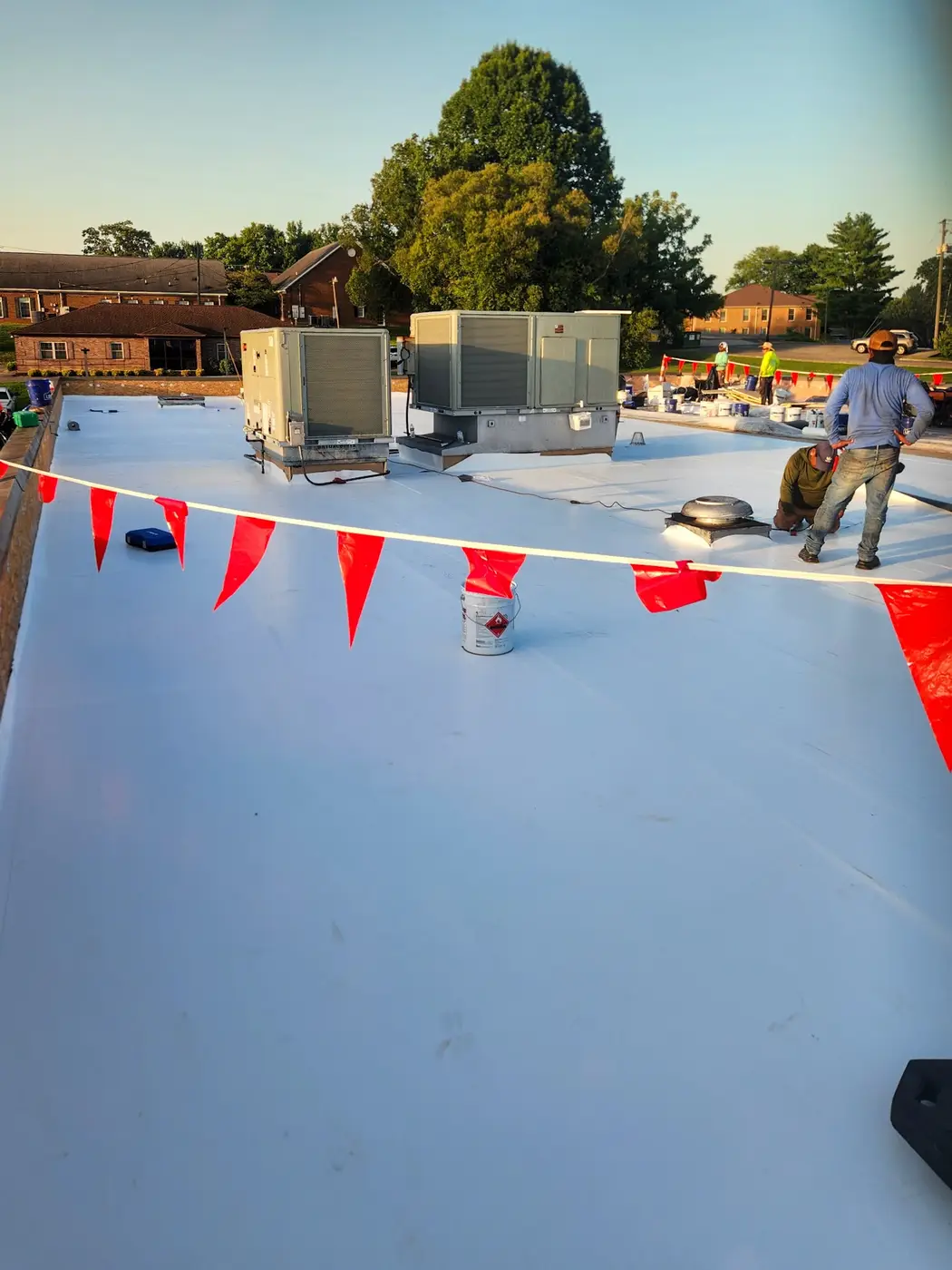
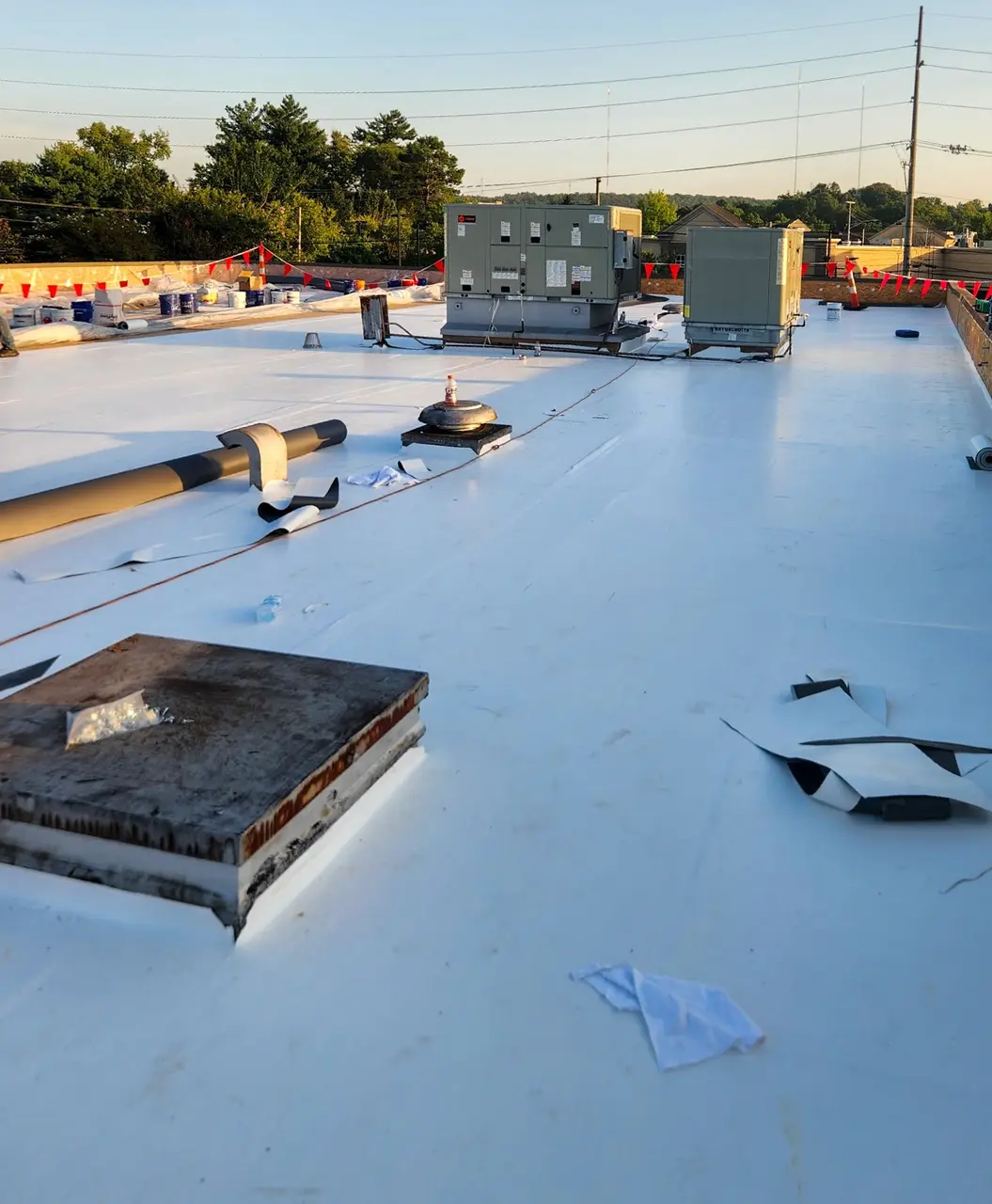
- Membrane retrofit: flute fill or insulation boards covered by a TPO or PVC membrane.
- Panel-over retrofit: new metal panels over the old roof, often using sub-framing, with room for added insulation.
Is your roof a candidate?
A retrofit needs a sound base. We check the following before recommending one:
- Structure: purlins and framing must carry any added load, which may require engineering.
- Rust: surface rust can be treated, but perforated panels and rusted-through areas need replacing.
- Moisture: wet insulation under the panels must be addressed rather than sealed in.
- Slope and drainage: low slopes affect which systems are allowed and how they perform.
- Code and fire rating: added insulation or membranes may trigger energy code or rating requirements.
If the deck is failing or panels are beyond saving, we will recommend a full replacement, either with new metal roofing or a different system. It rarely pays to put a new system over a bad structure.
Leak sources on older metal roofs
Most leaks on older metal roofs do not come through the panels. They start at details that age faster than the steel itself. Rubber washers harden and crack in the sun, and screws back out as panels expand and contract day after day. Horizontal laps collect water and rust from the inside. Ridge caps, skylights, HVAC curbs and pipe flashings are other usual suspects. Many of these can be repaired on their own with oversize fasteners, butyl tape and new flashings, which is sometimes all a roof needs for several more years.
Energy and insulation benefits
Uninsulated metal buildings get very hot in Oklahoma summers and are hard to heat in winter. A panel-over or membrane retrofit is one of the few times you can add continuous insulation above the old roof without disturbing the operations below. Reflective coatings and light-colored membranes reduce heat gain as well. How much you will save depends on the use of the building, the existing insulation and your HVAC system, so treat any percentage claim with caution and ask for assumptions. We can price with and without added insulation so you can compare.
How a retrofit project runs
Because the old roof stays in place, the building can usually keep operating. We start with a roof survey, a pull test or fastener check when needed, and a plan for drains, gutters and rooftop units. Prep work comes next, including cleaning, rust treatment and replacing damaged sections. Next comes the new system, followed by trim, flashing and final inspection. Work may be scheduled in phases on large roofs, which can help with budgets and keep areas of the building in use. See commercial roofing for how we coordinate with occupied buildings.
Related services
A retrofit is one option alongside new metal roofing in Tulsa and restoration coatings. For shops, warehouses and churches, it fits into a broader plan for the building, which our commercial roofing team can help you price.
Recent metal roof retrofit projects
Membrane Over an Existing Low-Slope Roof
See all of our roofing projects
Frequently asked questions
Is a retrofit cheaper than replacing the roof?
Can insulation be added?
Yes. Membrane and framed retrofits can add insulation above the old panels.
What if panels are badly rusted?
Rusted sections may need replacing first. Heavy structural corrosion can rule out a retrofit.
How much does a metal roof retrofit cost?
Fastener and coating work commonly costs $3 to $7 per square foot. Retrofit panels or membranes often run $7 to $14, with insulation and framing adding to the price.
Will a retrofit stop rust?
It can stop surface rust from spreading when the metal is cleaned and treated. Rust-through panels need to be replaced first, as coatings do not make up for missing metal.
How long does a retrofit last?
It depends on the system. Coatings commonly last about 10 to 20 years with maintenance, while new membranes or panels can last considerably longer.
Can I stay open during the retrofit?
Usually, yes. Since the old roof stays in place, most work happens above the building with little interruption, but we coordinate noise, odors and access.