

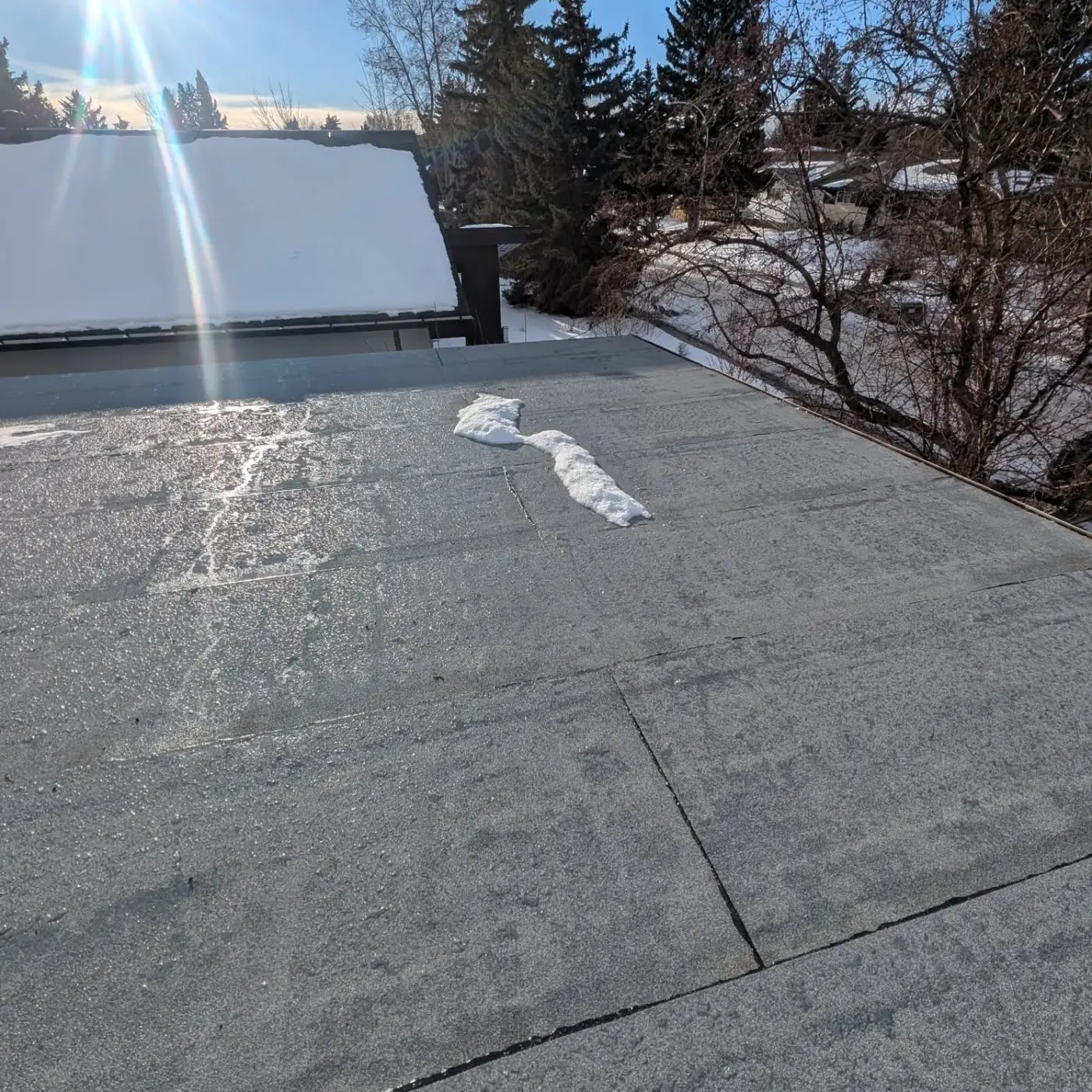
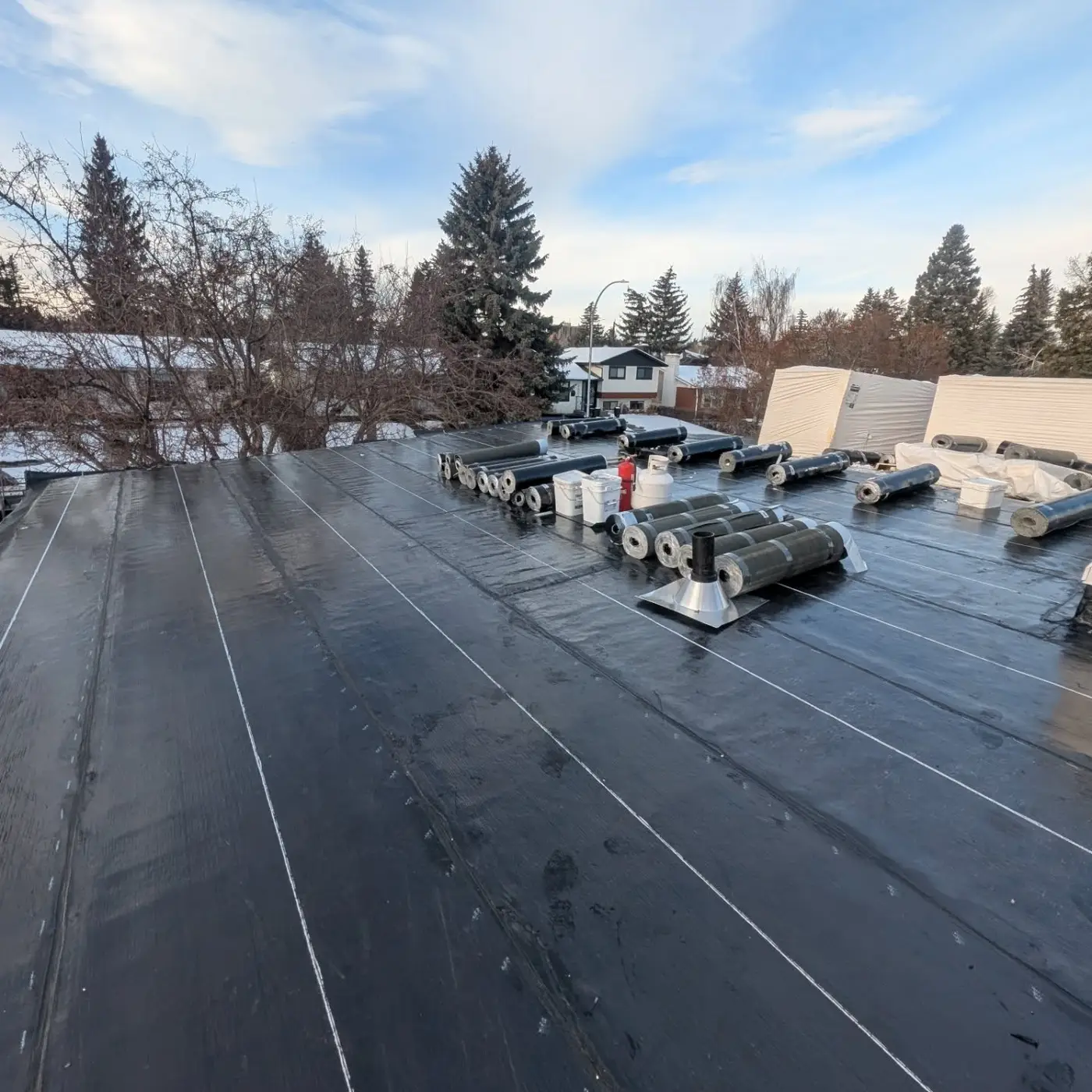
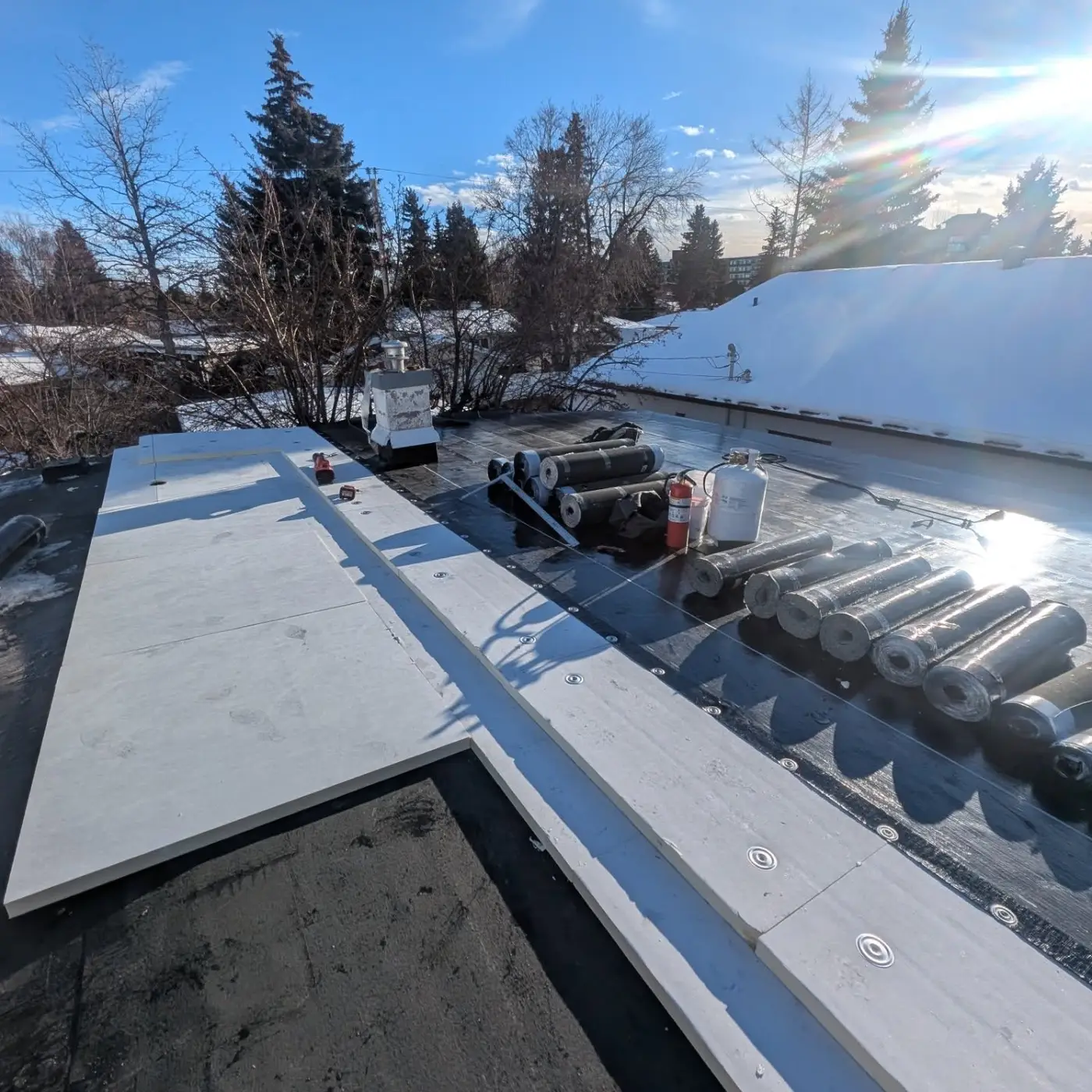
It needs strict fire-watch procedures. Self-adhered and cold-applied systems avoid open flame and suit many occupied buildings.
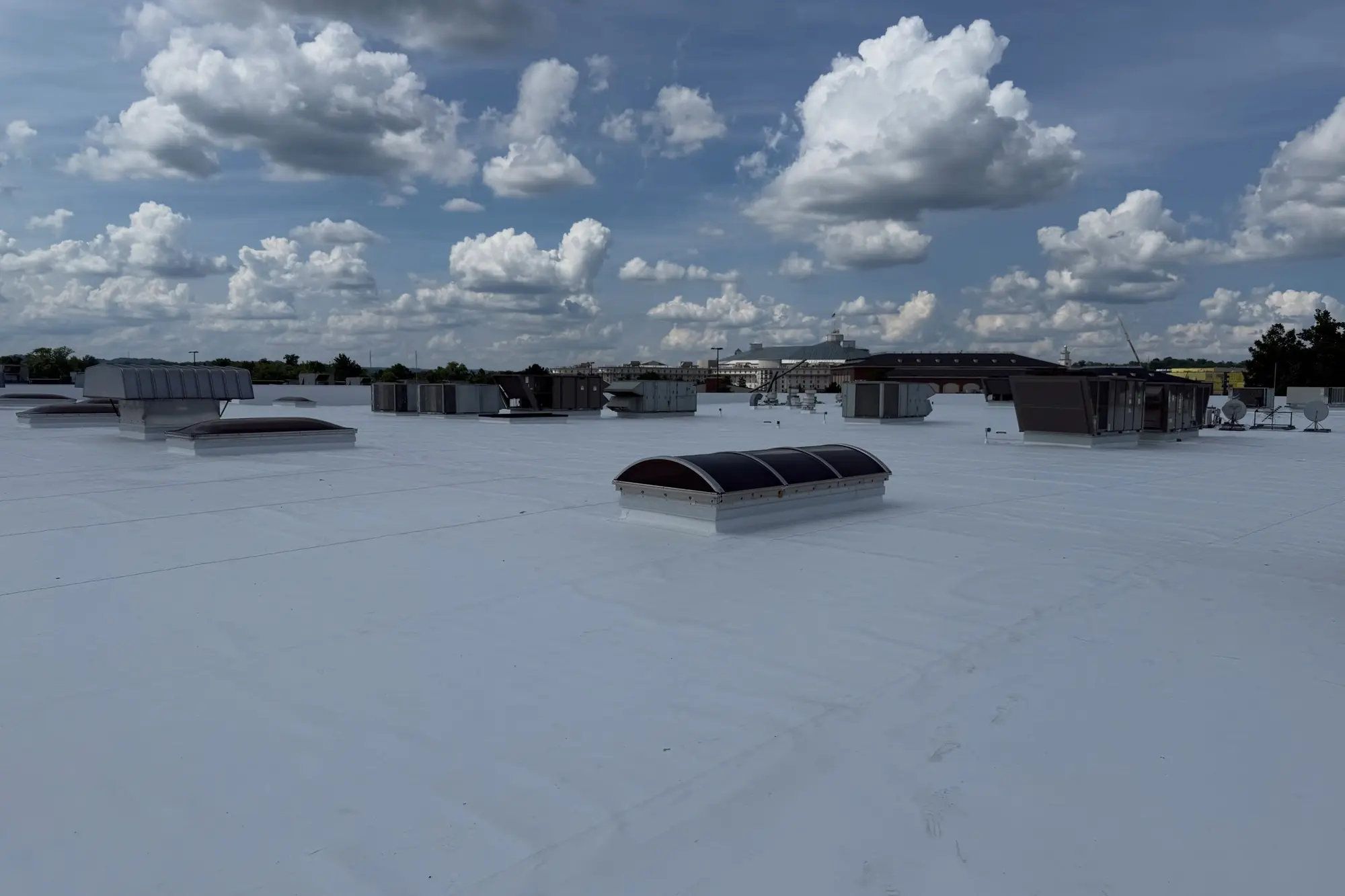

Modified bitumen is an asphalt-based, multi-layer system that remains a dependable choice for low-slope buildings. Its toughness and redundancy make it a good fit for roofs with some foot traffic.
On older buildings and occupied spaces, we often favor cold-applied or self-adhered systems because they reduce fire risk compared with torch application. Granulated cap sheets add ultraviolet protection and a surface that holds up well.
Common signs we check for:
- Cracked or alligatored cap sheet
- Open laps and seams
- Blisters over the surface
- Failing base flashing
- Granule loss on the cap sheet
- Multi-ply system nearing end of life
How the work gets done
Core Sample Review
Layers and moisture are checked where needed.
Select a System
Self-adhered, cold-applied and other options are compared.
Install the Plies
Base and cap layers go down with proper overlaps.
Flash Details
Walls, curbs, drains and edge metal are carefully detailed.
Typical Cost
Modified bitumen commonly runs $6 to $12 per square foot installed. Repairs often cost $400 to $2,000.
These are planning ranges for the Tulsa area, not a quote. Your written estimate is based on the actual roof.
Request an EstimateModified Bitumen Roofing prices
Planning ranges for the Tulsa area, updated November 2026. They include typical labor and materials, but they are not a quote. Your written estimate is based on an inspection of the actual job. See every category on our price list.
What modified bitumen is
Modified bitumen is asphalt with added polymers that improve flexibility and durability, formed into rolls reinforced with fiberglass or polyester. It descends from traditional built-up roofs and offers similar multi-layer protection, but with less labor. A typical system has a base sheet and a granulated cap sheet, so there are two layers of waterproofing between the rain and the deck.
It suits buildings where people walk on the roof, along with many apartment buildings and older commercial roofs. It is also a common choice for homes with low-slope sections.
Installation methods
The way modified bitumen goes down affects the price, safety and which buildings it suits.
- Torch-applied: the sheet is heated and rolled into place. It produces a strong bond, but open flame requires fire-watch procedures.
- Cold-applied: a solvent-based adhesive bonds the sheets without a flame, which suits occupied buildings. Odor needs some planning.
- Self-adhered: peel-and-stick sheets need no flame or hot asphalt, which is useful on smaller or sensitive jobs.
- Hot-mopped: hot asphalt bonds the layers in a traditional way, used less often because of fumes and equipment.
SBS-modified sheets are flexible in cold weather, while APP-modified sheets hold up well to heat and are generally torch-applied. We recommend the combination that suits the building, its occupants and the climate.
Strengths and weaknesses
The biggest strength is redundancy: two plies mean a small puncture does not automatically turn into a leak. It handles foot traffic well, and the mineral surface protects against sun. It also stands up reasonably well to hail, particularly over a good cover board. Repairs are straightforward. On the downside, dark cap sheets absorb heat unless they are reflective or coated. Seams and details can fail with age or poor workmanship, and ponding water wears the surface faster. Compared with single-ply systems, it usually has more labor and more weight. See TPO and EPDM for those alternatives, or read our guide to flat roof systems.
Common failures
Modified bitumen ages in predictable ways. Knowing the signs makes it easier to act early:
- Blisters from trapped moisture or air between layers.
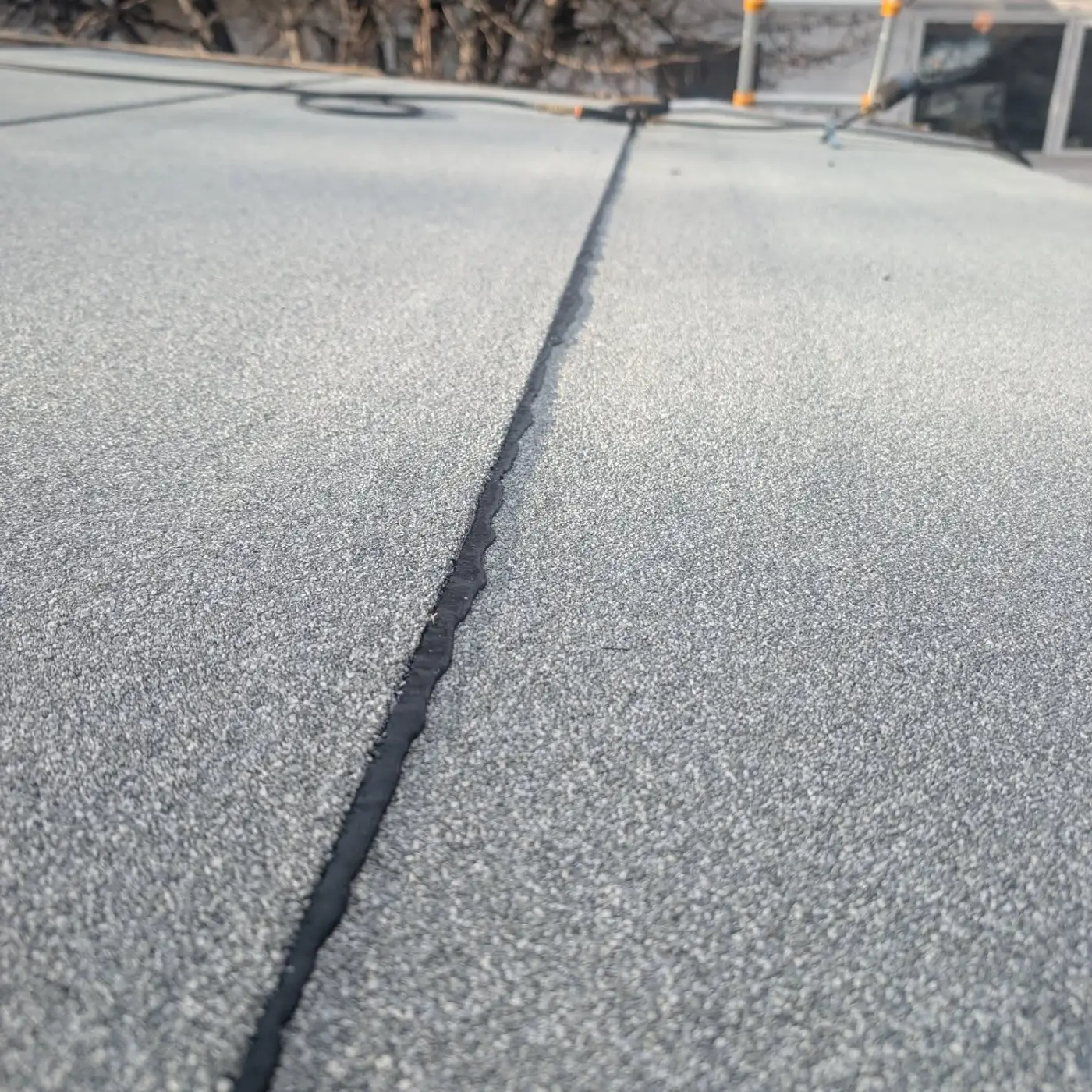
- Open laps, where the seam has lifted at the edge of a sheet.
- Alligatoring and granule loss, which leave the asphalt exposed to the sun.
- Failed flashing at parapets, curbs and roof-to-wall joints.
- Standing water that wears out the surface in low spots.
- Ridges caused by movement in the deck or insulation.
Small blisters that are not leaking can often be left alone and monitored. Cutting them open unnecessarily can do more harm than good, so a moisture check should come first. See flat roof repair for how we diagnose these problems.
Extending the life of your roof
An aged modified bitumen roof can often be restored with a compatible roof coating if the insulation is dry and the surface is sound. Aluminum or white coatings reduce heat and protect exposed asphalt from sunlight. Good housekeeping also helps, including clear drains, removal of debris and repair of minor seams before they spread. A recover with a new cap sheet or a membrane may be possible if code allows. Our commercial roofing page explains how we help owners choose between repair, restoration and replacement.
Related services
Modified bitumen is one of the main systems in our commercial roofing work, and it also suits low-slope parts of homes. Existing roofs can often be extended with flat roof repairs or a compatible roof coating.
Recent modified bitumen roofing projects
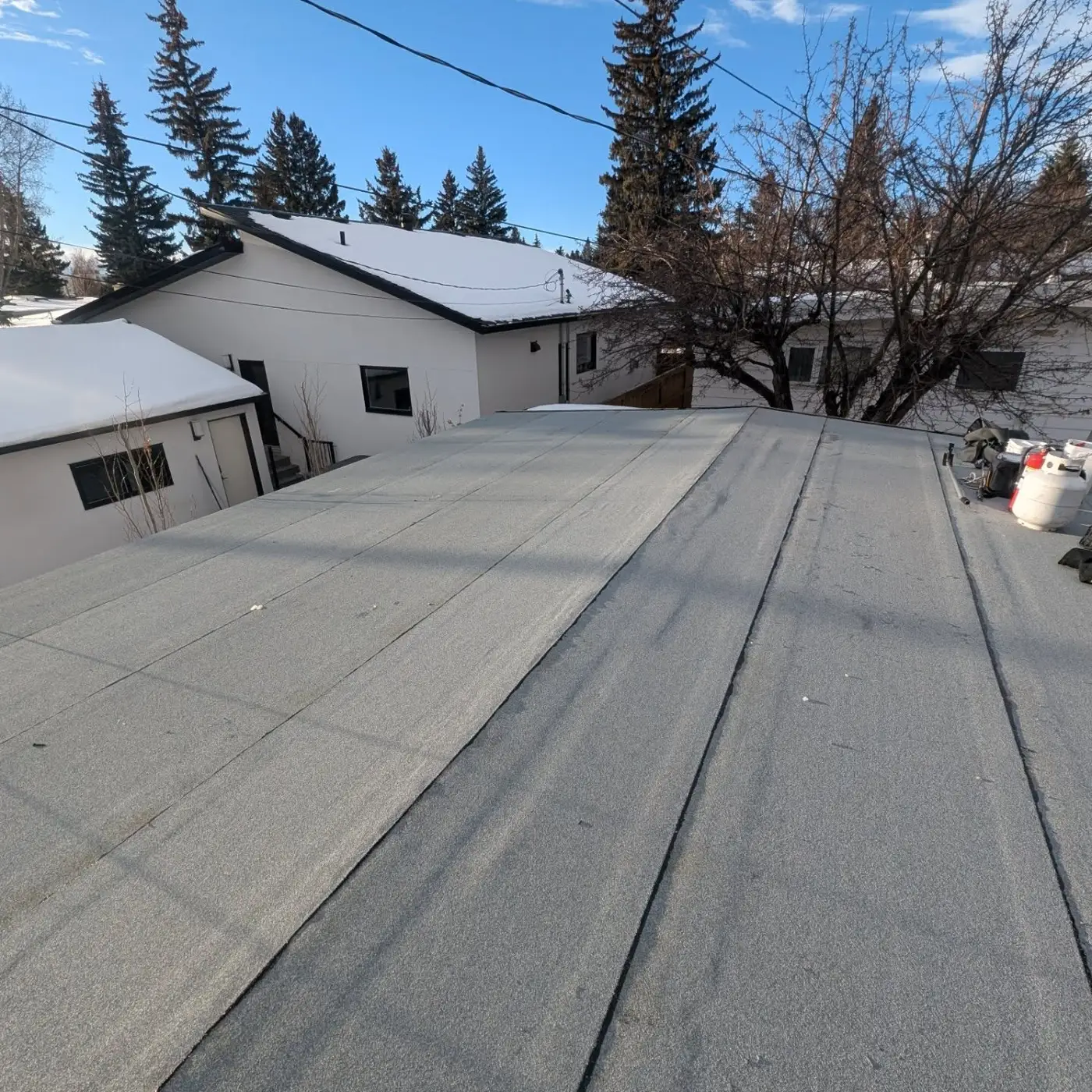
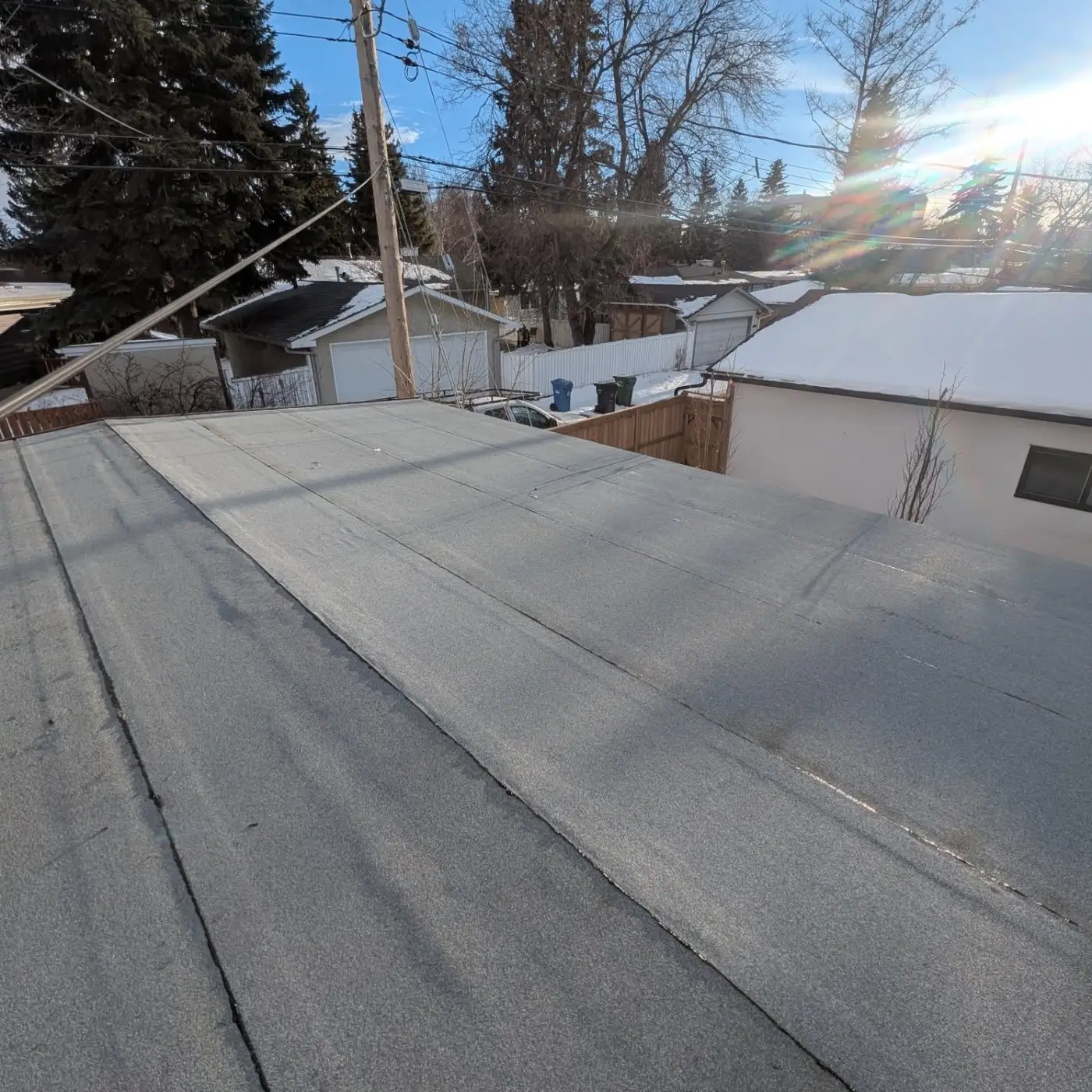
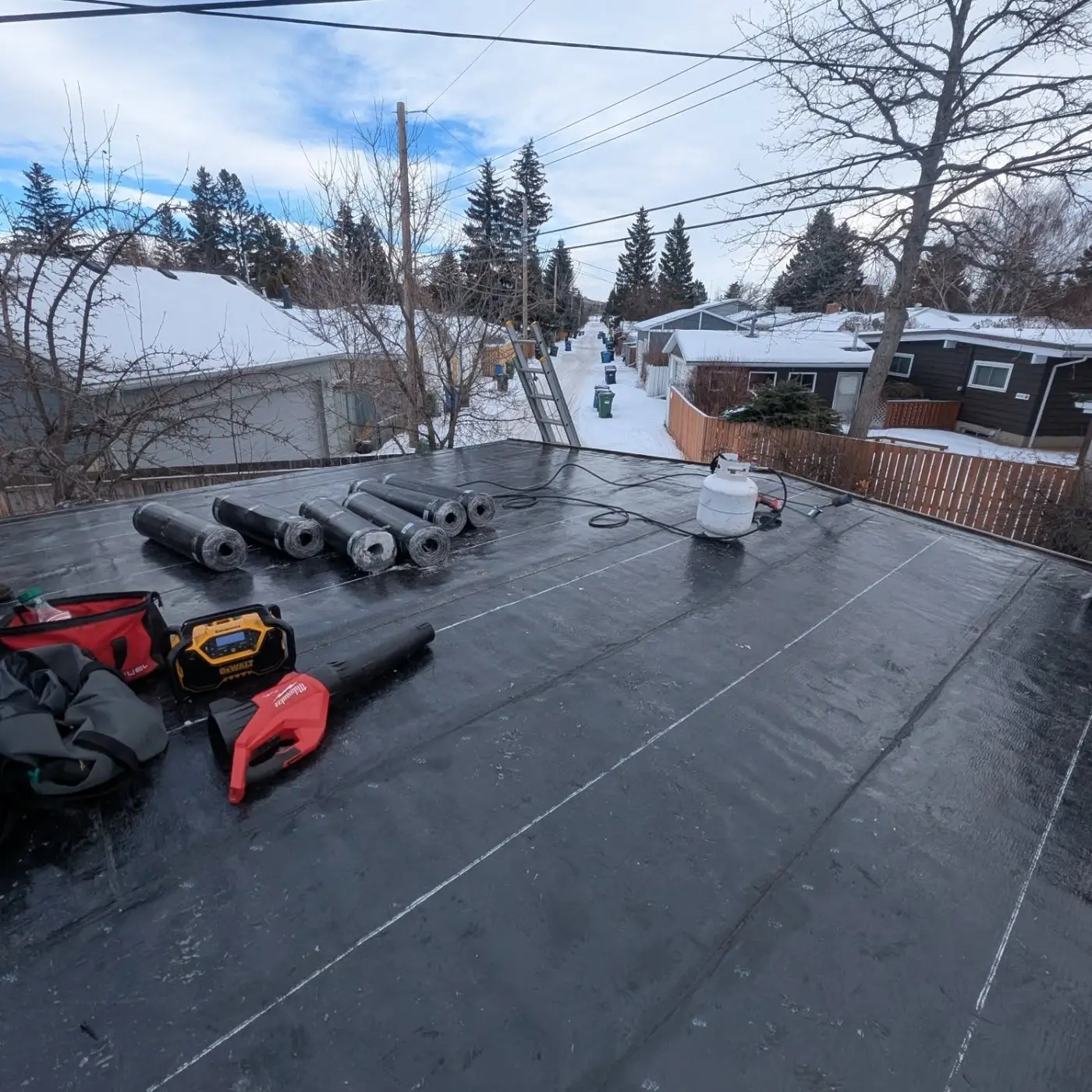
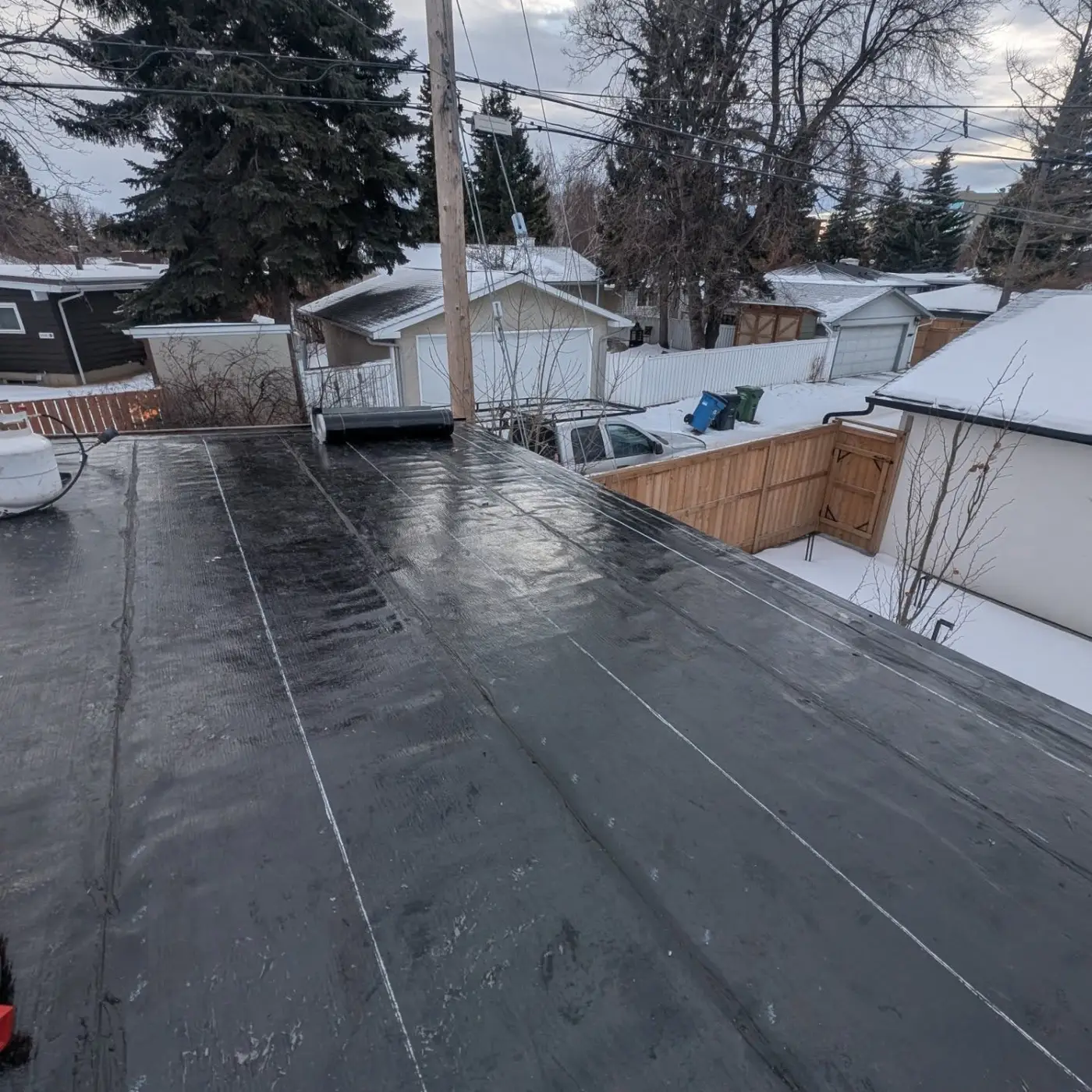
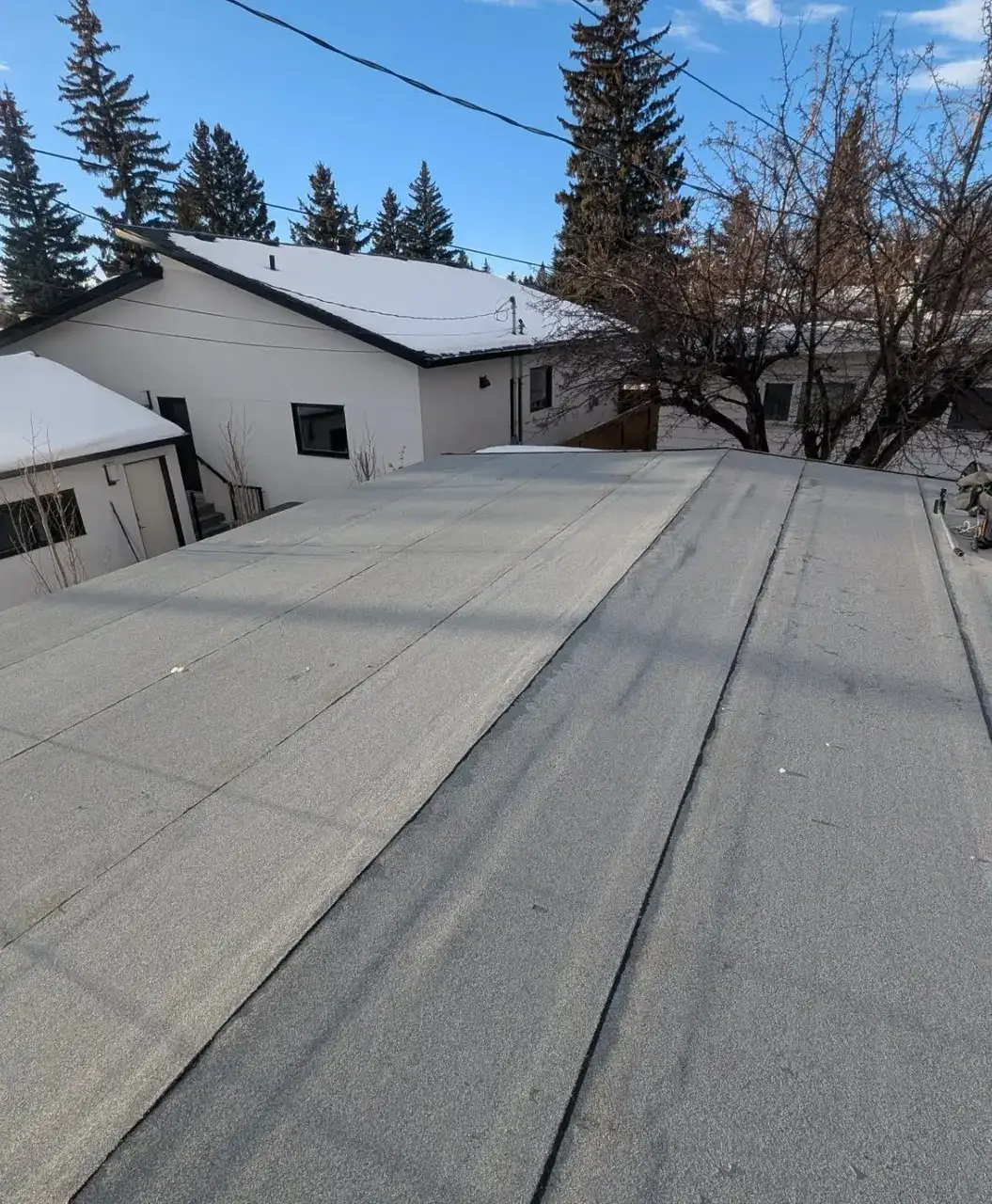
Two-Ply Modified Bitumen Roof in Winter
See all of our roofing projects
Frequently asked questions
Is torch application safe?
Can you patch a blister?
If it's limited, yes. Widespread blistering often points to trapped moisture or a roof near the end of its life.
How much does modified bitumen cost in Tulsa?
Modified bitumen commonly runs $6 to $12 per square foot installed. Repairs often cost $400 to $2,000, with tear-off and insulation affecting a full replacement.
How long does modified bitumen last?
Commonly about 15 to 25 years, depending on the number of plies, surface type, drainage and maintenance. Reflective coatings can help slow aging on a sound roof.
Is torching safe on my building?
Done correctly, by trained crews with fire watches, it is an established method. On sensitive buildings or near wood framing, cold-applied or self-adhered options may be better.
Can a blister be left alone?
Often, yes, if it is small and not leaking. We check moisture and watch it during later inspections. Larger or broken blisters need repair so water does not get underneath.