

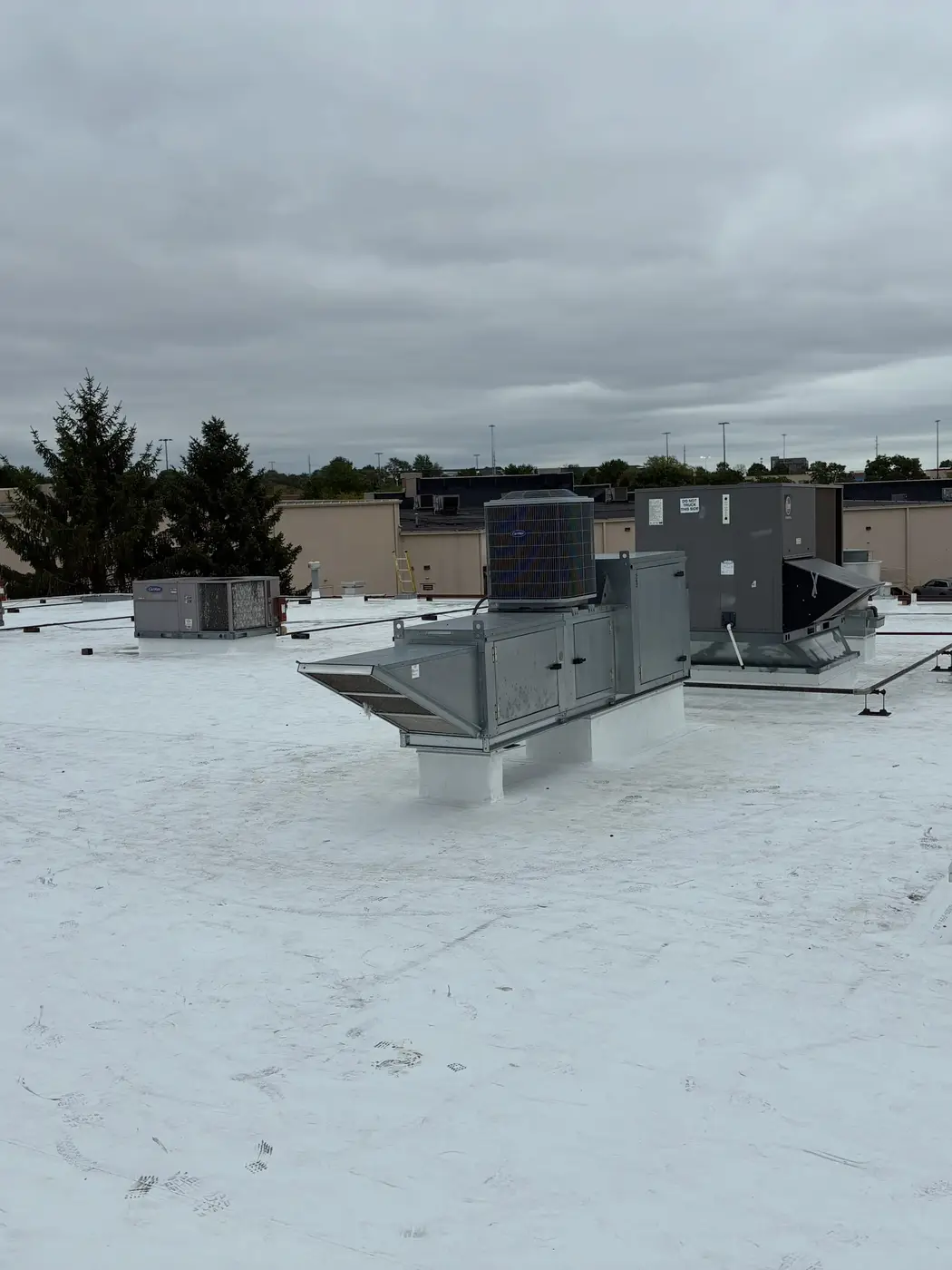
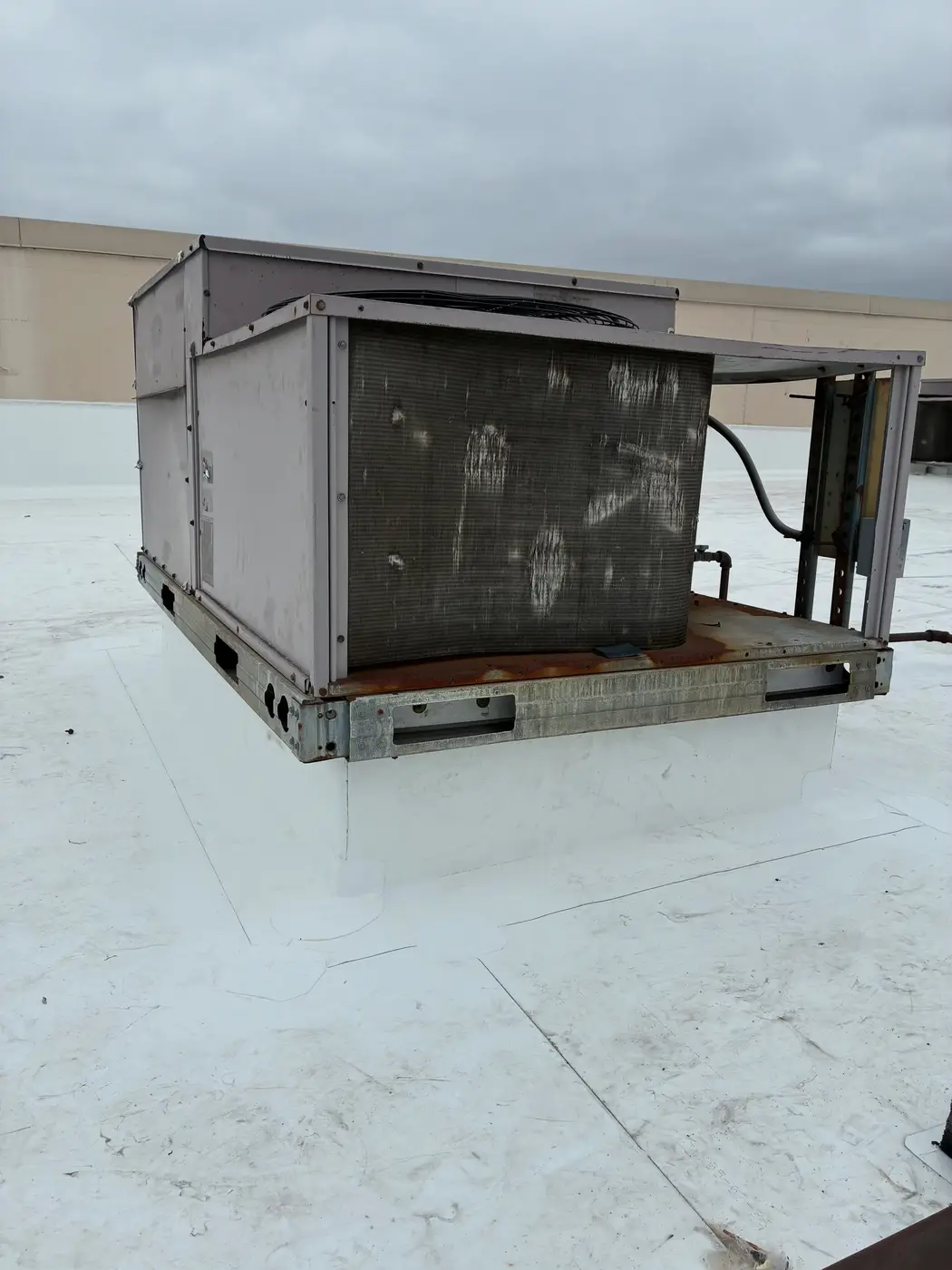
Thicker membranes, such as 60 or 80 mil, offer more material over the reinforcing scrim and can extend service life.
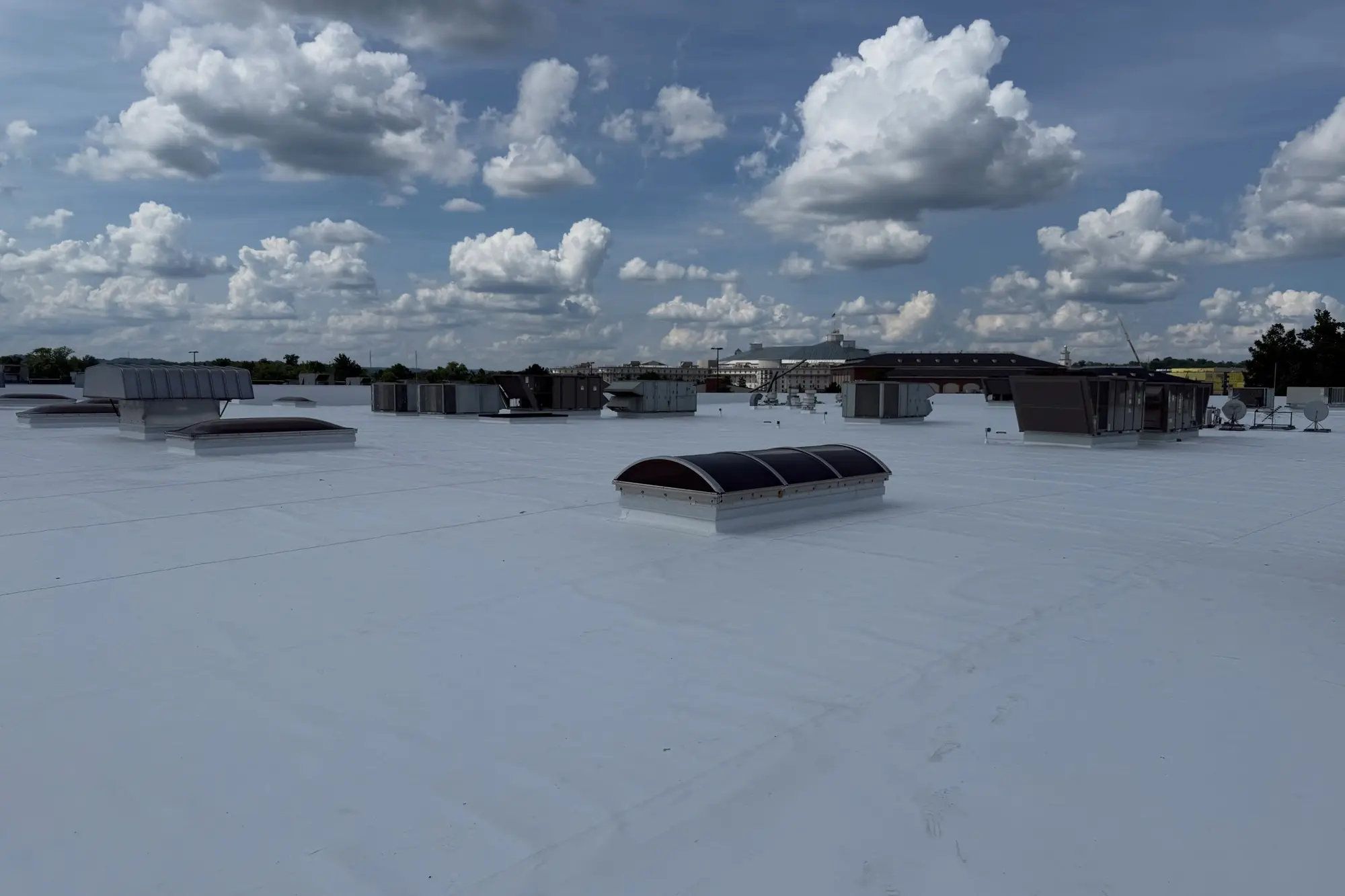

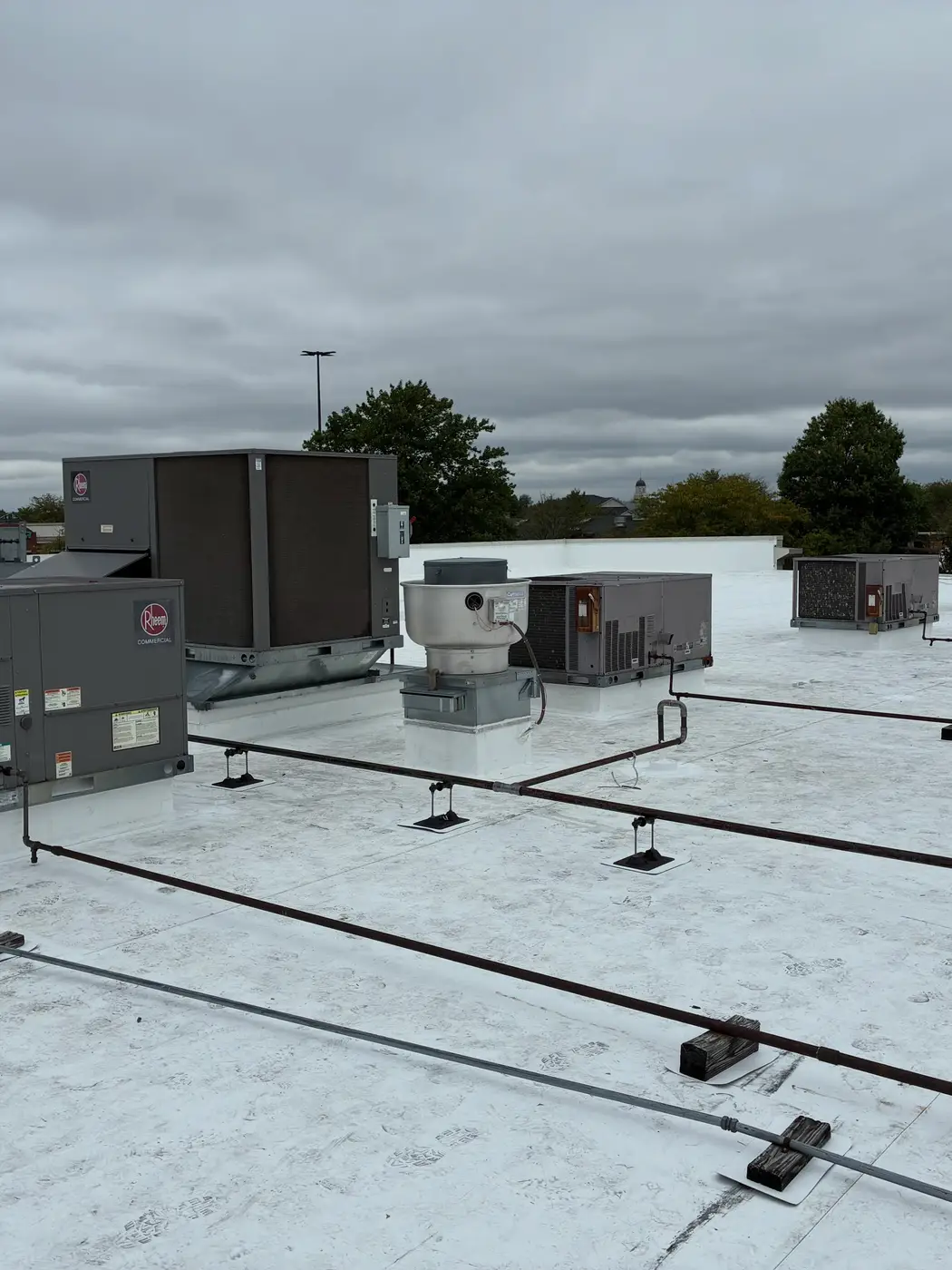
TPO is one of the most widely used commercial membranes. Its white surface reflects summer sun, and its heat-welded seams become a continuous bond rather than relying on adhesive tape or glue.
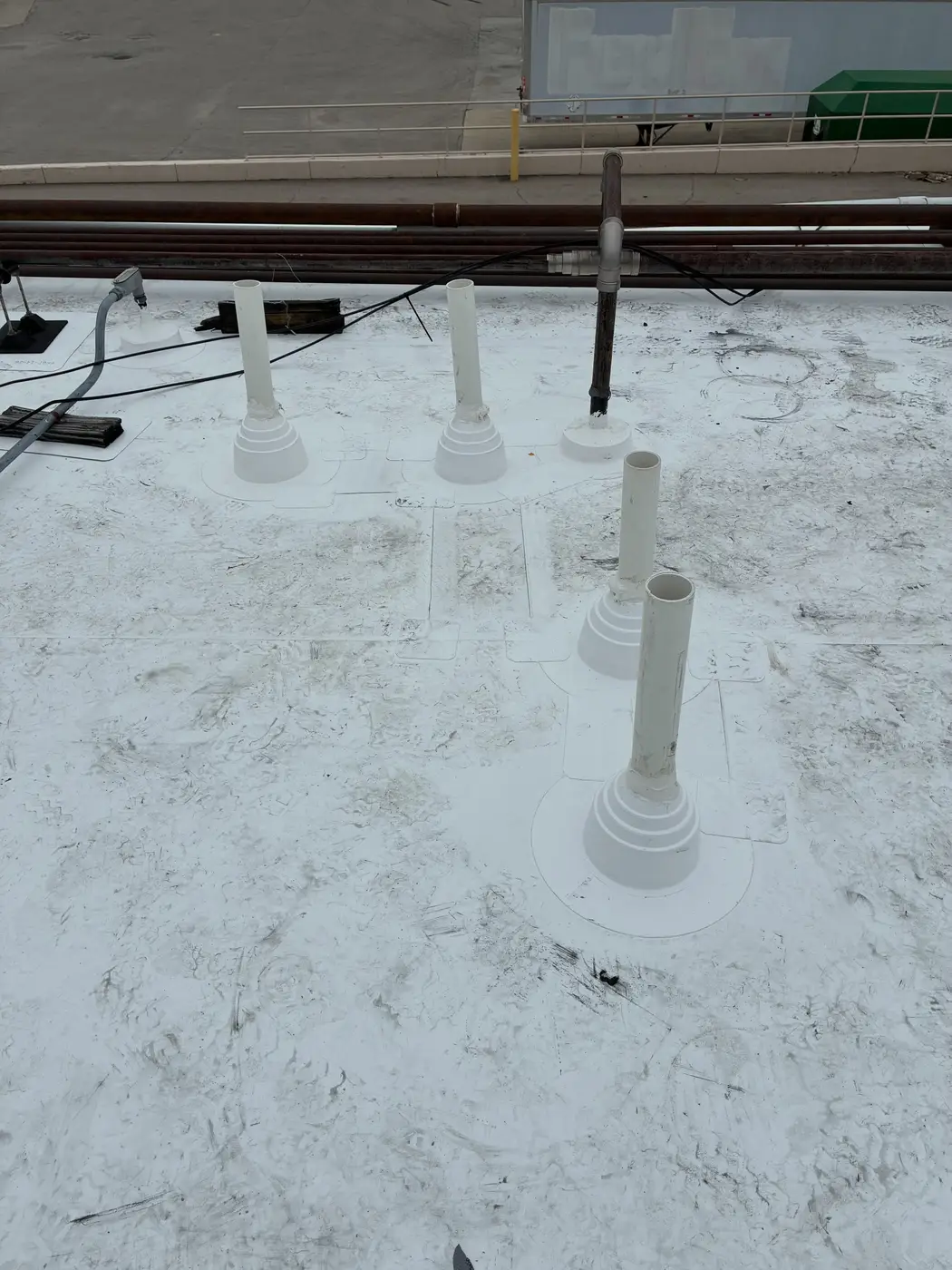
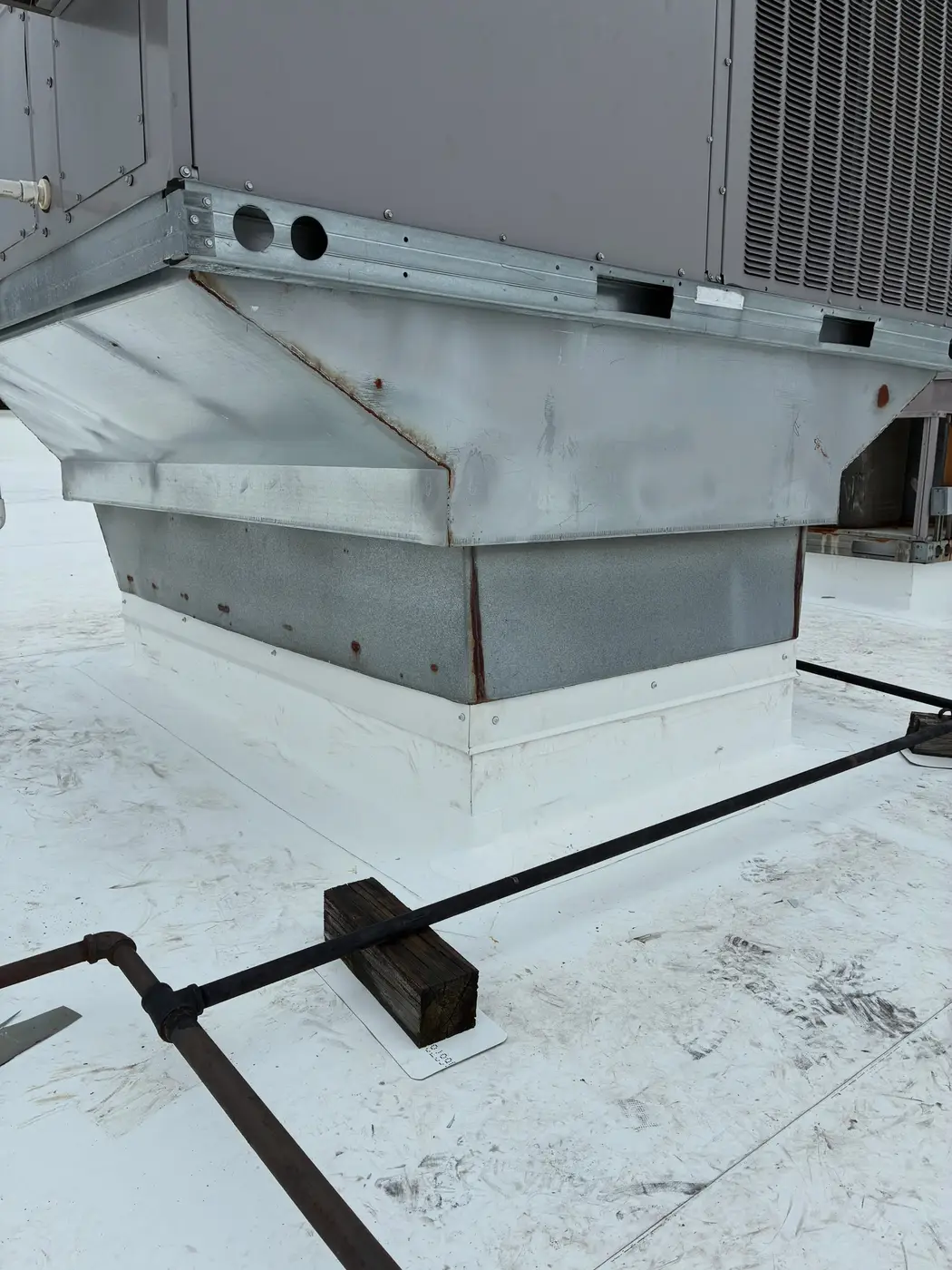
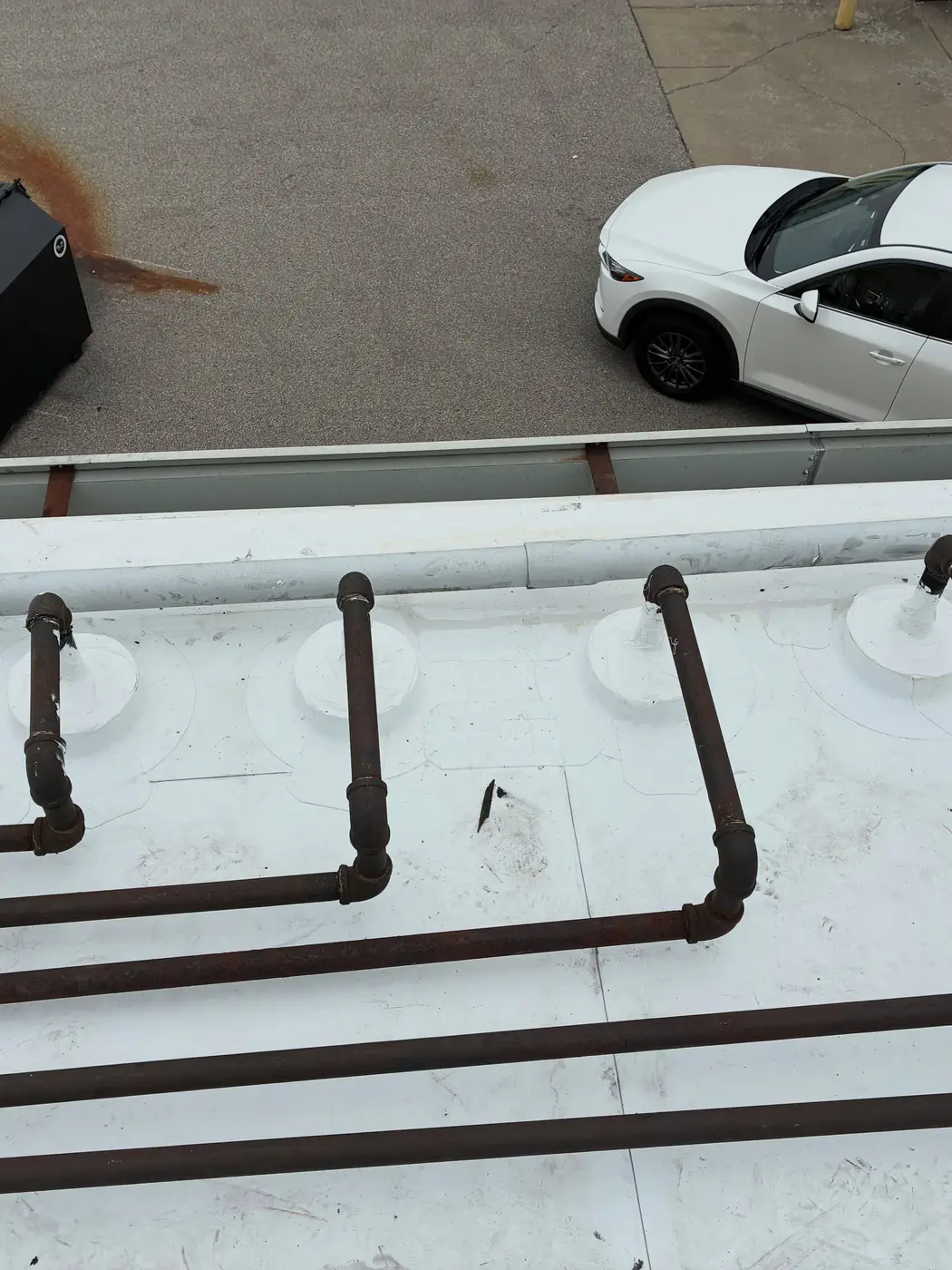
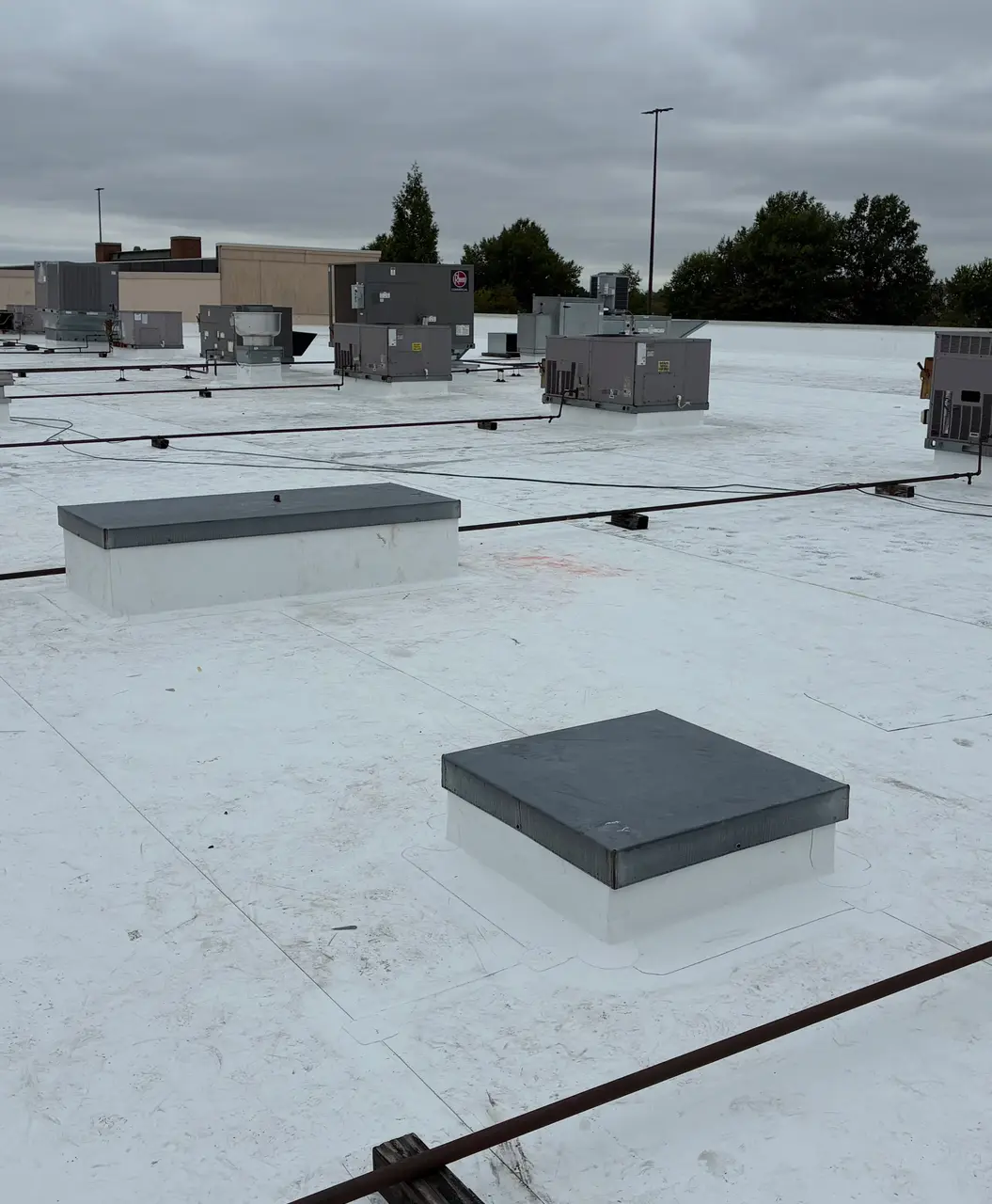
Good TPO roofs depend on correct seam welding and careful details around curbs, drains and walls. We probe seams after welding and pay particular attention to the penetrations, where single-ply roofs are most likely to fail.
Common signs we check for:
- Aging flat roof ready for replacement
- High summer cooling costs
- Failed older membrane
- New rooftop units or curbs
- Ponding on a tired roof
- Building recover opportunity
How the work gets done
Roof Survey
Existing layers, moisture and drainage are reviewed.
Insulation Plan
Insulation type, thickness and tapered areas are chosen.
Membrane Install
Sheets are fastened or adhered, then seams are hot-air welded.
Seam Probe
Seams and details are checked before final closeout.
Typical Cost
TPO commonly runs $6 to $12 per square foot installed, depending on insulation, access and tear-off.
These are planning ranges for the Tulsa area, not a quote. Your written estimate is based on the actual roof.
Request an EstimateTPO Roofing prices
Planning ranges for the Tulsa area, updated November 2026. They include typical labor and materials, but they are not a quote. Your written estimate is based on an inspection of the actual job. See every category on our price list.
What TPO roofing is
TPO (thermoplastic polyolefin) is a single-ply membrane used on many flat and low-slope roofs. It comes in rolls, usually white, and its seams are welded with hot air. That creates a joint that is often as strong as the membrane itself. It has become one of the most common commercial roofing systems because it offers solid performance and a reflective surface at a moderate price.
You will see it on retail, offices, warehouses, churches and apartment buildings around Tulsa, and on some low-slope residential sections too.
TPO thickness and attachment
Two choices largely decide how a TPO roof performs: how thick it is and how it is attached.
- 45 mil: the lightest common thickness, used where budget matters most.
- 60 mil: a common middle choice for commercial roofs, with more material to weather and more room for future repairs.
- 80 mil: heavier and more puncture-resistant, used for longer warranties or foot traffic.
- Mechanically attached: fastened through plates in the seams. Usually the most economical choice.
- Fully adhered: glued to the substrate for a smooth surface and better wind performance, at a higher cost.
- Induction welded: plates under the membrane are welded from above, with no holes through the sheet.
Insulation thickness and cover boards matter just as much. A cover board can add hail and foot traffic resistance, and that is a real consideration in Oklahoma.
TPO pros and cons
No roof type is perfect, and it helps to see both sides of TPO before committing. On the positive side, it reflects sunlight, which can reduce cooling load, particularly with little insulation. Heat-welded seams are durable. It costs less than PVC in most cases. On the other hand, quality varies by manufacturer and thickness, and older roofs can become difficult to weld as the surface ages. TPO has less resistance to grease and some chemicals than PVC, so restaurants and some industrial buildings may do better with PVC roofing. If you want to compare it with rubber, see EPDM. Our flat roof options guide puts all these systems side by side.
Installing and detailing TPO
Most TPO leaks trace back to details rather than the open field. Good installation depends on clean, properly heated welds, tested with a probe along every seam. Corners, curbs, pipes and drains need factory-molded or properly welded flashings. Terminations at walls and edges should use metal designed for wind resistance. We also look at slope and drainage before installing a new roof, since tapered insulation can solve ponding problems. Crew training and manufacturer approval matter, because many warranties require a certified installer and a final inspection.
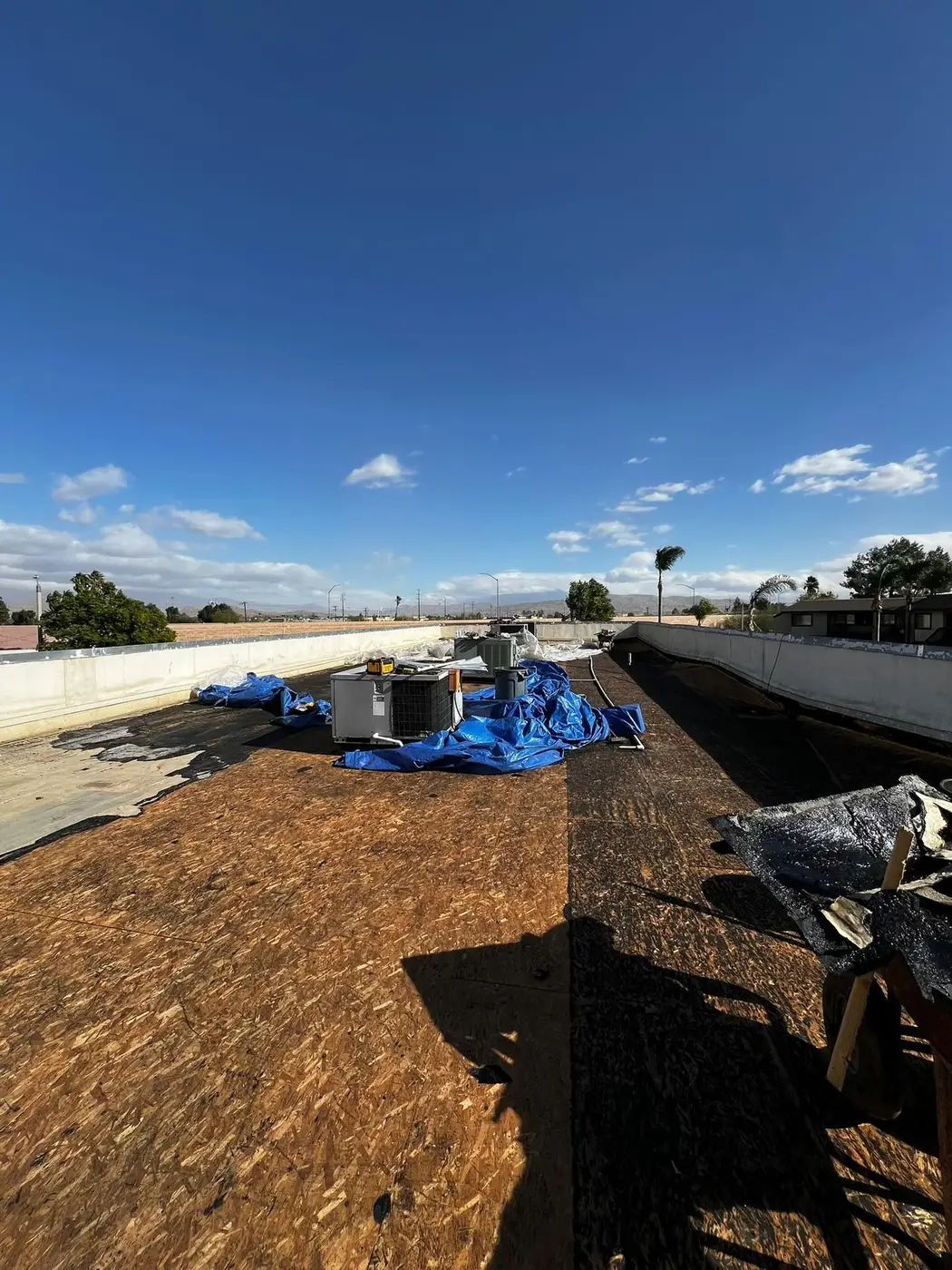
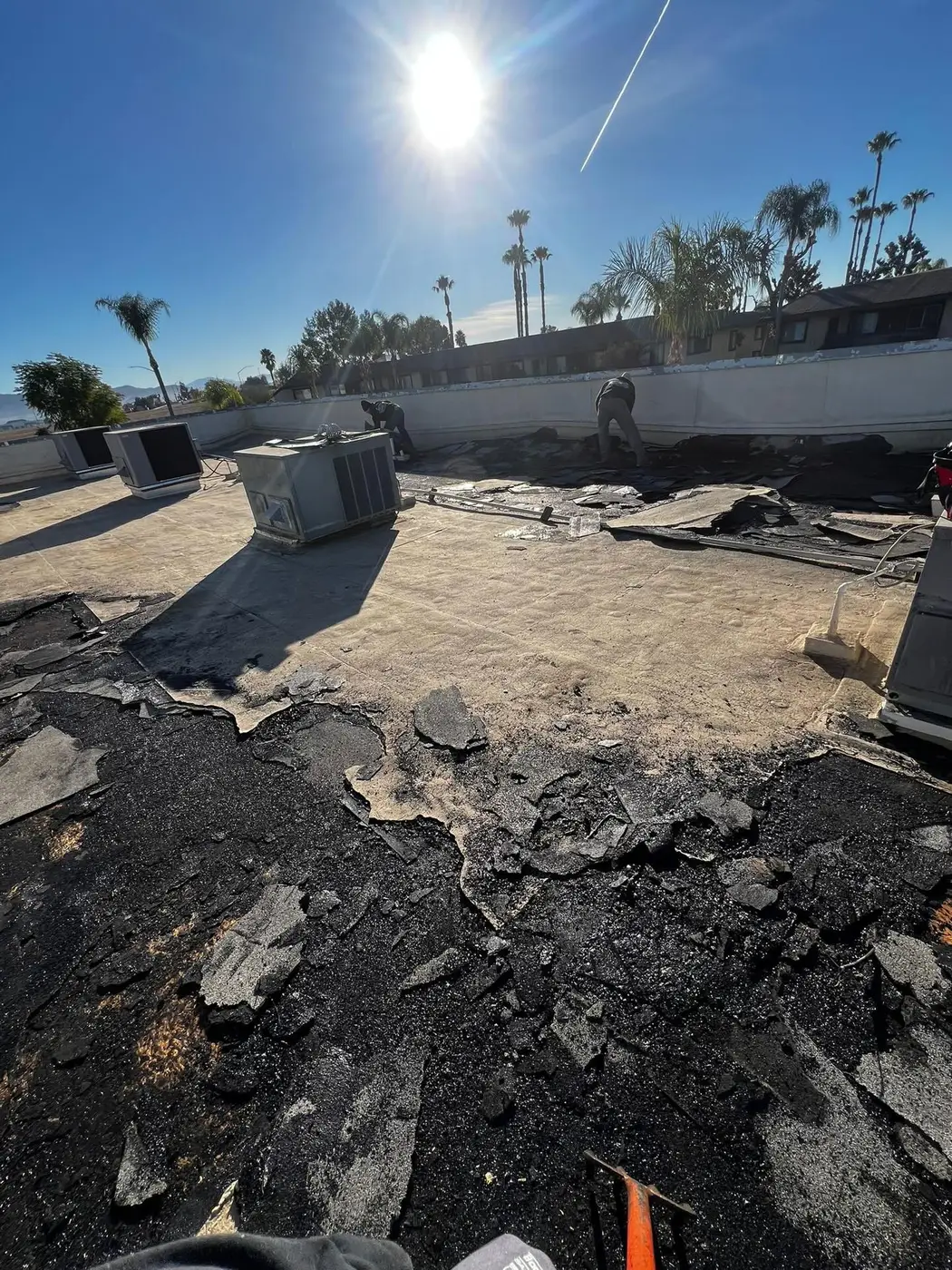
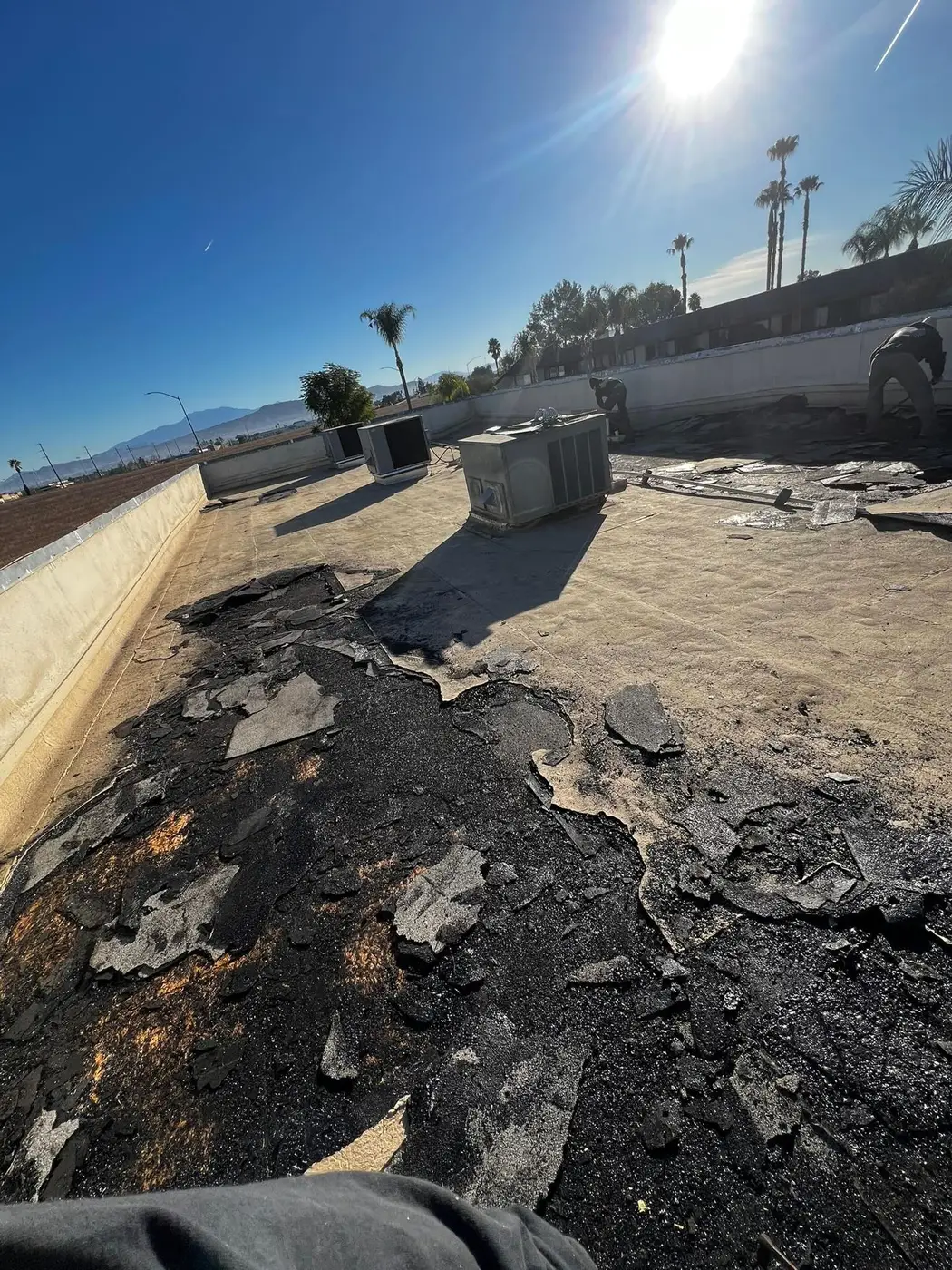
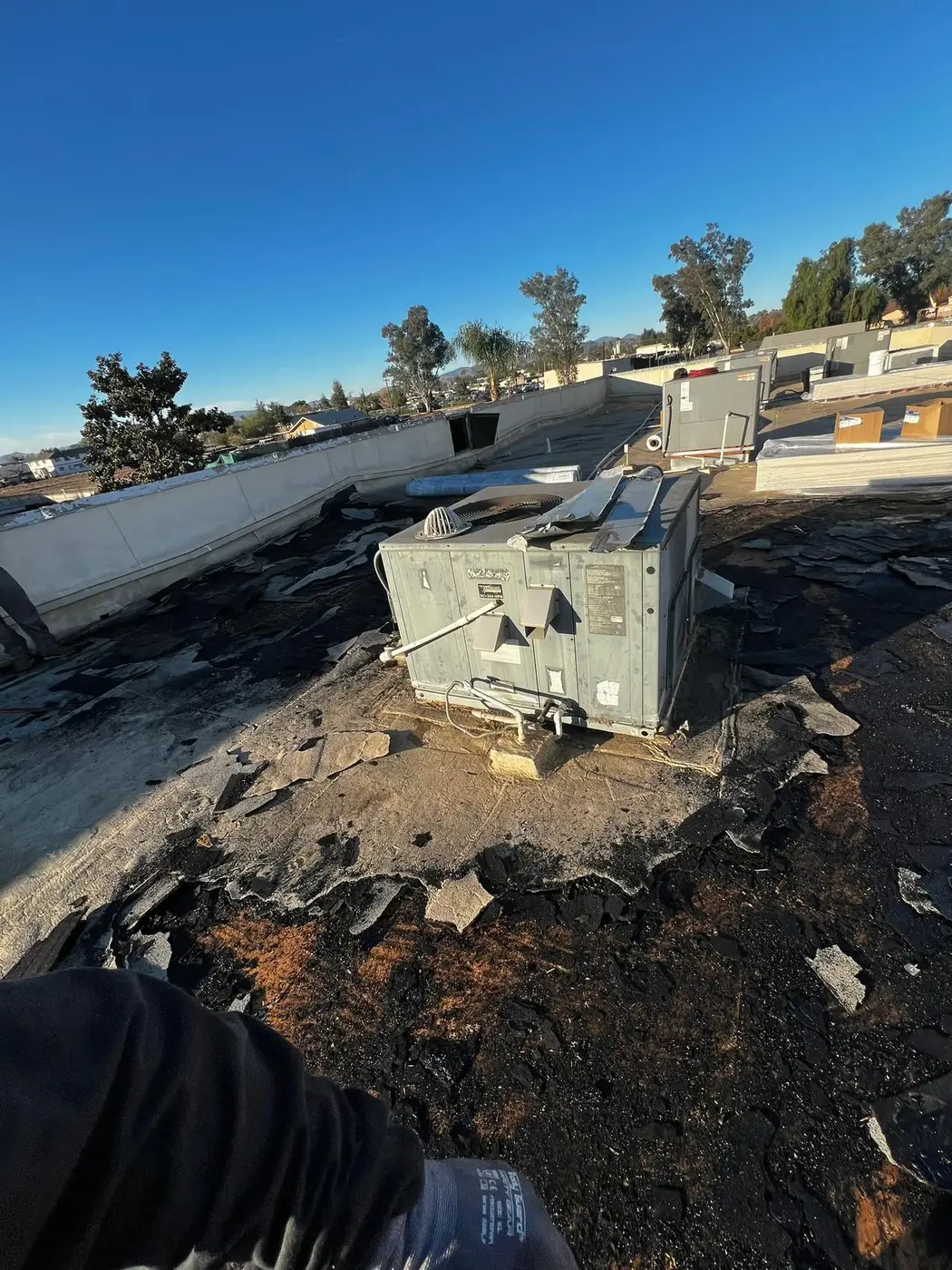
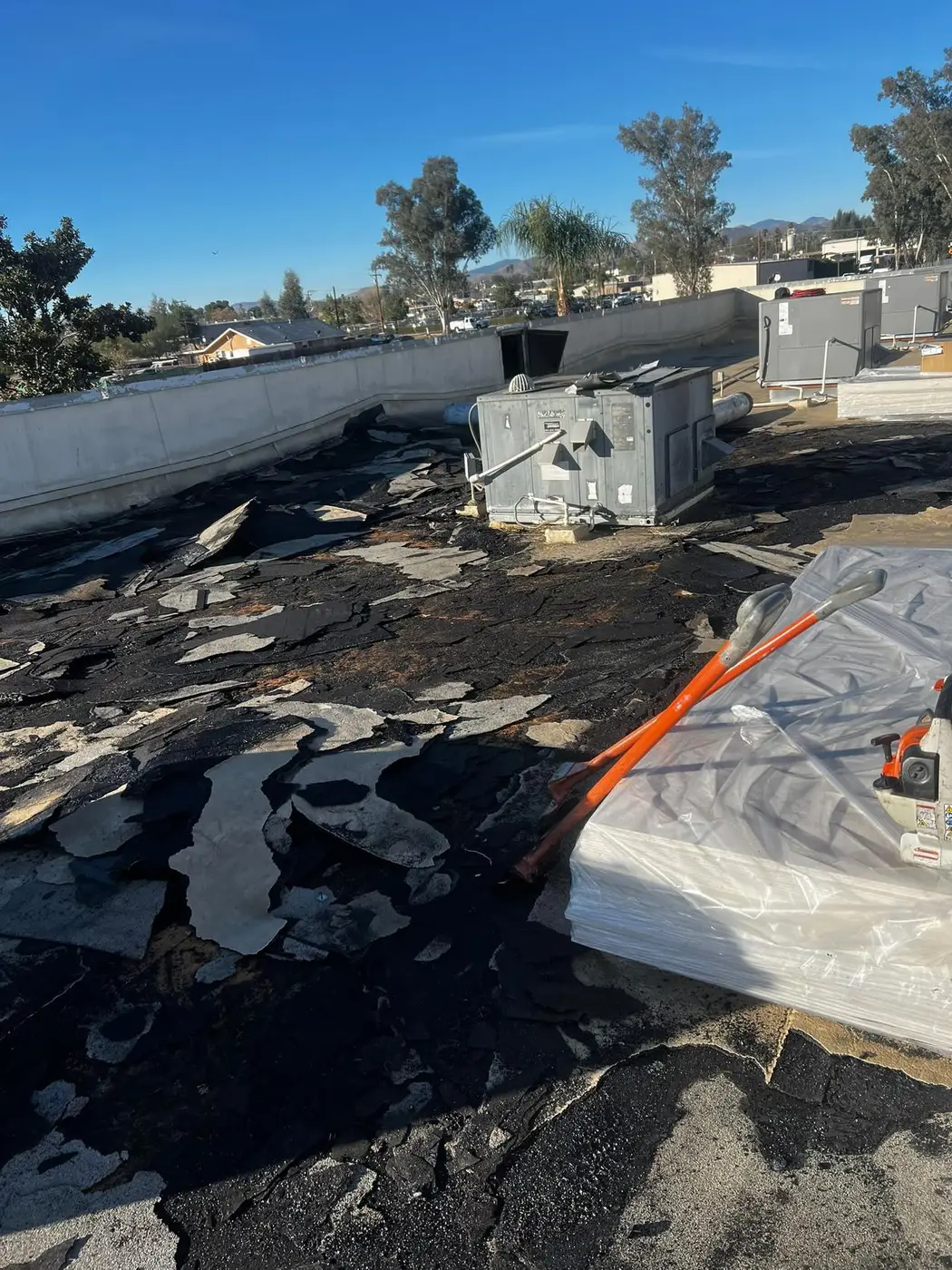
The existing roof dictates what can be done. A tear-off exposes wet insulation and bad deck. A recover over an existing roof can be cheaper, if moisture levels are low and code allows.
Maintaining and repairing TPO
Keep the roof clean and drains clear, and limit traffic to walkway pads. Inspect seams, flashings and sealant at least twice a year and after hail. Small punctures can often be repaired by cleaning the membrane and welding on a patch, as long as the surface is still weldable. Older roofs need more prep, and if the membrane no longer accepts a weld, you may need different methods. See flat roof repair for how we diagnose leaks, or commercial roofing for larger planning decisions.
Related services
TPO is one of the systems we install as part of our commercial roofing in Tulsa. Existing membranes are handled through flat roof repair, and our flat roof comparison guide shows how TPO stacks up against PVC and EPDM.
Recent tpo roofing projects
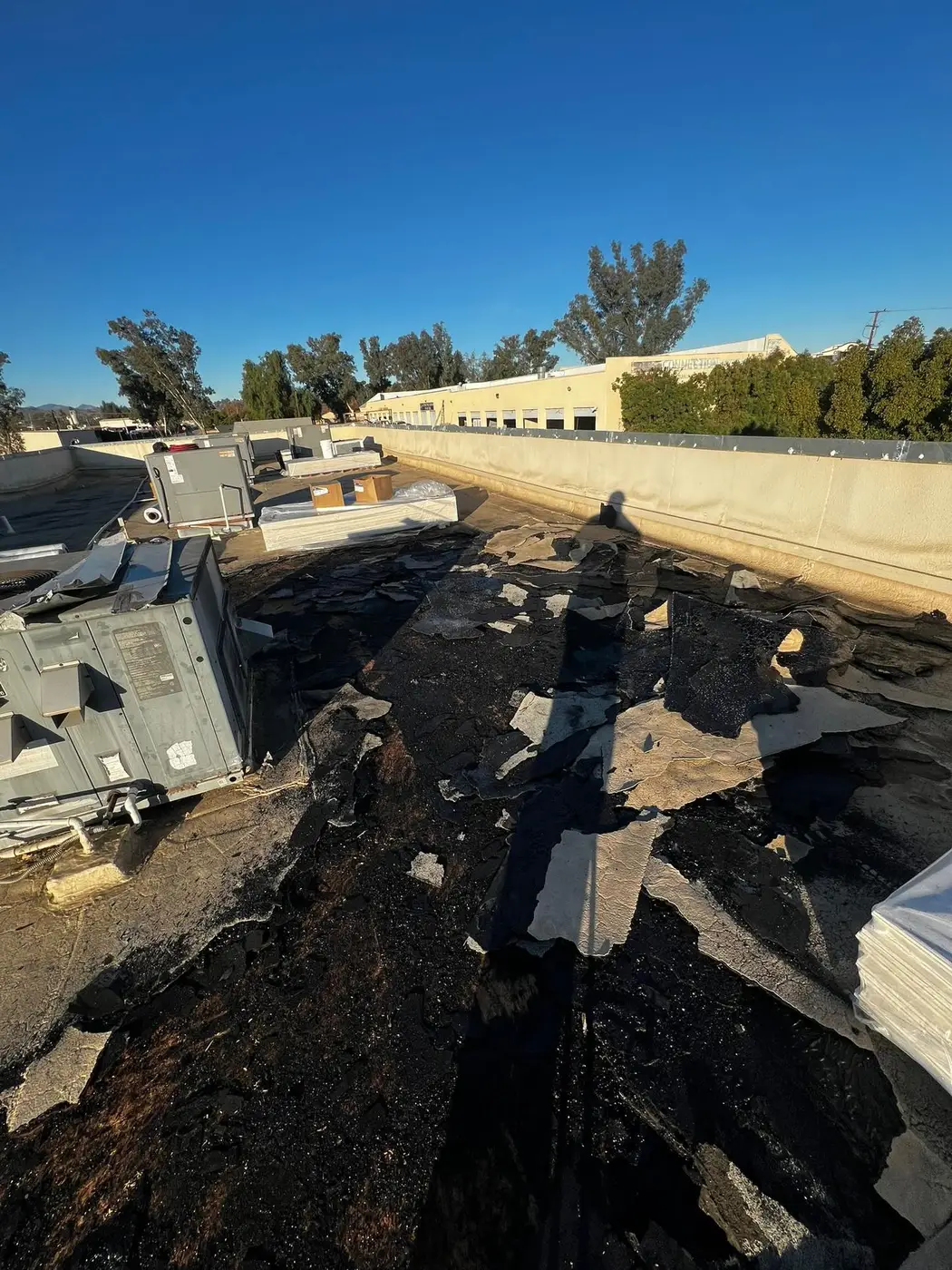
Commercial Tear-Off Ahead of a New TPO System
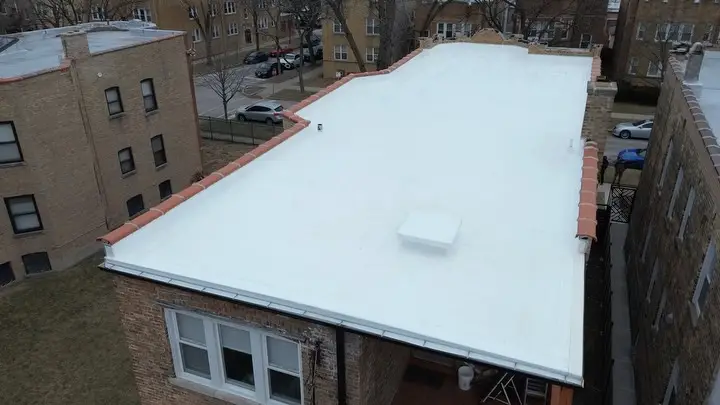
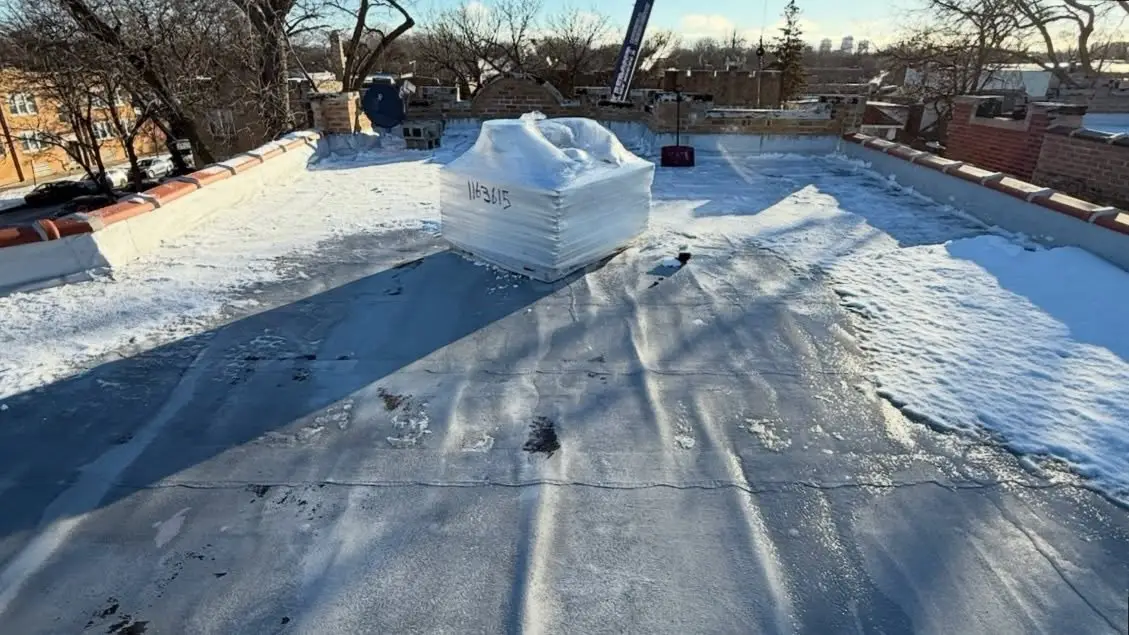
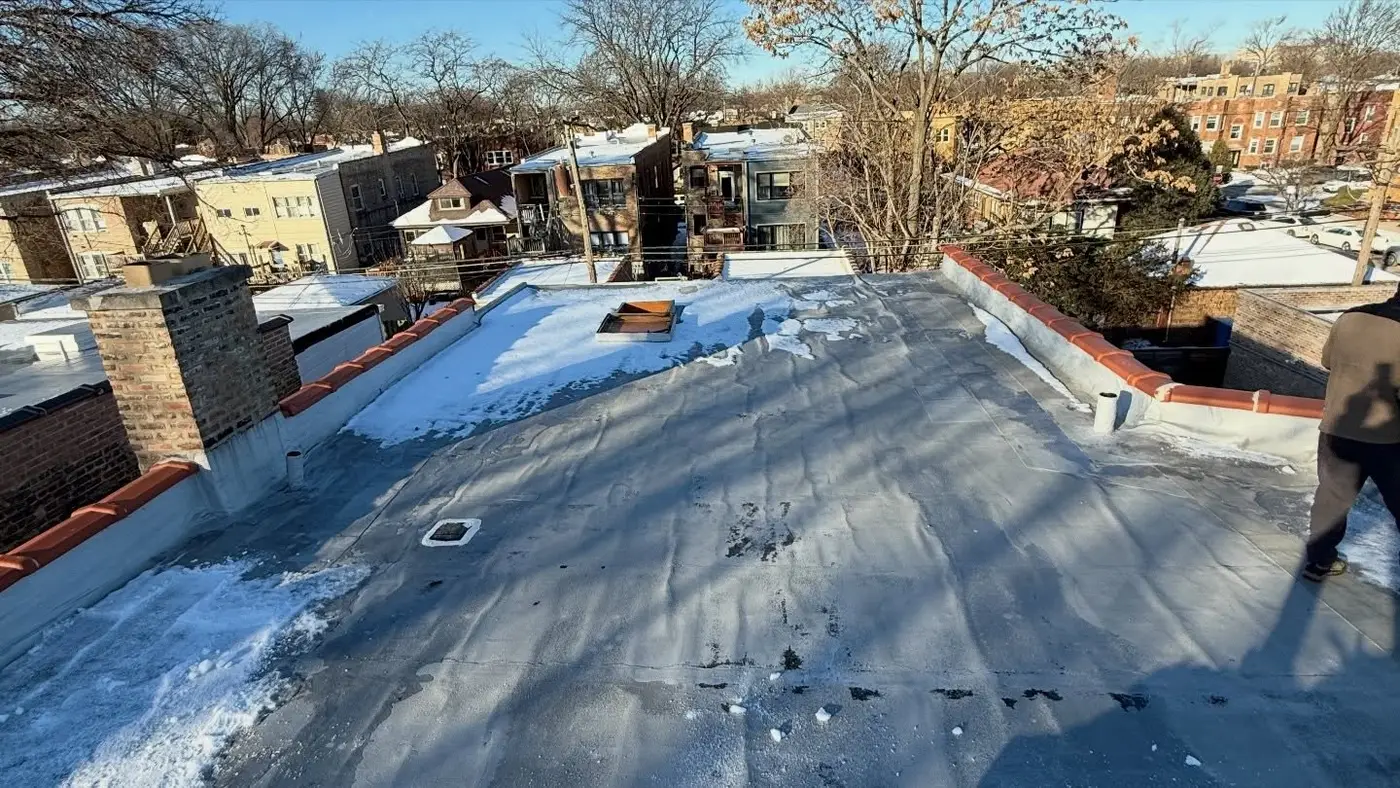
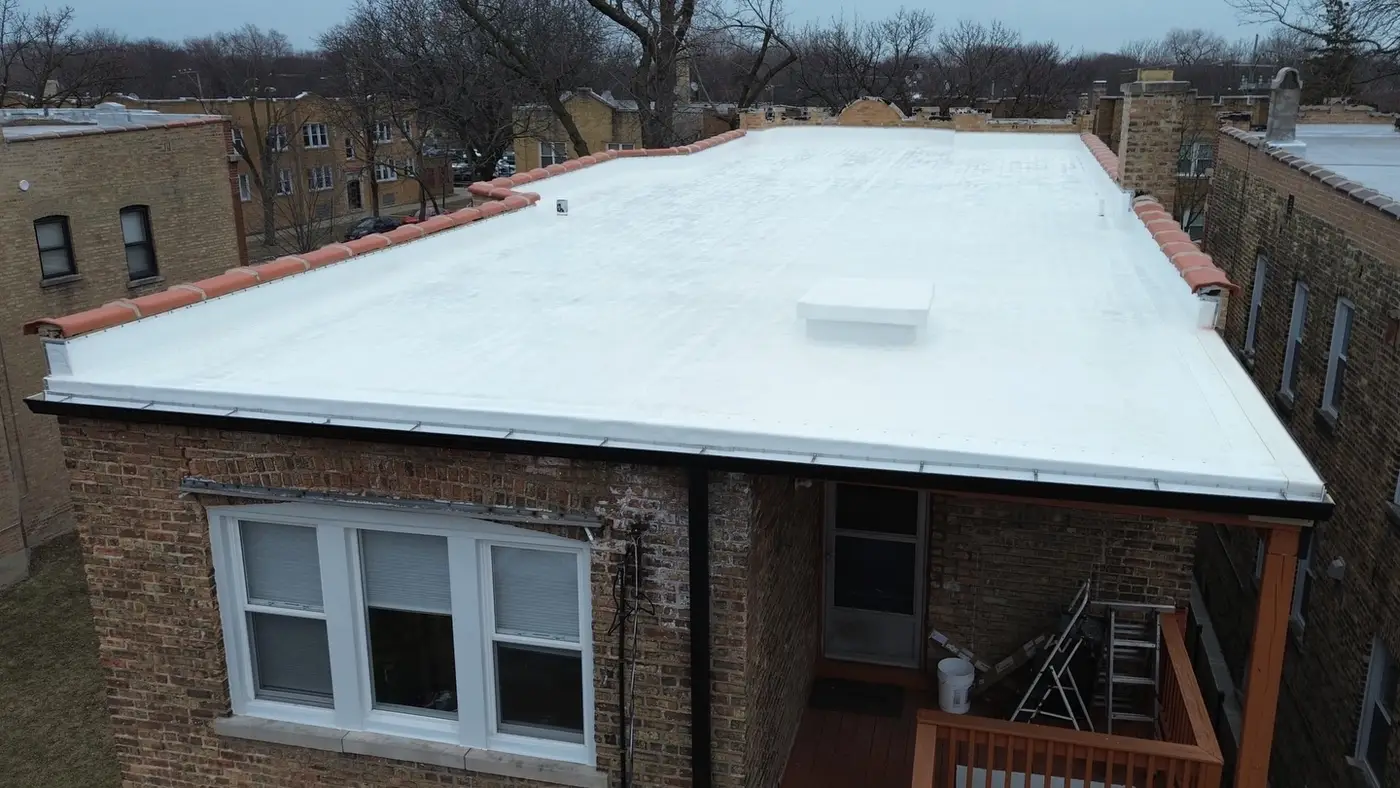
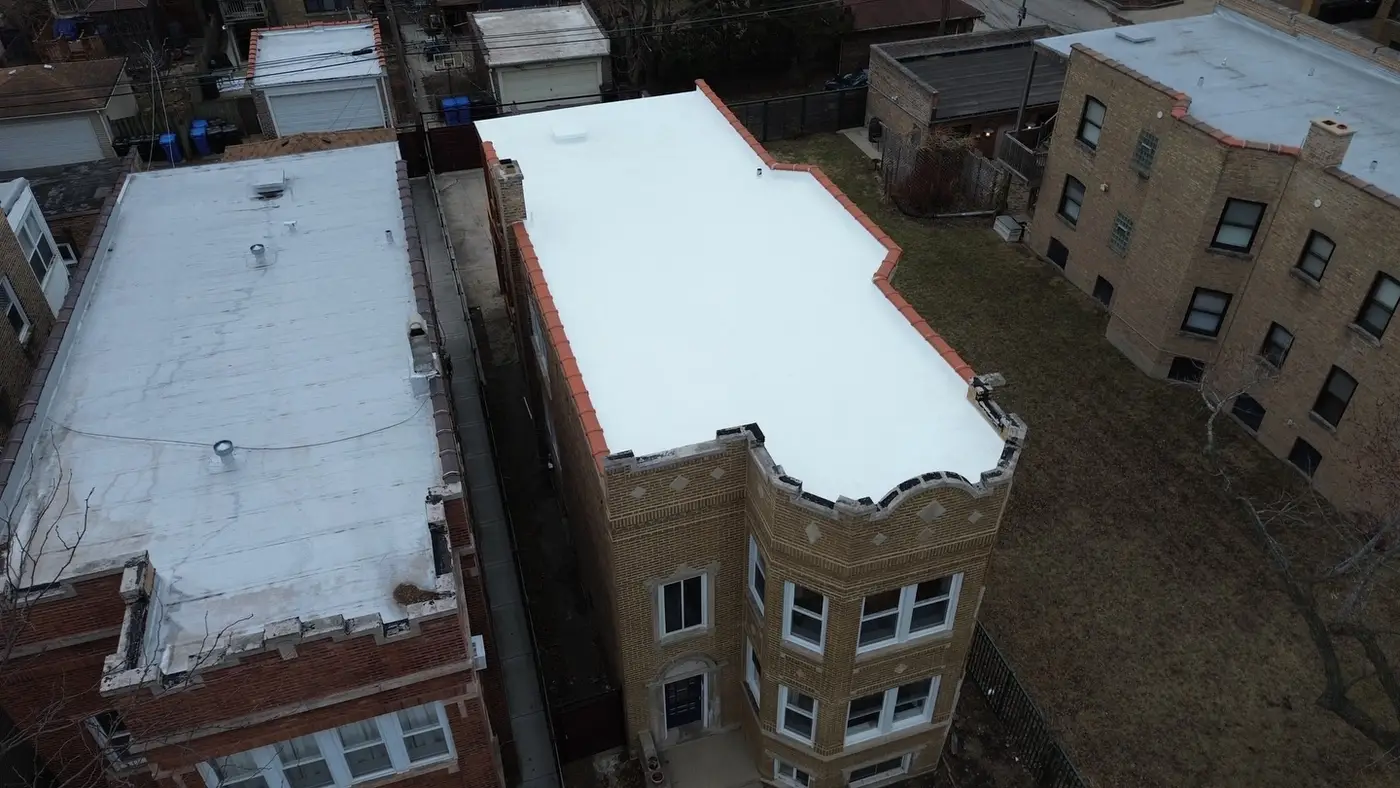
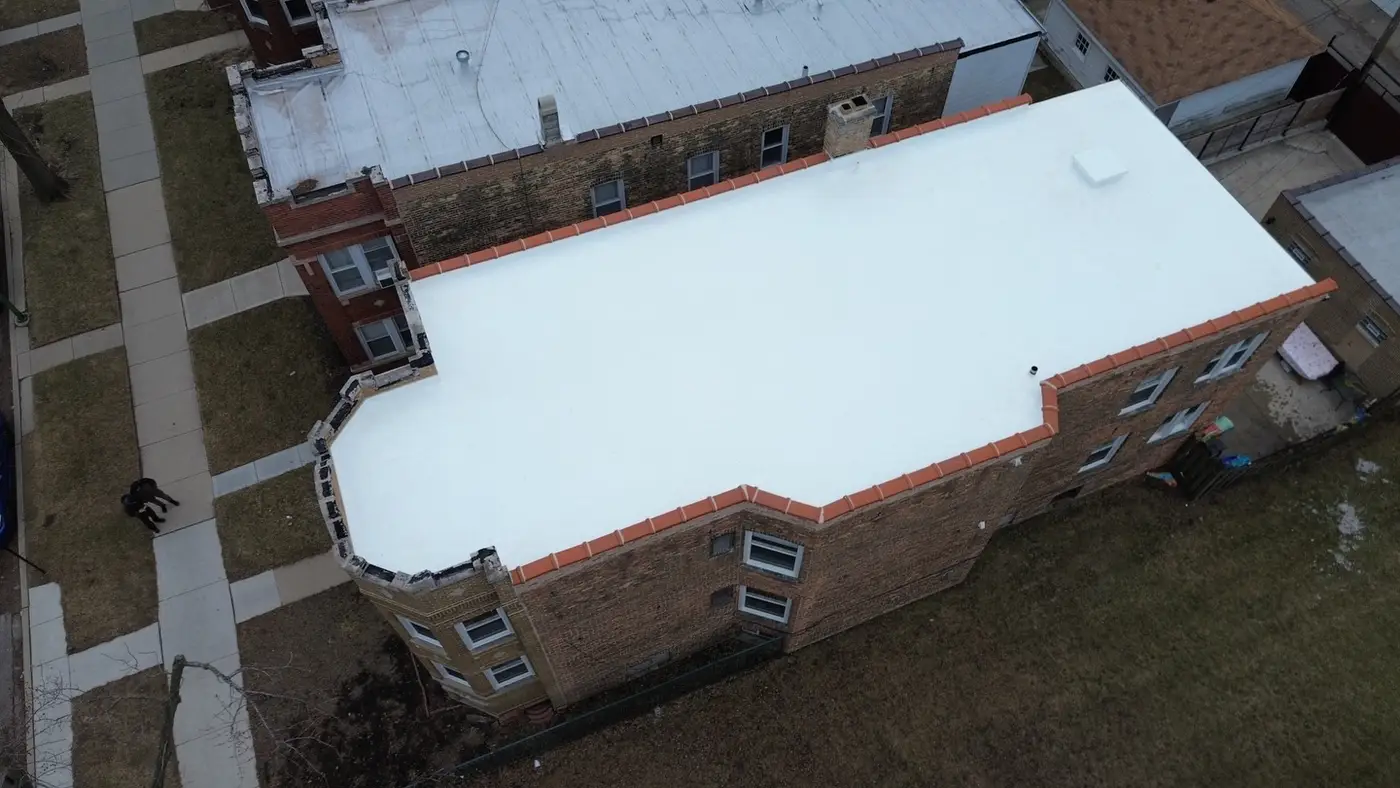
White TPO on a Brick Apartment Building
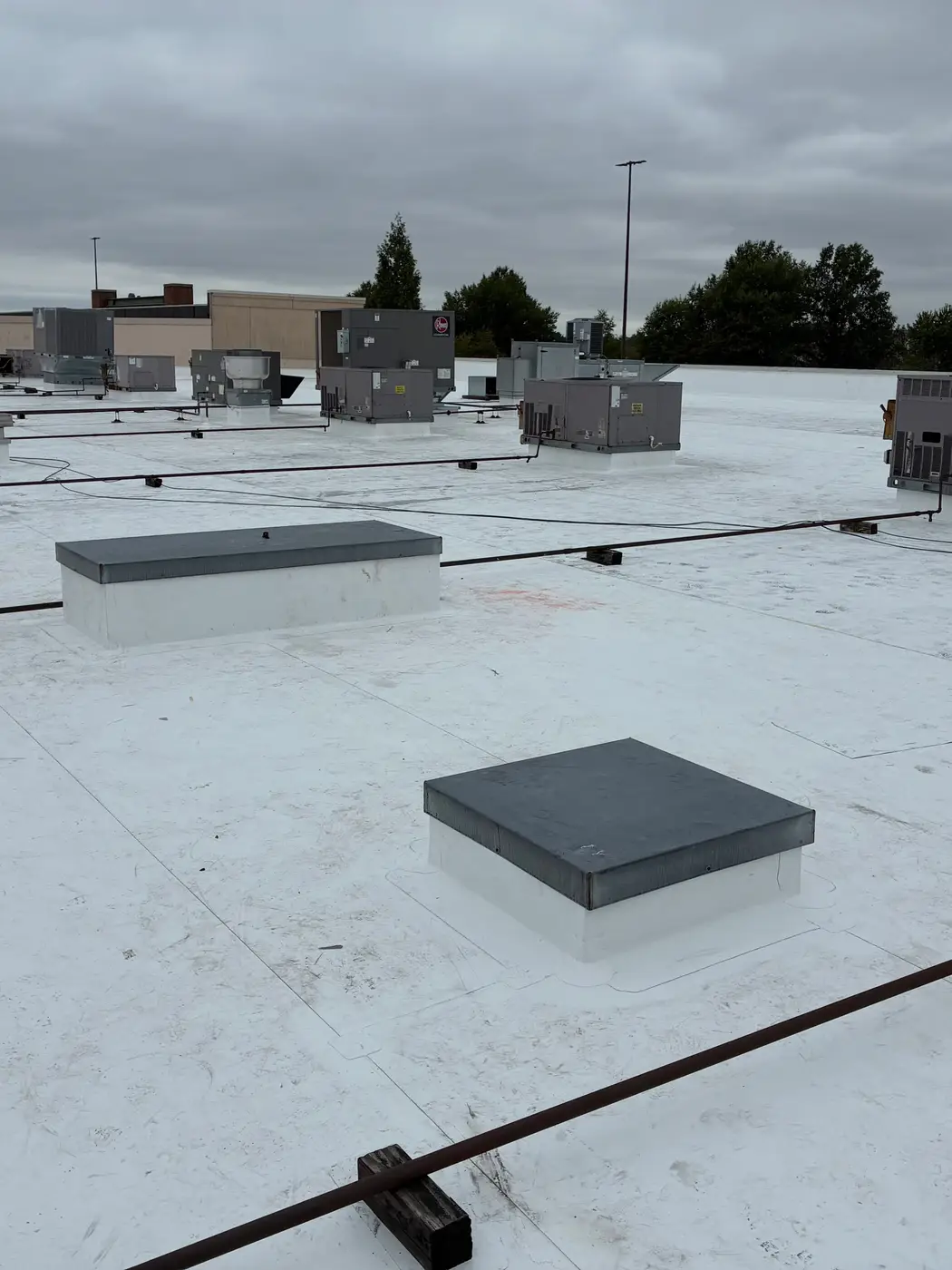
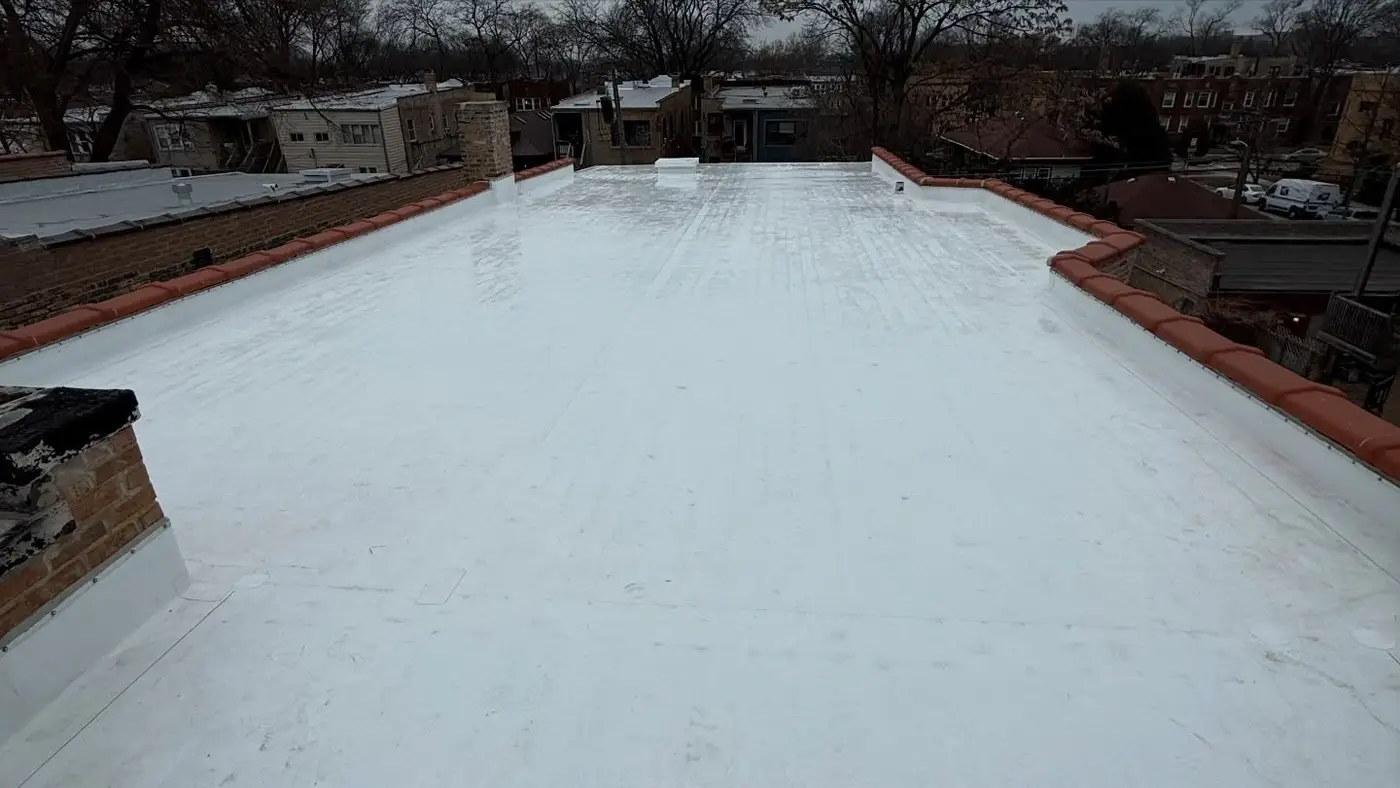
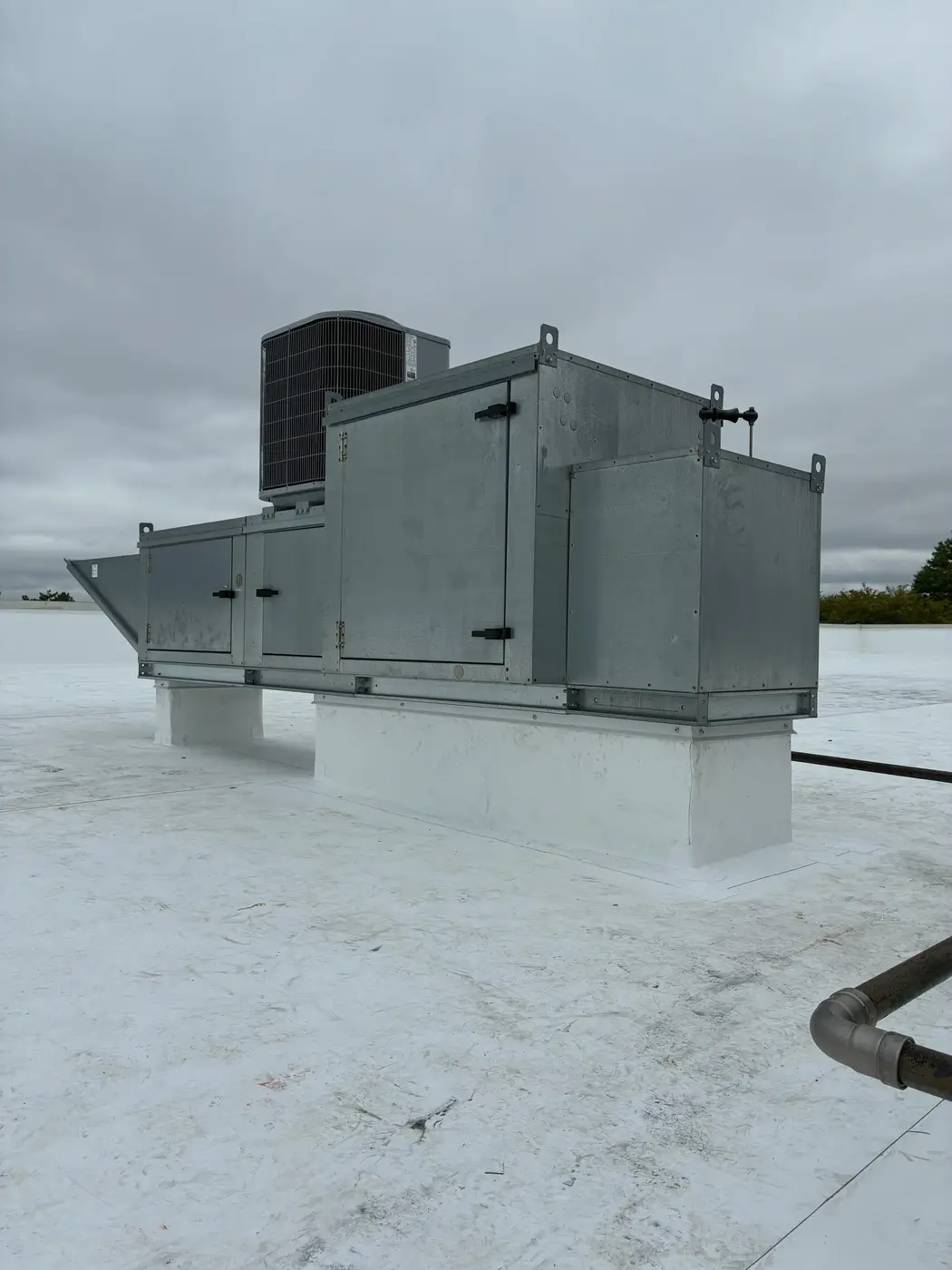
White Membrane on a Large Commercial Roof
See all of our roofing projects
Frequently asked questions
Is thicker TPO worth it?
How much does a TPO roof cost in Tulsa?
TPO commonly runs $6 to $12 per square foot installed, depending on insulation, access and tear-off. Thicker membranes and adhered systems cost more.
How long does TPO last?
Commonly about 15 to 30 years, depending on thickness, manufacturer, installation quality and maintenance. Hail exposure and ponding water can shorten that.
Can TPO go over my existing roof?
Sometimes. Code limits the number of layers, and wet insulation should not be covered. A moisture survey or core sample tells us whether a recover is suitable.
Is TPO good for residential flat roofs?
It can be, particularly on additions and low-slope sections. We check how it ties into the shingle roof and whether foot traffic or decks are involved.