

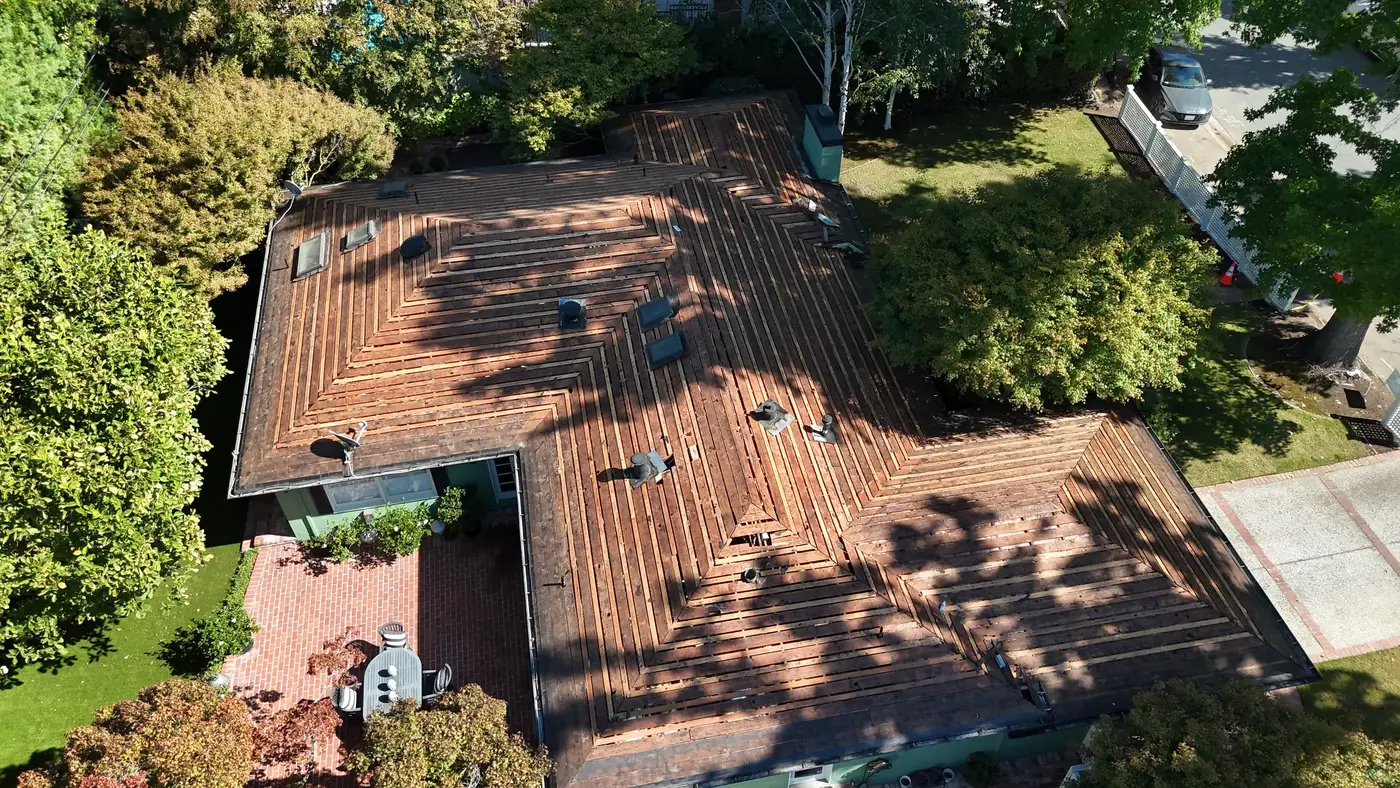
Some carriers restrict or surcharge wood roofs, so check with your agent before investing in replacement.

Asphalt Shingle Roofing
Metal Roofing
Standing Seam Metal Roof
Metal Roof Retrofit
Clay Tile Roofing
Concrete Tile Roofing
Slate Roof Repair
Wood Shake Roofing
All Services
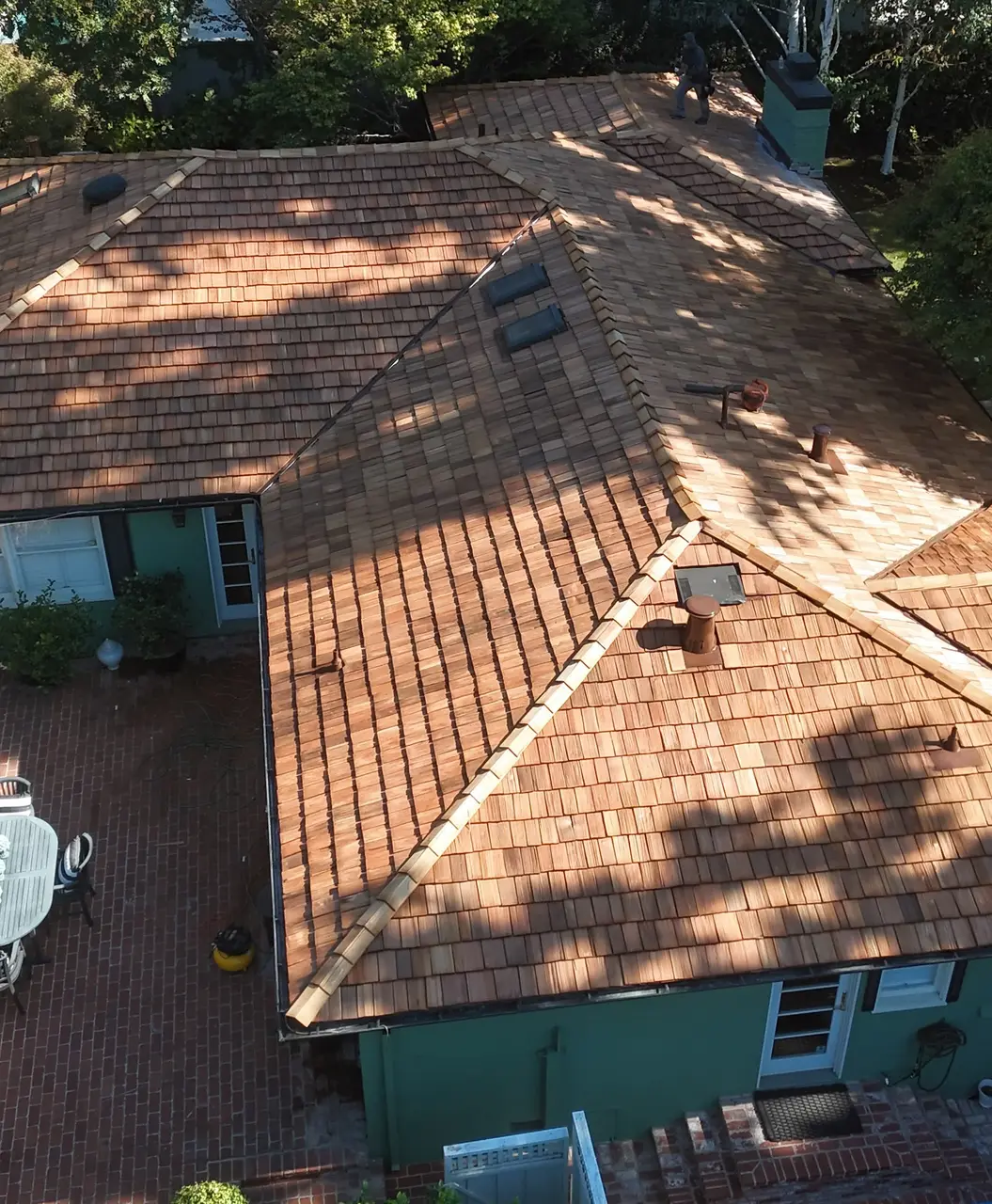
Cedar shakes bring warmth and texture that few materials match. They also need more upkeep than other roofs, since moss, shade, sun and hail all affect how quickly the wood deteriorates.
We replace split or rotted shakes, correct flashing problems and advise on cleaning and treatment. If upkeep or insurance is a concern, we can also show synthetic shakes and impact-rated options that preserve a similar look.
Common signs we check for:
- Split, cupped or curled shakes
- Moss growing in shaded areas
- Gaps visible between pieces
- Soft, rotted wood
- Insurance questions about wood roofs
- Hail-split shakes
How the work gets done
Inspect the Wood
We check for splits, rot and fastener failures slope by slope.
Repair or Replace
Costs for spot repair and full replacement are compared.
Ventilate
Airflow beneath and through the roof is reviewed.
Care Plan
We recommend cleaning and treatment intervals for your roof.
Typical Cost
Shake repairs often begin around $400 to $1,500. Full cedar roofs often cost $12 to $25 per square foot installed.
These are planning ranges for the Tulsa area, not a quote. Your written estimate is based on the actual roof.
Request an EstimateWood Shake Roofing prices
Planning ranges for the Tulsa area, updated November 2026. They include typical labor and materials, but they are not a quote. Your written estimate is based on an inspection of the actual job. See every category on our price list.
Shakes vs wood shingles
People often use the two terms interchangeably, but they are different products. Knowing which you have will help with repairs and pricing.
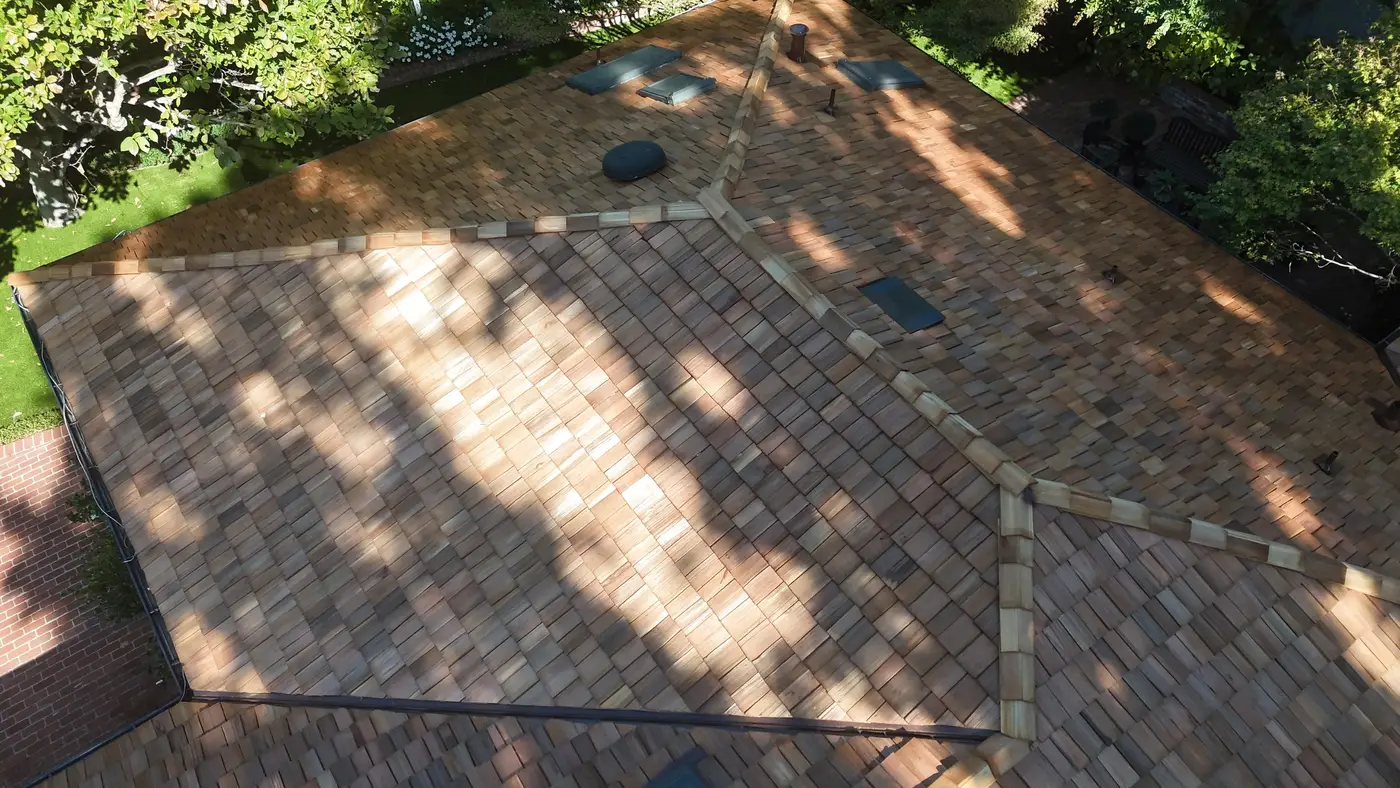
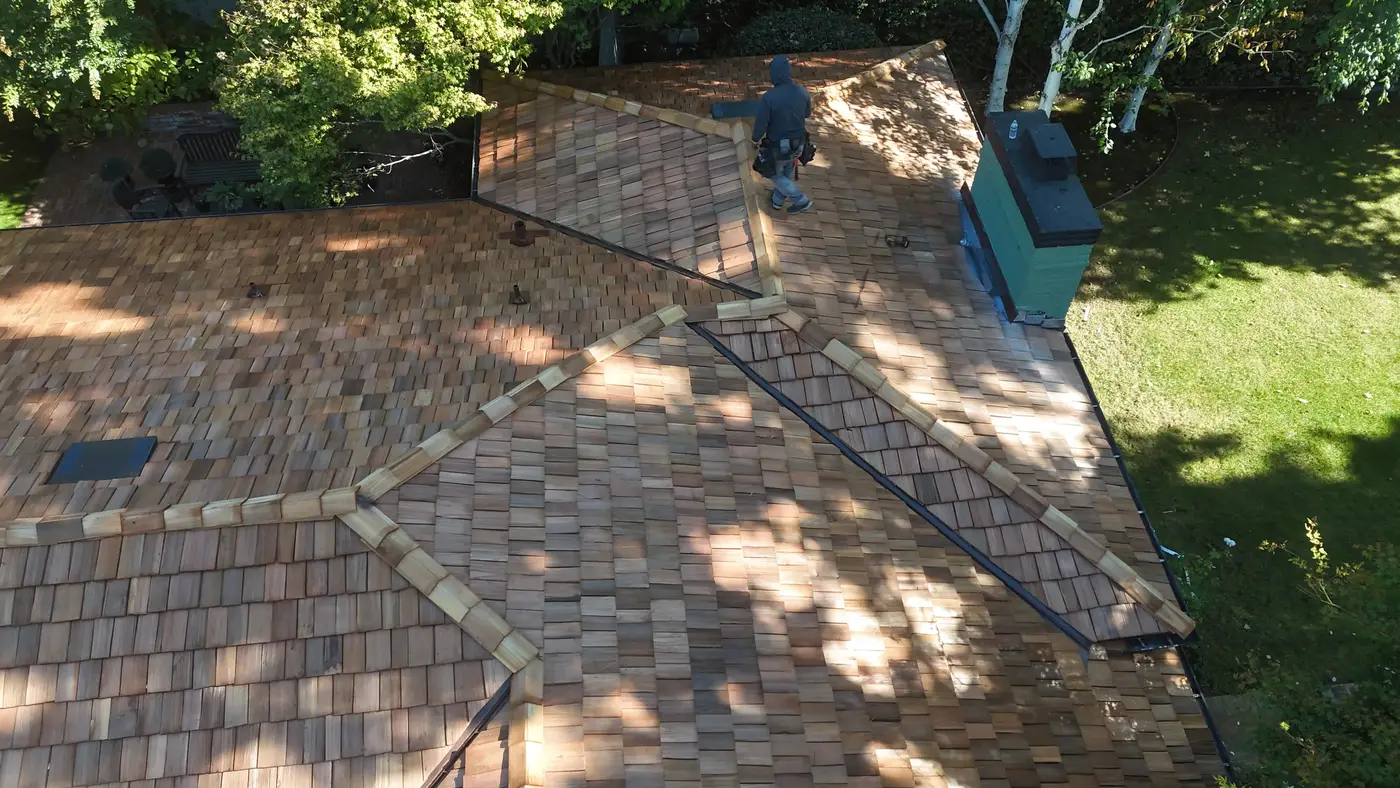
- Wood shakes are split rather than sawn, so they are thicker, with a rugged, textured surface and irregular shadow lines.
- Wood shingles are sawn on both sides, which gives a thinner, smoother and more uniform look.
- Red cedar is the most common species thanks to its natural resistance to decay. White oak and treated pine appear on some roofs.
- Grades matter: higher grades use more heartwood with a straighter grain and fewer defects, and they last longer.
Wood roofs in an Oklahoma climate
Wood roofing can work well in northeast Oklahoma, but our climate tests it. Heavy humidity promotes moss and fungal growth on shaded slopes, and long summers dry and cup the wood. Repeated wetting and drying causes splitting over time. Hail can bruise and split shakes, particularly older ones. Airflow is the key: wood lasts longer when it can dry from below, so spaced decking or a ventilation mat helps. Expect a lifespan of about 20 to 40 years with good installation and care, although shaded, neglected roofs can fail sooner.
Fire is another factor. Untreated wood roofs are restricted in some areas, and they may raise insurance questions. Fire-retardant treated products with a Class A or B assembly are available. Check with your insurer and your local building department before you buy.
Repairs and maintenance
Wood roofs fail one piece at a time, so regular repairs can add years. Typical work includes:
- Replacing split, cupped or rotten shakes with similar grade and thickness.
- Rebuilding ridges and hips, which take the most sun and wind.
- Replacing worn valley metal and step flashing.
- Clearing debris from keyways, the gaps between shakes where leaves and needles collect.
- Trimming nearby trees to improve sun and airflow on shaded slopes.
- Gentle cleaning and preservative treatment where the wood is still sound.
Avoid high-pressure washing, since it can strip wood fibers and shorten the life of the roof. New pieces start out brighter than the aged wood around them, but will weather in over time.
Treatments: what they can and cannot do
Preservative and fungicide treatments help slow moss, algae and UV damage, and they are most useful when applied to a roof with plenty of life left. Oil-based products can darken the wood. Some coatings claim to restore old roofs, but no treatment can repair a split or rotted shake. We will tell you honestly whether a treatment is worthwhile or whether the money is better saved for a replacement. Moss can also be slowed by zinc or copper strips near the ridge, which release trace metals when it rains.
Replacing a shake roof
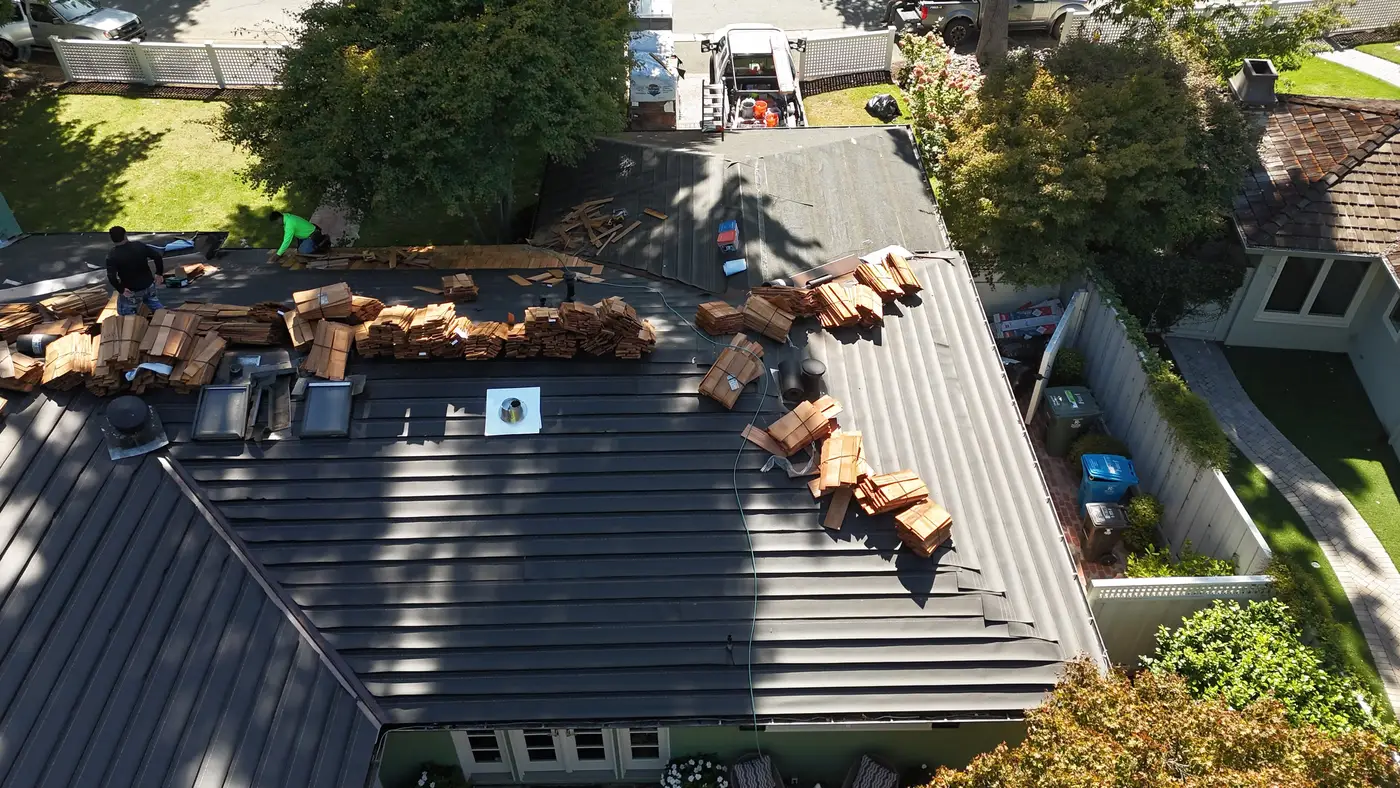
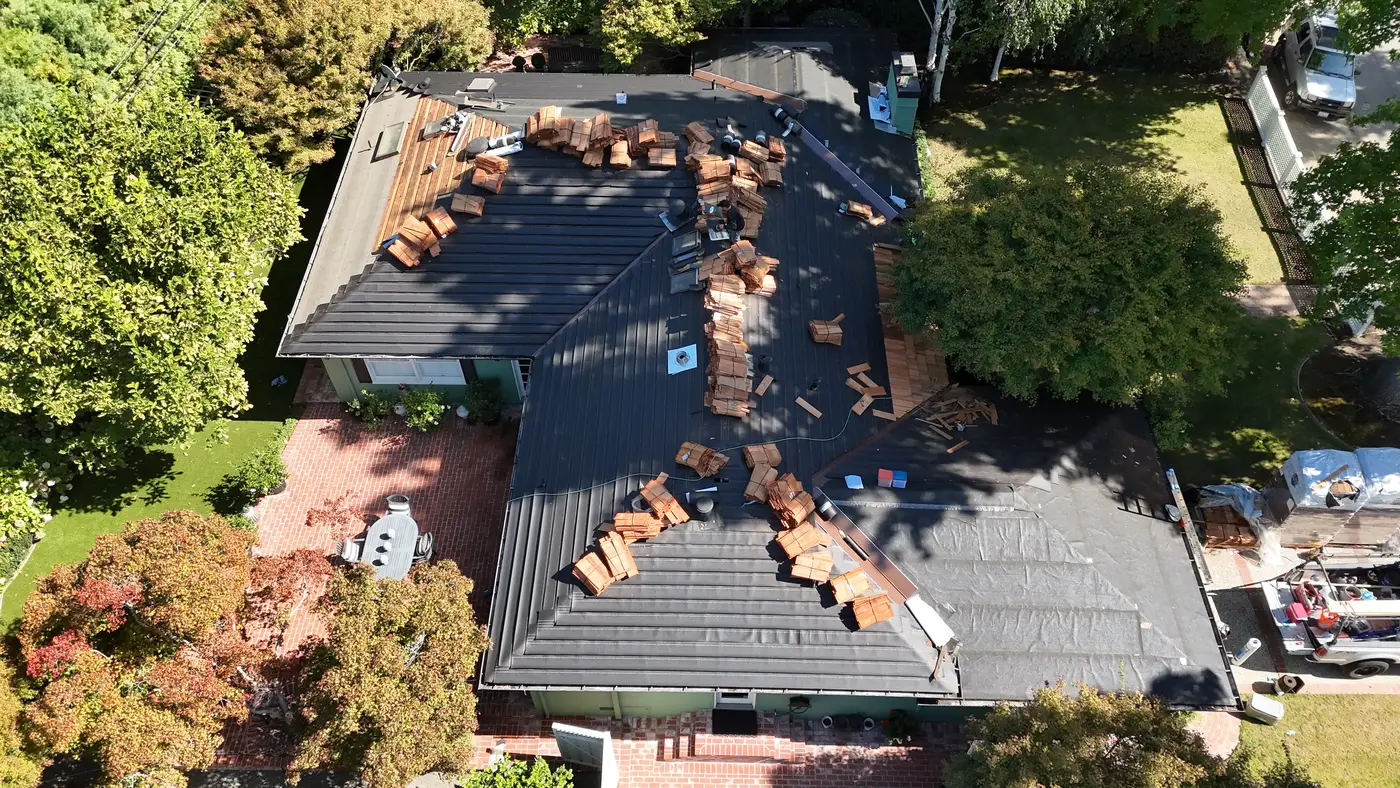
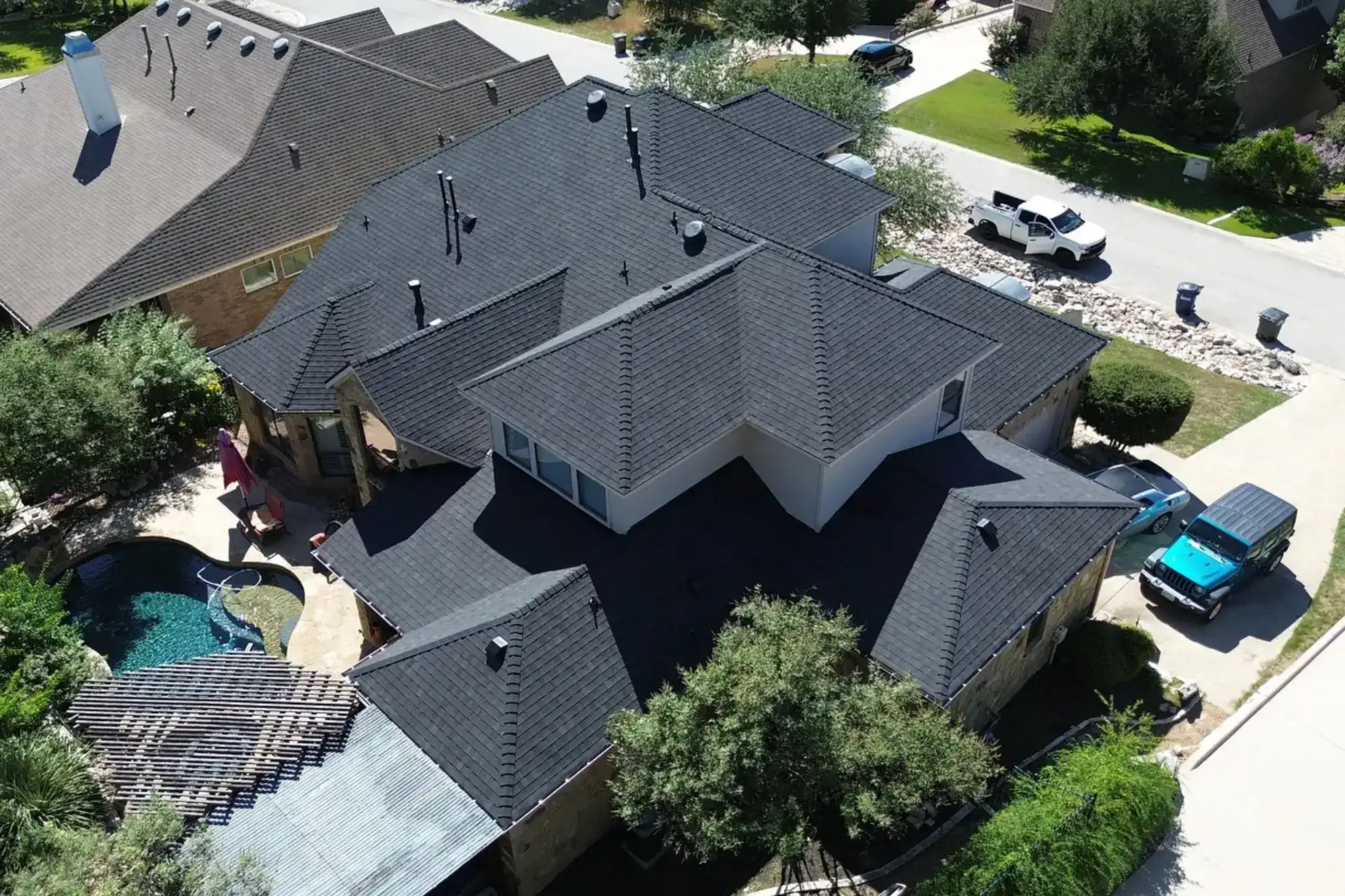
If a roof has reached the end of its life, we will replace it with new cedar or an alternative. Composite and synthetic shakes offer a similar look with less maintenance and better fire and impact ratings on many products. Designer shingles give a shake-like look at a lower cost, and stone-coated metal roofing is another option. Older shake roofs often sit on spaced decking, so moving to shingles usually requires new solid sheathing, which should be included in the bid. Compare materials on our roof replacement page, and if you have had a storm, start with hail damage roof repair.
Related services
Shakes are a specialty material within our residential roofing work. If yours are beyond repair, see roof replacement for the alternatives, including designer shingles and stone-coated metal roofs.
Recent wood shake roofing projects
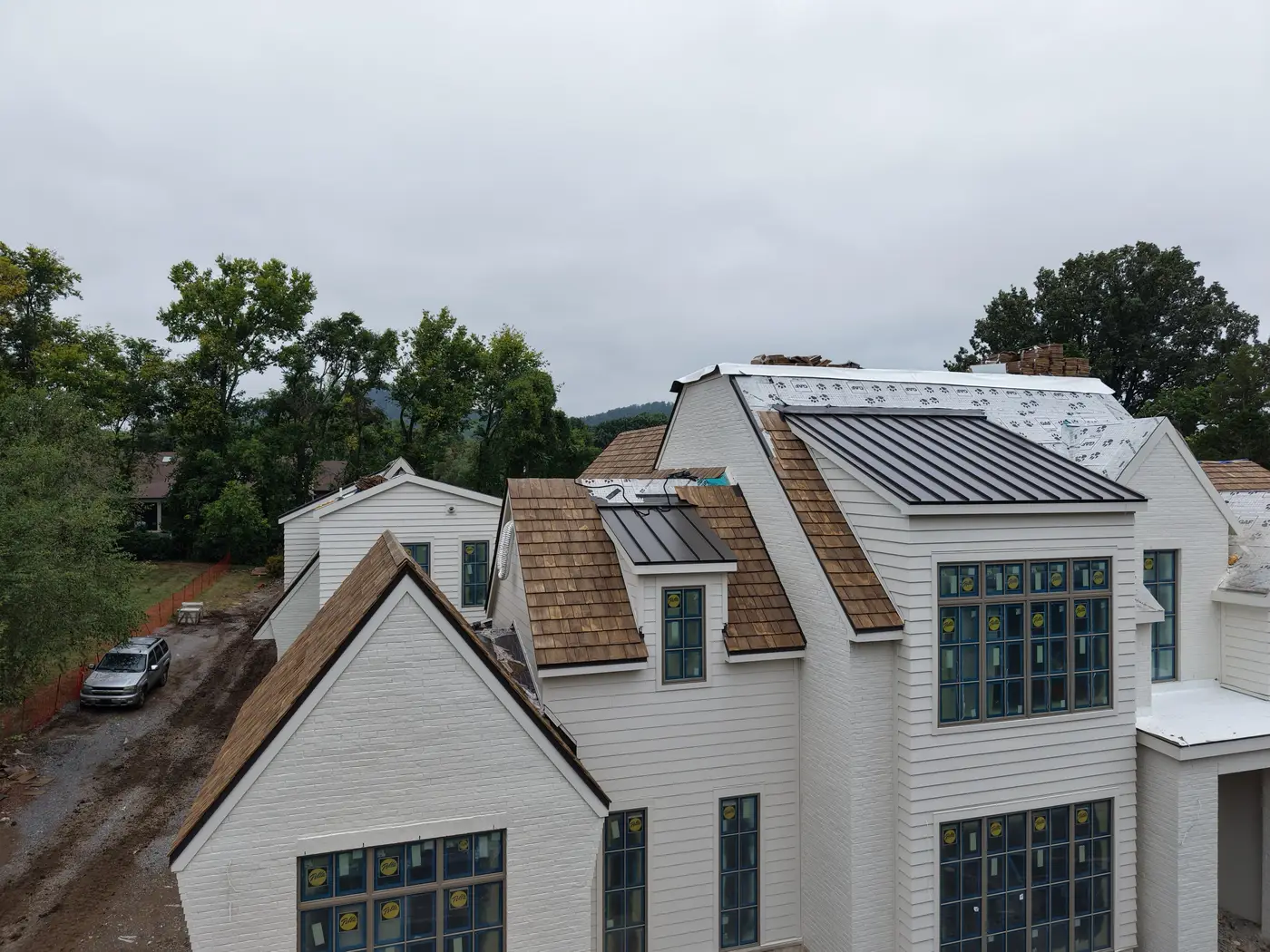
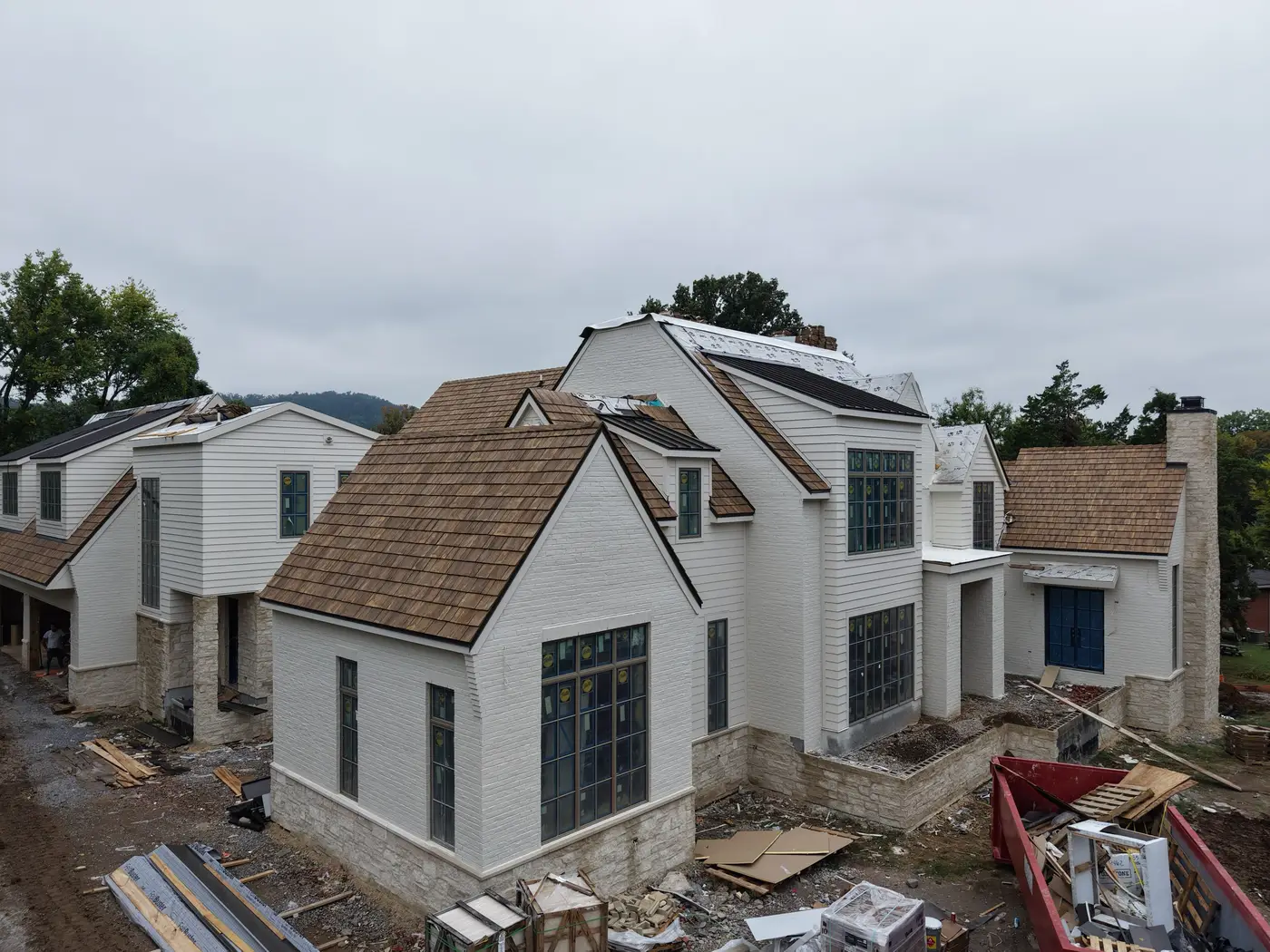
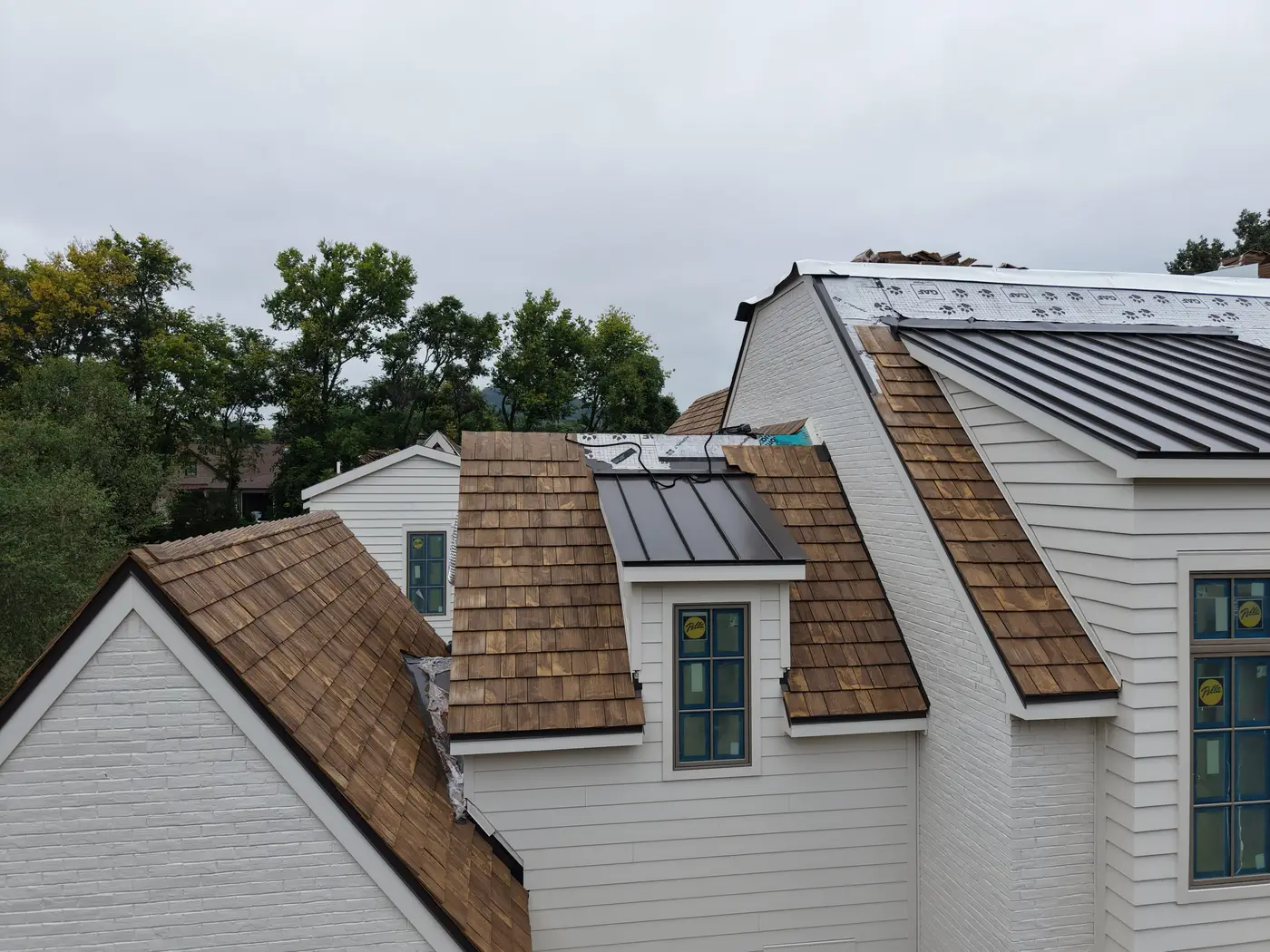
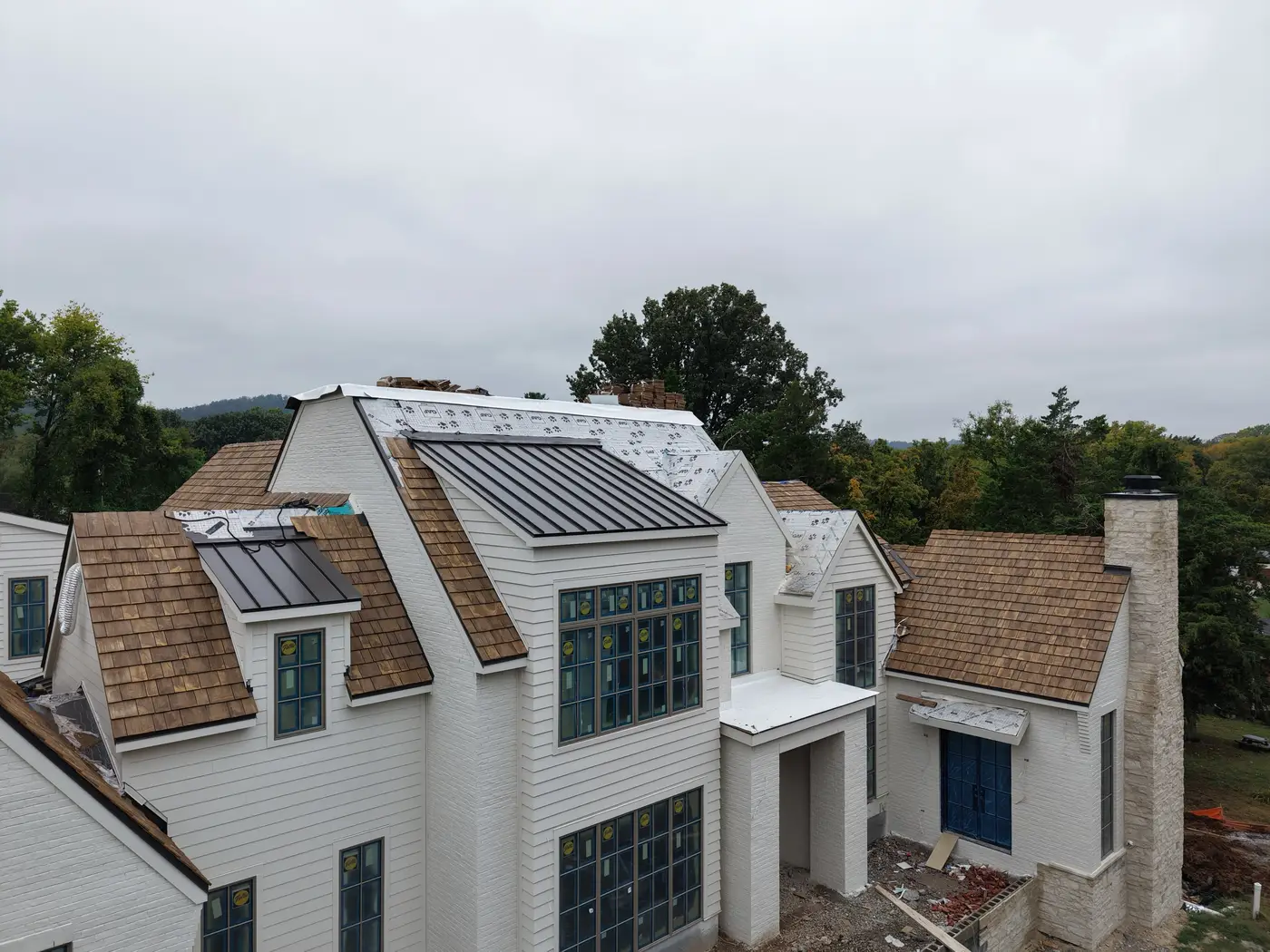
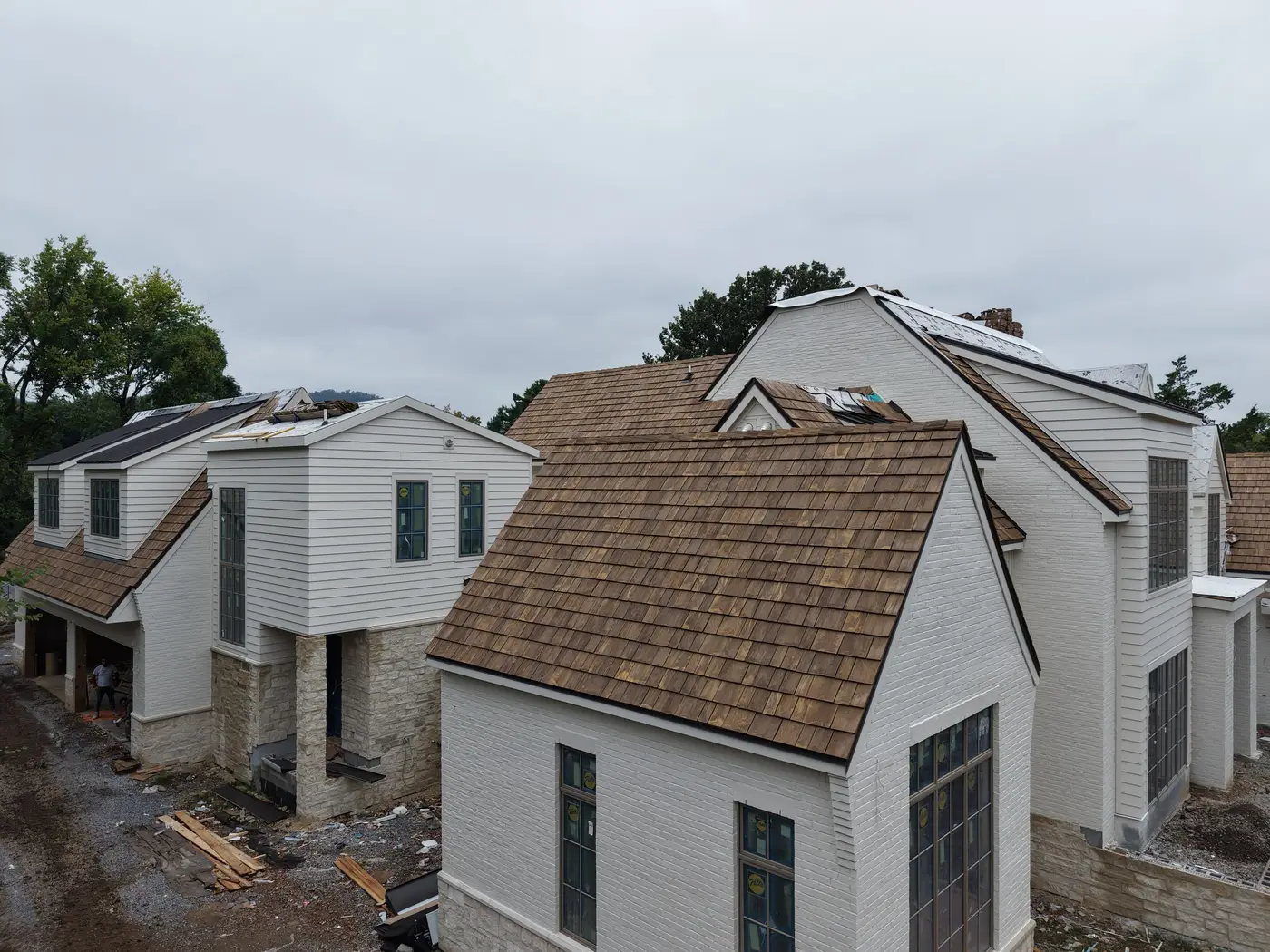
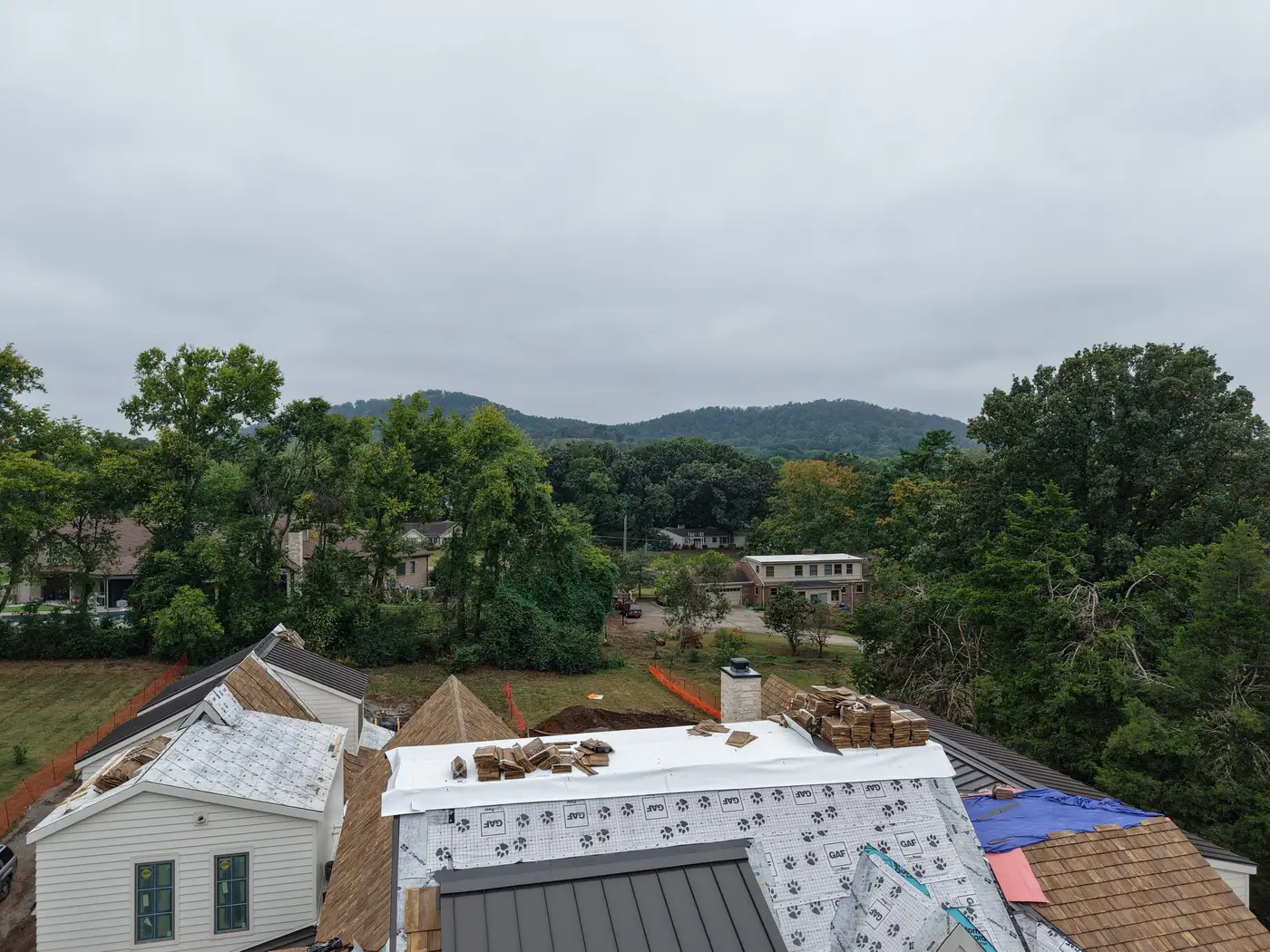
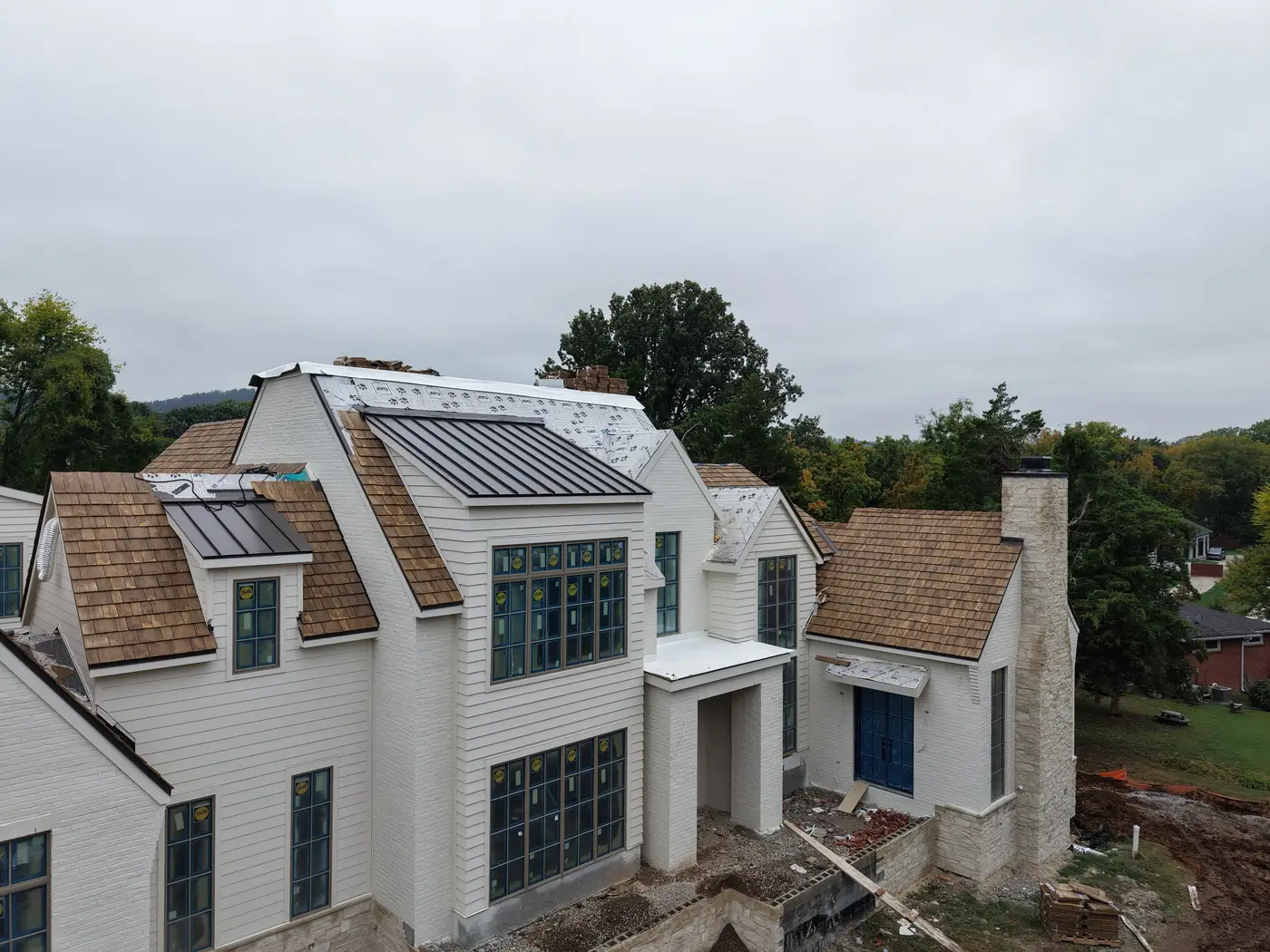
Cedar Shake Roof on a New White-Brick Home
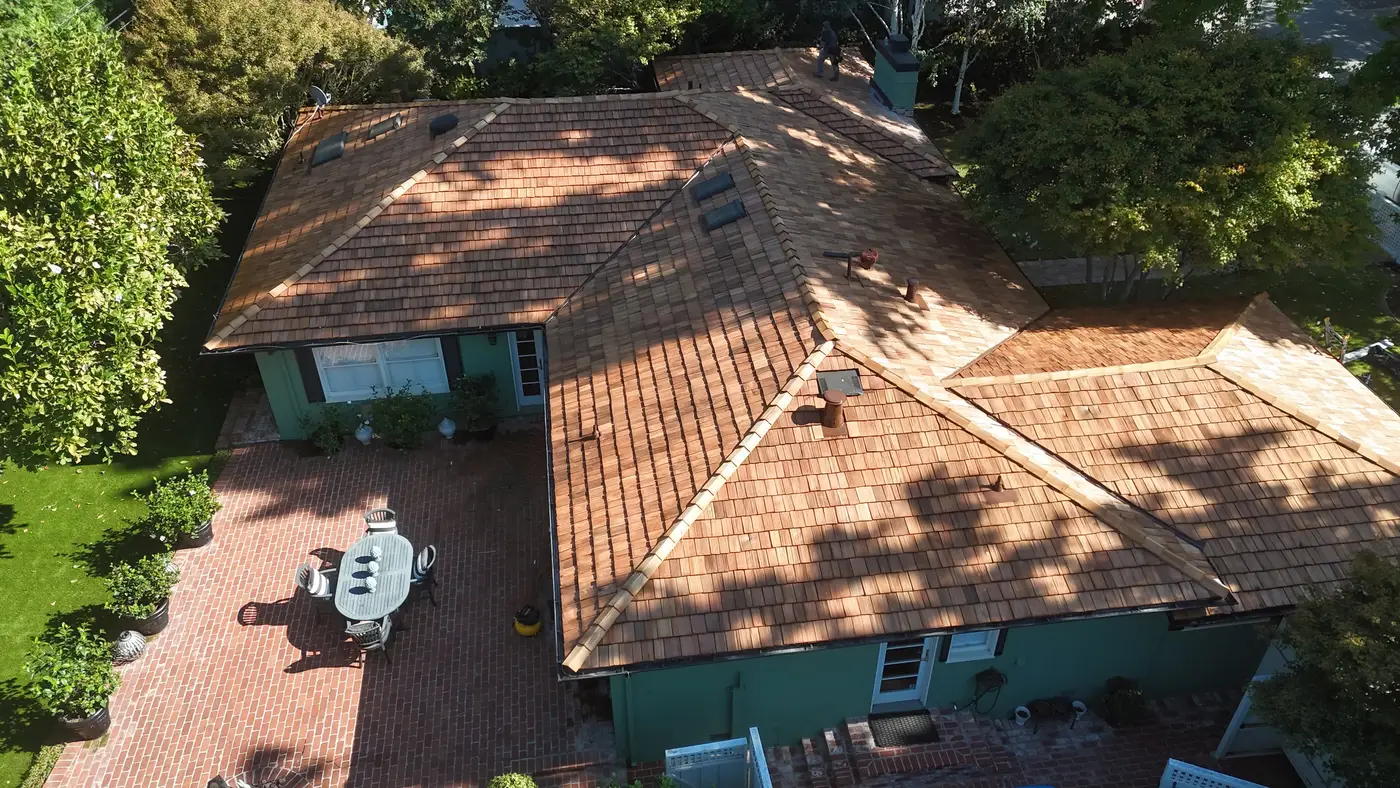
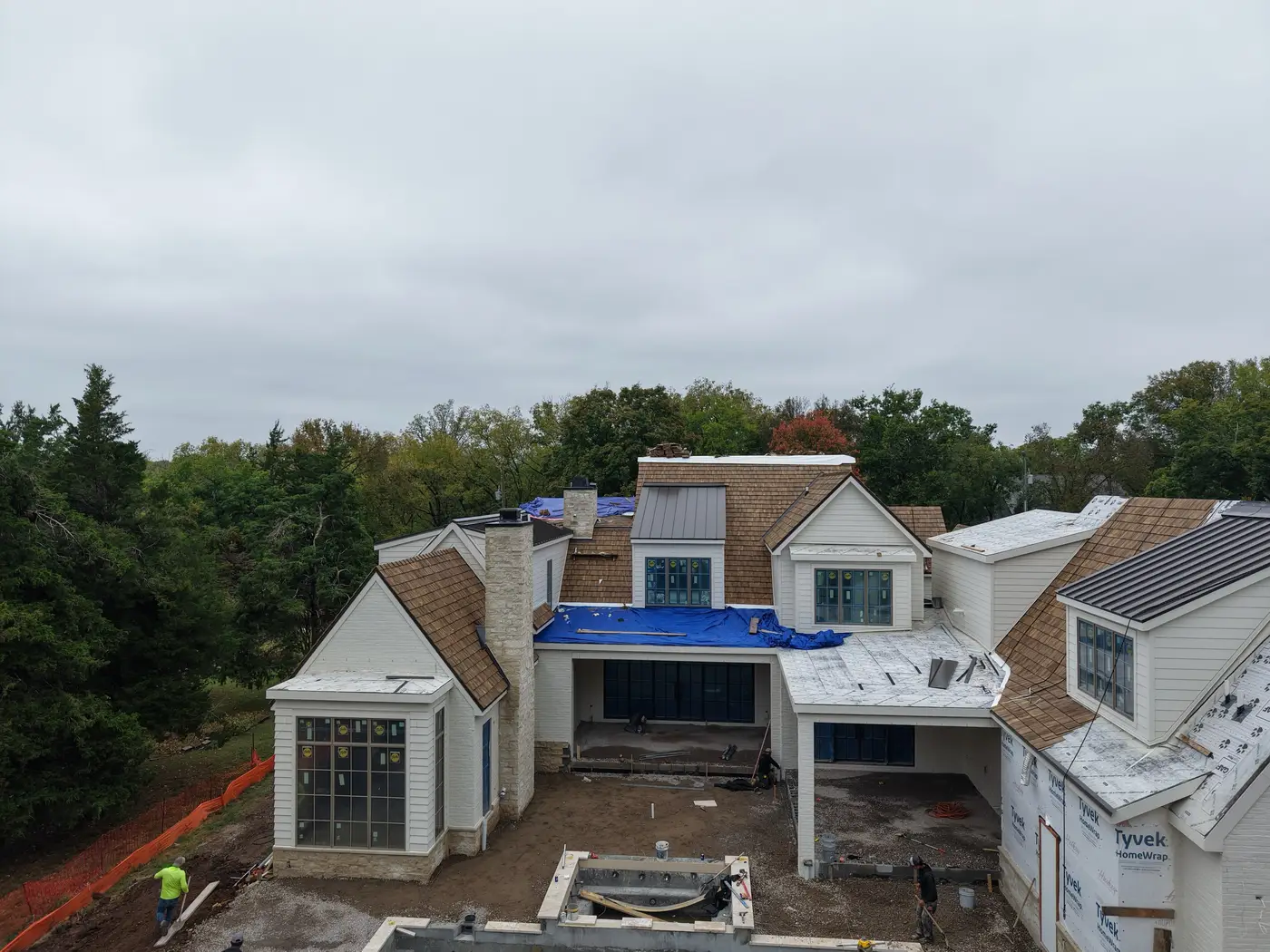
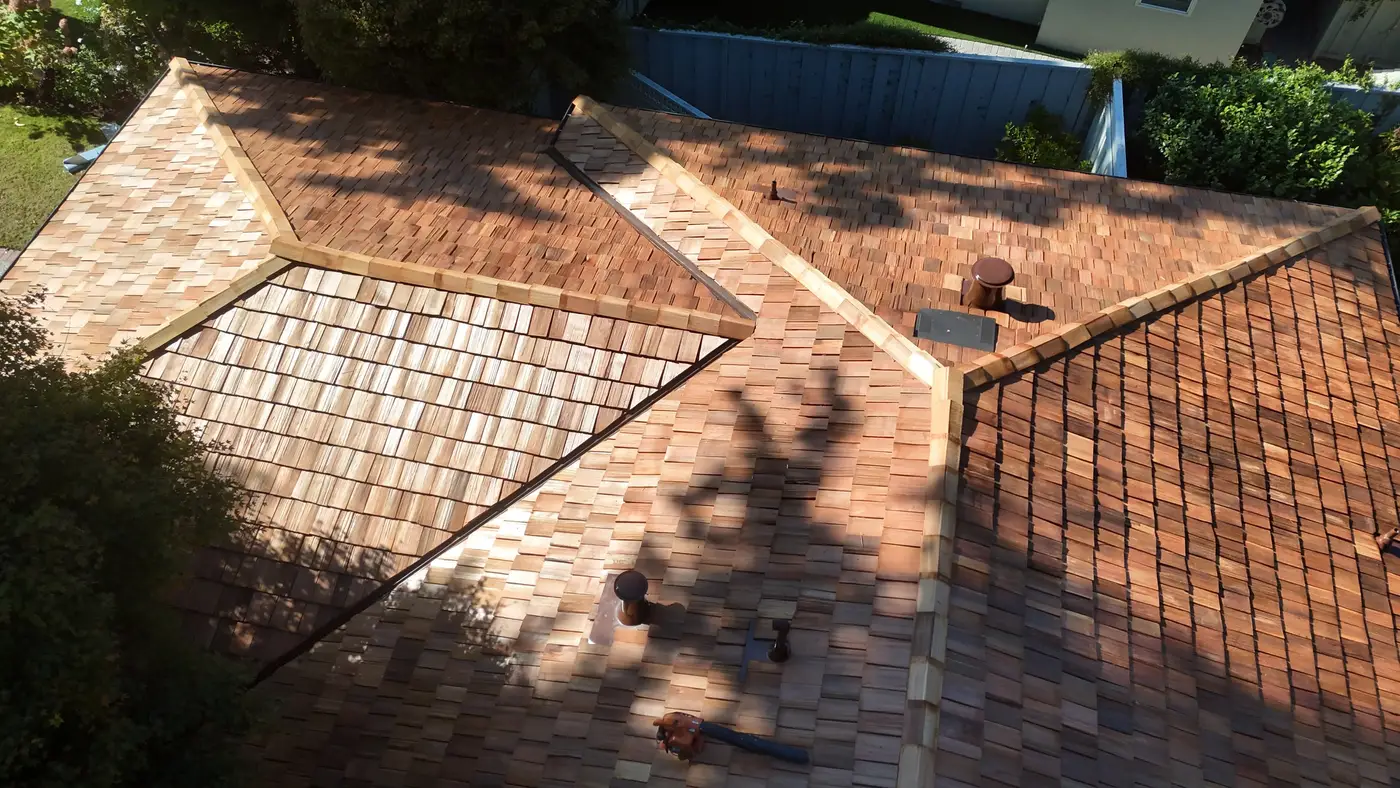
Shake and Tile Roof Seen from Above
See all of our roofing projects
Frequently asked questions
Will my insurer cover wood shakes?
Are synthetic shakes worth considering?
They reduce upkeep and offer better fire and impact ratings on many products, though they don't age quite like natural cedar.
How much does a wood shake roof cost in Tulsa?
Shake repairs often begin around $400 to $1,500. Full cedar roofs often cost $12 to $25 per square foot installed, depending on grade, thickness and pitch.
How long does a cedar shake roof last here?
About 20 to 40 years is typical with good installation and maintenance. Shade, debris and humidity shorten that, while good airflow and regular care help the roof reach the upper range.
Do wood roofs cost more to insure?
They can, and some carriers restrict them. Ask your agent before installing wood, and ask whether a fire-rated or composite product changes your premium.
Can you replace a few shakes without a full re-roof?
Yes. Spot repairs are common as long as the surrounding wood is sound. New shakes will look brighter at first and blend in as they weather.