Published November 4, 2026 by Redbud Ridge Roofing
If you're replacing a roof in Tulsa, someone will probably mention Class 4 shingles. Some roofers present them as a must-have, while others treat them as an upsell. The real answer depends on your insurance, how long you plan to stay and the kind of storms you are trying to protect against. Here's a straightforward look at what the rating means and how to decide with your own numbers. If you are pricing a project now, start with our roof replacement in Tulsa page.
What Class 4 means
The rating comes from the UL 2218 test, in which steel balls are dropped from set heights onto a roofing sample. There are four classes, based on the size of the ball and the height of the drop. Class 1 uses a 1.25-inch ball, and Class 4 uses a 2-inch ball dropped from 20 feet, striking the same spot twice. A product earns its rating if the back of the sample shows no cracking or tearing.
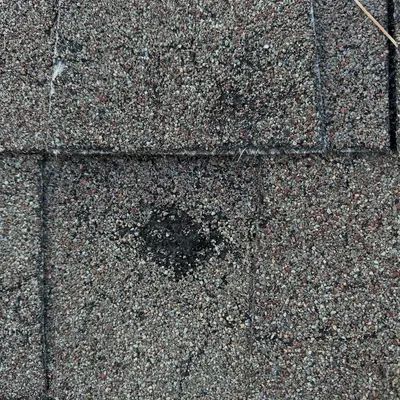
That is a useful result, but it has limits. Passing means the product didn't crack in that test. It doesn't mean a shingle is hail-proof. Real hail varies in size, hardness and angle, and wind can drive it in sideways. Very large stones can still damage a Class 4 roof. Some evaluation programs, such as FM 4473, use ice balls instead of steel, which is closer to real hail, so you may see a second rating on some products.
How Class 4 shingles are made
Manufacturers take different approaches. Many Class 4 shingles use SBS-modified asphalt, a rubberized blend that flexes on impact and stays more pliable in the cold. Others add a reinforcing layer on the back of a traditional shingle. Modified asphalt shingles generally feel more flexible and can be easier to install in cold weather. Since the construction differs, it pays to ask what you are actually buying rather than treat all Class 4 shingles as the same.
Class 4 ratings also exist on other materials, including certain metal panels, synthetic slate and synthetic shake. Metal may keep its rating while still showing dents, because the test looks at cracking and not appearance. That is why cosmetic damage exclusions matter on metal roofs, a topic covered in our metal roofing guide.
The cost
Class 4 shingles commonly add about 15 to 30 percent to an architectural shingle job. On a $14,000 roof, that's roughly $2,100 to $4,200 more. Pricing changes with the product, roof complexity and supply. Ask for a written price with both options on the same estimate, so that labor, flashing and ventilation are the same and you are comparing only the upgrade.
The insurance side
Some Oklahoma insurers offer premium credits for impact-rated roofing. The amount varies a lot, and it can change at renewal. Before choosing, ask your agent these questions:
- Is there a credit for impact-rated roofing on my policy?
- How much is it per year in actual dollars, rather than as a percentage?
- Which ratings and documents do you require, such as an invoice or a product certificate?
- Does the roof change my wind and hail deductible or my roof payment schedule?
- Would a metal or Class 4 roof be subject to any cosmetic damage exclusion?
Get the answer in writing if you can. A credit that looks generous in a brochure may be small once applied to your actual premium. Remember, too, that insurers can change their discount programs, so don't assume the same credit will last for the life of the roof.
How to run the numbers
You can work out a rough payback period in a minute. Divide the extra cost by the yearly savings. Here is an example using made-up figures:
- Extra cost of Class 4 on your roof: $3,000.
- Annual premium credit your agent confirms: $300.
- Simple payback: $3,000 divided by $300 is 10 years.
Now compare that with how long you plan to stay. If you expect to be there for 15 years, the upgrade may pay for itself and you get a tougher roof besides. If you plan to move in five years, the numbers may not work unless buyers in your area will pay for it. If your insurer offers no credit, the case relies on potential hail performance and peace of mind. There is no guarantee of fewer claims, although lower odds of damage are the reason people buy these shingles.
What about hail claims?
A Class 4 roof can still end up with a claim, and it doesn't take away the need for inspection after major storms. However, fewer damaged shingles could mean fewer deductibles over the life of the roof. That matters more with a high percentage deductible. If yours is $6,000, avoiding one claim would likely cover the cost of the upgrade. No one can tell you that it will, because that depends on future storms, but it is a fair thing to weigh. For guidance after a storm, see our post-hail checklist.
When it tends to make sense
- You plan to stay in the house for many years.
- Your insurer offers a meaningful credit.
- Your current policy has a high or restrictive roof deductible.
- The roof is being replaced anyway, which means you pay only the difference in cost.
- You have had repeated hail losses at this address.
When it may not
- You're selling soon and buyers in your area won't pay more for it.
- Your carrier offers no credit and you are working with a tight budget.
- Other parts of the project need the money first, such as rotten decking or poor ventilation.
- The upgrade would leave too little for quality flashing and installation.
Installation still decides the outcome
A premium shingle fastened poorly will still fail in high wind, whatever its impact rating. Nail placement, starter strip, underlayment and ventilation matter just as much. Hot attics age any shingle faster, and wind warranties often depend on specific nailing patterns and accessories. When comparing bids, check that the scope covers those details, and don't assume that an expensive shingle makes up for a thin scope. Ask to see the product name and the rating on the written estimate, and keep the wrapper or a certificate for your insurer.
Other ways to make a roof tougher
Impact rating is only one part of how a roof handles Oklahoma weather. If your budget won't stretch to Class 4, or if you want the upgrade to work as well as it can, these details are worth pricing as well.
- Wind-rated installation. Correct nail placement, starter strip at eaves and rakes, and sealed ridge caps help keep shingles on during straight-line winds.
- Better underlayment. Synthetic underlayment and ice and water membrane at valleys and penetrations give the roof a second line of defense if shingles are damaged.
- Attic ventilation. Balanced intake and exhaust reduce heat that ages shingles from below, keeping them flexible for longer.
- Solid decking. Replacing soft or thin decking gives fasteners a better grip and gives shingles firmer support, which may help them handle impact.
- New flashing and vents. Fresh metal at walls, chimneys and pipes means the small parts won't fail years before the shingles do.
Questions to ask about any Class 4 product
Not every shingle sold as impact-resistant performs the same, so it's fair to ask for specifics before you pay more. Ask for the exact product name and confirm its UL 2218 Class 4 listing on the manufacturer's documentation. Find out how the shingle is built, whether it uses SBS-modified asphalt or a reinforcing layer, and how it behaves in cold-weather installation. Read the warranty to see how it treats hail, because many manufacturers exclude hail damage even on impact-rated products. Some offer limited coverage, and the terms can be narrow.
Ask your contractor how the product should be fastened and whether it needs matching starter and ridge cap for the wind warranty to apply. Finally, keep the documentation. Your insurer may want an invoice that names the product, and a future buyer may appreciate the proof as well. A rated shingle can only earn a credit if you can show that it is actually on your roof.
Common questions
Do Class 4 shingles last longer overall? They may resist impact and flexing better, but overall life still depends on sun, ventilation and installation. Don't assume a dramatic increase in years unless the product data supports it.
Do they look different? Most look like standard architectural shingles, and many come in similar colors. Bring samples outside and look at them against your brick or siding.
Can Class 4 shingles be used for repairs? Usually, but a full roof benefits most, as one rated slope doesn't change how the rest of the roof behaves, and it is unlikely to qualify for a credit.
When you are ready to compare, our shingle roofing page explains the main product types and our roof replacement page explains what a full project should include. We are glad to price standard and Class 4 options on one estimate, so you can check it against your agent's answer.