Published November 4, 2026 by Redbud Ridge Roofing
Patching directly above a ceiling stain is one of the most common failed roof repairs. Water enters through a small opening, runs along the underside of the decking or down a rafter, and only drips once it finds a low spot. The stain and the source may be several feet apart, and on a long slope they can be even farther. Understanding how water travels helps you find the real problem, describe it to a roofer and avoid paying twice for the same leak. If you would rather have someone trace it for you, see roof repair in Tulsa.
How water moves through a roof
Water follows gravity, but it also clings to surfaces. Once it gets through the shingles and underlayment, it usually runs downhill along the bottom of the decking until it meets a nail, a rafter or a seam. It may then slide along that framing member and drop onto insulation. Fiberglass or blown insulation can soak up water and spread it sideways before the drywall starts to show a stain. By the time you notice a mark, water may have been running for weeks along a route you can't see.
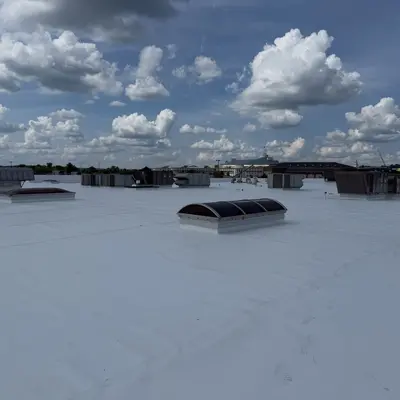
That is why a stain near an outside wall may come from a vent halfway up the roof, and why a stain in the middle of a ceiling may come from a valley or chimney in another room. Roof pitch makes a difference too. Water runs farther on steeper slopes. On low-slope and flat roofs, it can spread under a membrane in nearly any direction, as we explain in flat roof repair.
Where leaks usually begin
- Pipe boots. Rubber collars crack in the sun, often well before the shingles wear out. A failed boot is one of the cheapest leaks to fix, and it is often found on an otherwise healthy roof.
- Step flashing. Where a roof meets a wall, missing or poorly lapped pieces let water behind the siding. These leaks may show up on the wall below instead of on a ceiling.
- Kick-out flashing. When this small piece is missing at the bottom of a roof-to-wall joint, water can run behind the siding and rot the wall.
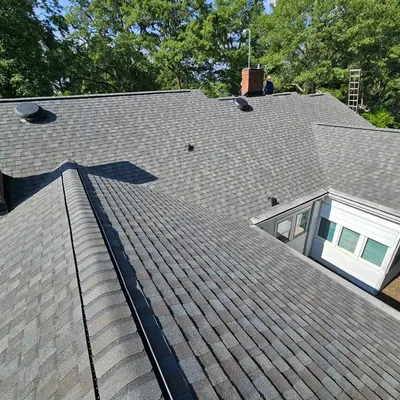
- Chimneys. Failed counterflashing and worn mortar joints are frequent causes. Porous brick can also absorb water and pass it inside.
- Valleys. These carry the most water and collect debris that holds it there. Worn shingles in a valley often leak during heavy rain only.
- Skylights. Leaks may come from the flashing kit, the frame or the glass seal. Condensation on the inside can look like a leak as well.
- Exposed fasteners. Nails that back out can let in water around their shanks. They often come from movement in the deck or from nails that missed a rafter.
- Vents and attic fans. Cracked housings and old sealant let in wind-driven rain.
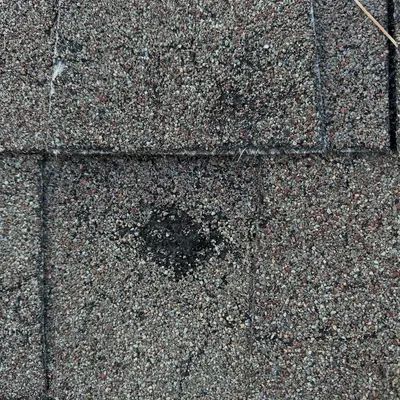
- Storm damage. Creased or missing shingles from wind or bruises from hail may open a path that didn't exist before.
Clues that point to the source
Your observations can save a roofer a lot of time. Keep a short log with the answers to these questions:
- Does it leak every time it rains, or only in heavy or wind-driven rain?
- Which direction was the wind coming from?
- Does it start right away, or hours after the rain begins?
- Does it leak when the weather turns cold, with no rain at all?
- Have you had any recent work on the roof, such as a satellite dish, solar or HVAC?
A leak that only appears in wind-driven rain usually points to flashing or an opening on the side facing the storm. A slow leak that appears hours later often means water is soaking through insulation before it reaches the drywall. Moisture in cold weather without rain may be condensation, not a leak at all. Recent roof work is always worth mentioning, as penetrations and foot traffic can cause new problems.
What you can safely check
If your attic has safe access, take a flashlight and look uphill from the stain. Dark trails on rafters and rusty nail tips can help narrow things down. Look for wet or matted insulation, mold spots on the decking, and any daylight coming through. Step only on framing, and watch for wiring and insulation. A misstep can put a foot through the ceiling. Take a picture to share with your roofer.
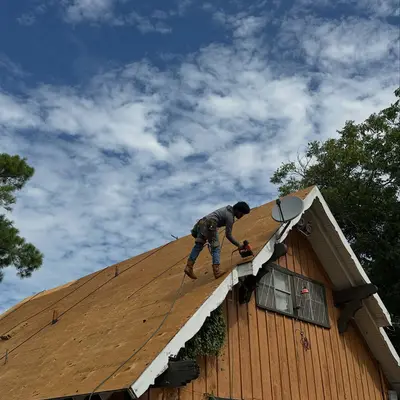
From the ground, look at the roof above and uphill from the problem area with binoculars or a phone camera. Check for missing shingles, cracked boots, lifted flashing and debris in valleys. Please stay off the roof, especially when it is wet. A fall costs far more than a service call, and walking on a damaged or older roof can make things worse.
How a roofer traces a leak
A careful diagnosis usually works from the inside out. We look at the stain, follow the water trail in the attic, and use moisture meters to map where materials are wet. Thermal imaging can help in some conditions. Then we go up on the roof and examine every penetration and transition uphill from that point.
When the source still isn't clear, a controlled water test can settle it. One person runs a hose slowly over a small section of roof, starting low and moving uphill, while another watches from the attic. Each area gets several minutes before moving on. Working from low to high matters because otherwise you can't tell which area let the water in. It takes patience, but it is far cheaper than guessing.
Why caulk is usually not the answer
Roof cement and caulk have their place, but they rarely make a long-term fix when used on their own. Sealant shrinks and cracks in the Oklahoma sun, and it can trap water and hide what really failed. A smear of tar around a chimney usually means the flashing underneath has a problem that nobody corrected. Proper repairs replace or rework the failed part, such as new step flashing, a new pipe boot or a new valley. If a contractor's whole plan is a tube of sealant, ask what exactly failed and how long the repair is expected to last.
Why it shouldn't wait
Even a small leak can saturate insulation, weaken decking and encourage mold, which can start to grow within a day or two on wet materials. Soaked insulation also loses its value, so you pay for it again in your energy bills. If the leak only shows up in some storms, note the wind direction and rainfall, because that's useful information. A bucket buys time, but it isn't a repair. If there's been a lot of water, ask about water damage restoration as well.
Leaks that aren't really roof leaks
Not every wet ceiling starts with the roof. Before paying for a roof repair, it helps to rule out a few other causes, especially if the shingles look sound or the problem doesn't follow the rain.
- HVAC units in the attic. A clogged condensate line or a rusted drain pan can overflow in summer, leaving a stain that looks just like a roof leak.
- Bathroom fans. A fan vented into the attic, or a duct that has come loose, blows moist air onto the decking, where it condenses and drips.
- Plumbing. A supply line or drain above the ceiling can leak at any time, whether it is raining or not.
- Condensation. Poor attic ventilation combined with cold weather can leave frost or moisture on nail tips and decking, which then drips as it warms.
- Siding, windows and masonry. Wind-driven rain can enter around a window or through brick and show up well below the roof line.
Timing is the best clue here. A stain that grows on sunny days points away from the roof, as does one that appears when the air conditioner runs hard. Tell your roofer what you have noticed so they can check these possibilities instead of assuming that the shingles are to blame.
What a leak repair should include
A complete repair does more than stop today's drip. Ask what failed, how it will be fixed and how you will know that it worked. You should receive photos of the failed part and of the finished repair. Wet decking should be replaced rather than covered over, and wet insulation should be dried or removed. Ask whether nearby parts of the same age should be replaced at the same time. If one pipe boot has cracked, the others on your roof may not be far behind, and fixing them all during one visit usually costs less than several separate calls.
What to do while you wait
- Move furniture and electronics and put down a bucket.
- If a ceiling is bulging with water, keep everyone out of that room, because wet drywall can come down without warning.
- Turn off power to any wet light fixtures at the breaker.
- Take dated photos of the stain and any damaged items.
- Mark the edge of the stain with a pencil, so you can see whether it grows.
Our roof leak repair page explains how we fix each of these common failures and what the repairs usually cost. If rain is falling and water is coming in quickly, see emergency roof repair.